
What this practice is for
A physician who examines the whole skin rather than the spot you pointed at, a named diagnosis written down for you, and a treatment plan you leave holding.
Dermatology is the speciality where the gap between a confident guess and an actual diagnosis is widest, because so many conditions look alike and so few of them can be settled by looking alone. A great many patients arrive here having been treated for years without ever being told what they have. The first appointment usually goes back to the beginning: what it looked like when it started, what has been tried, at what strength, for how long, and what happened when it stopped.
The second thing this practice is for is finding skin cancers while they are small. That is a forty-five minute appointment, it is the single most useful thing in the speciality, and it is also the thing most often oversold — so every page in that group says plainly that a screening examination finds most of what is present, not all of it, and that what you do between appointments matters as much as the appointment.

Six promises
What you can expect, every appointment
Each of these is checkable at your first visit, which is the point of writing them down.
The whole skin gets examined, not the spot you pointed at
A new-patient appointment is a full skin examination in a gown, in good light, with a dermatoscope — scalp, behind the ears, the back, between the toes, the soles, the nails. A great many of the cancers found here were found somewhere the patient could not see and had not mentioned. If you would rather only the one spot were looked at, say so and that is what we will do, but we will ask once more before you leave.
A named diagnosis, written down, that you leave holding
You should be able to say what you have when you get home, spell it, and look it up. If we are not sure, you will be told that we are not sure and what would make us sure, which is usually a biopsy. "A bit of dermatitis" is not a diagnosis, and neither is a cream handed over without a name attached to it.
The risks and the stopping point before the prescription
Every topical steroid leaves here with a strength, a site, a frequency and a date to stop or review. Every medicine needing a blood test leaves with the blood test booked. Nobody is given something to use indefinitely on skin that was never re-examined.
Long appointments, because the history is the diagnosis
Thirty minutes for a new patient, forty-five for a full skin check, an hour for patch testing and for a child. Most of what distinguishes one rash from another is when it started, what makes it worse and what you have already put on it — and none of that can be asked in seven minutes.
What is medical and what is cosmetic, said out loud, before you sit down
The line between the two is where dermatology billing goes wrong for patients, and it is not always where people expect. You will be told which side of it your visit falls on, and if a thing you want is cosmetic and therefore yours to pay for, you will hear the price before it happens rather than read it afterwards.
The same physician, appointment after appointment
Chronic skin disease is managed by somebody who remembers what has already been tried on you and what it did. You are booked with a named physician and you stay with them. If you would rather be seen by somebody else, that is an ordinary request and nobody will be offended.
We claim nobody else's approval, and we name nobody's product. Dermatology is regulated in New York State, every physician here is licensed, and the practice is inspected like any other medical office. What we will not do is decorate this website with the seal of a board, a college or an academy as though somebody outside this building has personally vouched for the care you are about to receive. Nobody outside this practice has reviewed it. So instead of a wall of logos, these pages tell you plainly who will examine you, what they will do, what they will not do, what it costs, what can go wrong and how often. Ask us about any of it before you book.
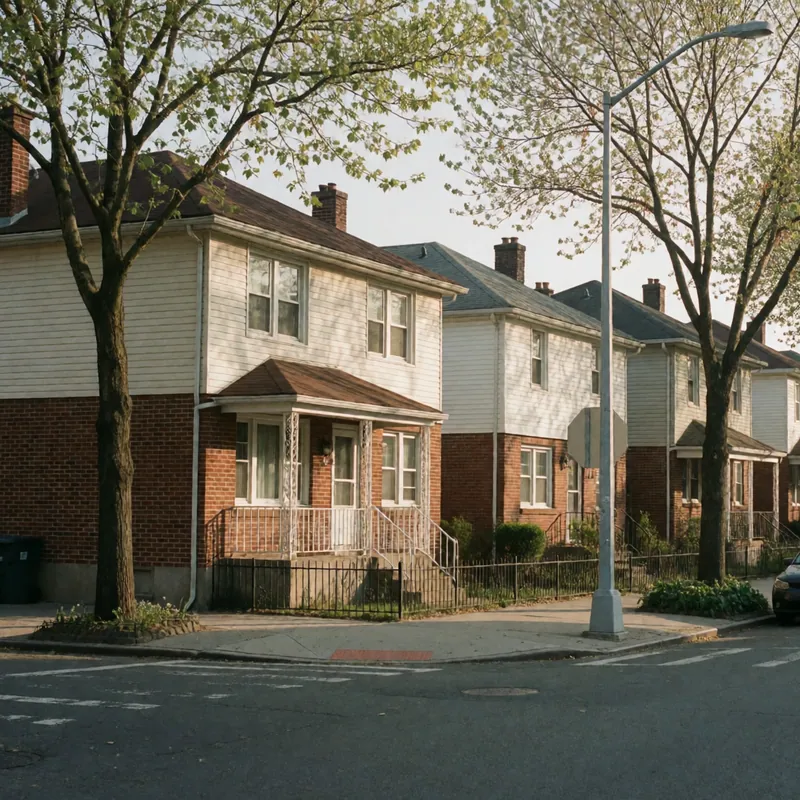
Woodside, specifically
This neighbourhood is why several things about this practice are the way they are.
Dermatology's reference photographs, several of its severity scales and some of its treatment protocols were largely built around pale skin. In a neighbourhood where most patients do not have it, that is not an academic problem: inflammation reads as violet, grey or simply darker rather than pink, so eczema gets graded mild when it is severe; pigment change after inflammation is more pronounced and far longer-lasting, and is frequently the complaint that matters most to the patient; scars are more likely to thicken; and every light-based treatment carries different risk.
So the defaults here are different. Examinations include palms, soles, nails and the mouth on everybody. Anything that irritates is started conservatively. Scarring risk is discussed before an elective procedure rather than after one. And we ask to see what you are actually using, including anything bought abroad, because products sold outside regulated channels have repeatedly been found to contain mercury or potent steroids. There is a whole page on this.
The other practical consequence is language. Between the four clinicians and the front desk we work in English, Spanish, Tagalog, Bengali, Nepali, Korean, Polish, Romanian, Turkish, Arabic — and where we cannot, we book an interpreter rather than relying on a patient's child to translate a diagnosis.
In their words
What patients say about being seen here
These are illustrative comments written for a demonstration site. They are not marked up as reviews, no rating is claimed anywhere on this website, and nothing here should be read as evidence of anything.
“I came in about one spot on my arm and she examined all of me. The thing that mattered was on my back, where I had never looked, and I would not have found it in a hundred years.”
“Six years of being told it was a bit of dermatitis. He patch tested me and it turned out to be something in my work gloves. I have not had a flare since I changed them.”
“She wrote down the strength of the cream, where to put it, and the date to stop. Nobody had ever done that. It turned out I had been using something far too weak for two years because I was scared of it.”
“My daughter was terrified. The doctor talked to her, not to me, and showed her the magnifier before she used it. She let herself be examined and she has not been frightened of a doctor since.”
“I was told the marks on my face would go with the acne treatment and that it would take longer than the acne itself. It did take longer. But I had been told, so I did not give up in month three.”
“They telephoned with the biopsy result on a Tuesday evening, and it was good news. I had assumed no call meant no news, and I had spent a week assuming the wrong thing.”
Questions
About the practice — the questions we are asked most
What kind of dermatology practice is this?
A medical and surgical one. That means skin disease, skin cancer, hair, nails and children's skin — diagnosis, biopsy, surgery, phototherapy and long-term management of chronic conditions. It does not mean cosmetic injectables or cosmetic surgery, which we do not offer at all.
Why is there no wall of certifications on this website?
Because a seal on a website is not the same as somebody having checked the care you are about to receive, and it is designed to feel as though it is. Everyone here is licensed and the practice is regulated like any other medical office. Instead of logos, these pages tell you who will examine you, what they will do, what they will not do, what it costs and what can go wrong.
How long have you been in Woodside?
Since 2009 — 17 years at 37-32 61st Street. The practice has grown from one physician to three plus a physician assistant, in the same building.
Can I choose which clinician I see?
Yes, and you book directly with a named one from the calendar. Chronic conditions are managed better by somebody who remembers what has already been tried on you, so you stay with the same person unless you would rather not — and asking to change is an ordinary request that offends nobody.
Nothing is diagnosed from a photograph. We do not diagnose skin from photographs, and we do not answer "what is this?" by email, by message or through a form. This is not caution for its own sake. A photograph has no history attached to it, cannot be felt, cannot be stretched or pressed to see whether the colour blanches, cannot be examined under a dermatoscope, and misreports colour badly — which matters enormously on skin that is not pale. The examination that actually distinguishes a harmless growth from an early cancer involves magnification, cross-polarised light and, when there is any doubt at all, a biopsy. An application that offers to tell you whether a mole is dangerous from a picture taken on a telephone is selling reassurance, and reassurance is the one product in this field that is dangerous when it is wrong. Bring the mark to a room where somebody can look at it.
A named diagnosis and a written plan you leave holding
Book an appointment
Pick a physician and a time from the calendar — it shows only the hours each of them genuinely has free. A new patient appointment is thirty minutes, a full skin examination forty-five, and you leave with a named diagnosis written down. If something on your skin has changed, telephone instead and say that word: it is triaged differently.