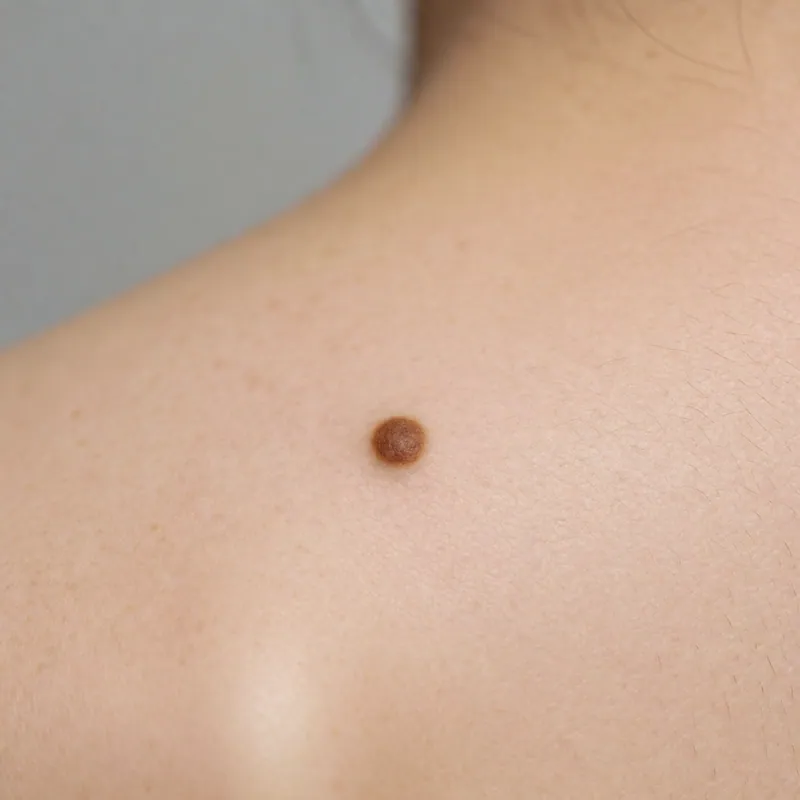
Some things should not wait for the next free routine appointment. Some things should not wait for the next free routine appointment. Telephone the practice and say what is happening, or go to an emergency room, if you have a mole or a mark that has changed shape, colour or size, that has become raised or uneven, or that bleeds, itches or will not heal; a sore anywhere that has not healed in three weeks; a rash that is spreading quickly, especially with fever, blistering, or peeling skin; a painful rash in a band on one side of the body, particularly near an eye; redness that is hot, swollen, tender and spreading, which can be a deep skin infection; a new rash after starting a medicine, especially with mouth or eye involvement; or a child under three months with any widespread rash. If you have been treated here and something is worse rather than better after a procedure, telephone us rather than waiting for the review appointment. We would far rather field a call that turns out to be nothing.
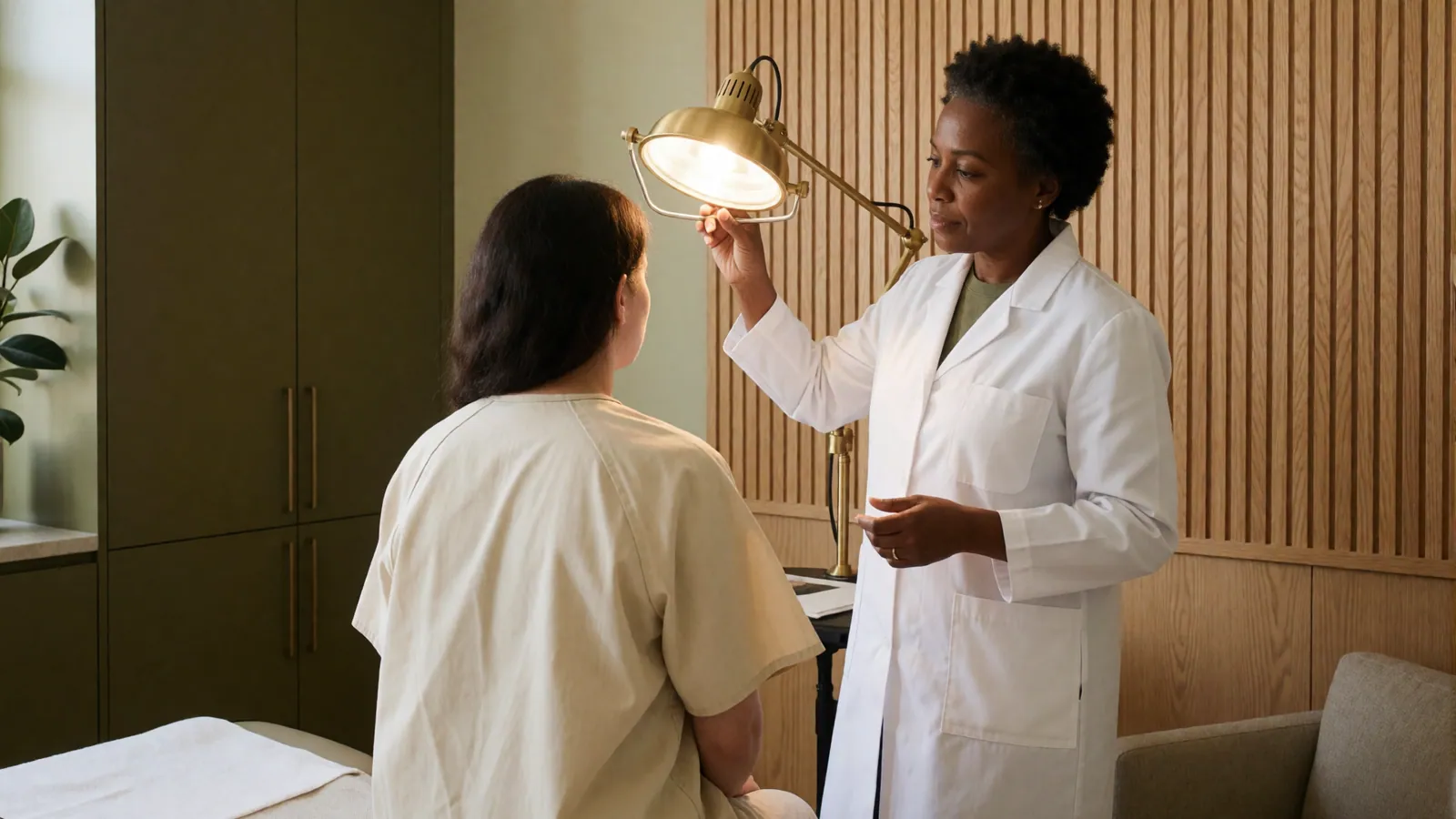
A screening examination is a systematic look at all of your skin by somebody trained to know what is ordinary. You change into a gown, the lights go up, and the examination runs in a fixed order — scalp parted with a comb or a hairdryer, face, ears and behind them, neck, chest, abdomen, back, arms, hands and nails, legs, the soles of the feet and between the toes. The order is fixed on purpose, because the cancers people bring in themselves are on the face and the forearms, and the ones found by somebody else are on the back, the scalp and the feet.
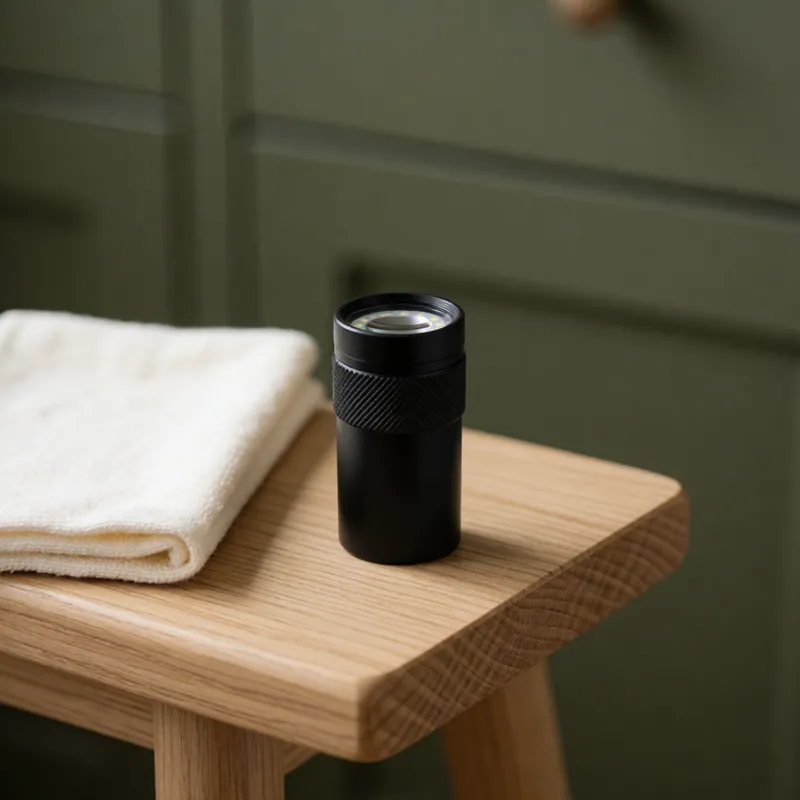
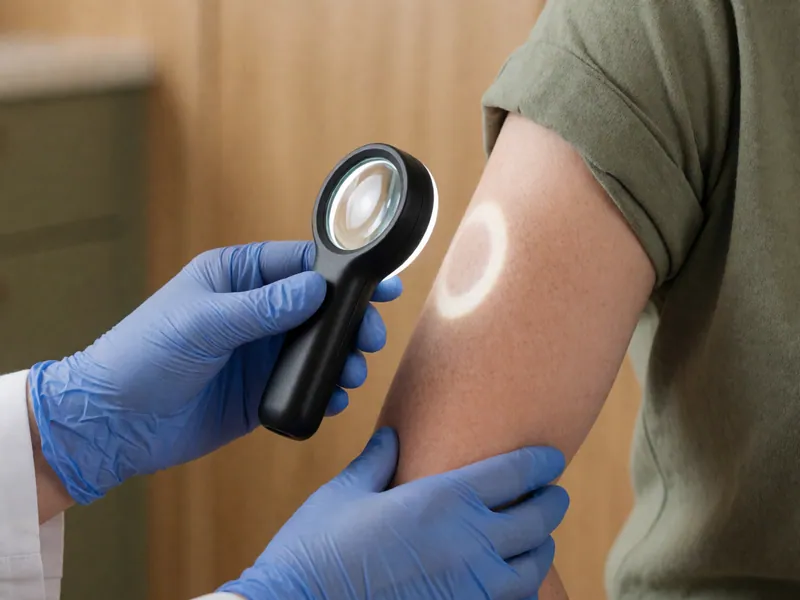
Anything of interest is then examined again through a dermatoscope — a magnifier with cross-polarised light that cancels the surface shine and shows the pigment network and the vessel pattern underneath. This is the instrument that changed the speciality. It lets us confidently leave alone a great many marks that would once have been cut out to be safe, and it lets us take seriously a mark that looks unremarkable to the naked eye. You are welcome to look through it, and most people ask to.
What comes out of the appointment is a map: which marks on you are entirely ordinary, which one or two are worth watching and what specifically to watch them for, and whether anything needs sampling today. If something needs a biopsy we would rather do it in the same visit than book you back, and you will be told before you leave how and when you get the result.
What a screening examination does not do
The honest limits, which almost nobody advertising this appointment prints alongside it.
It does not find every cancer
It finds most of what is present on the day it is performed. It can miss something very early, something in a place that is genuinely difficult to examine, and something that had not yet appeared when you were seen. A practice implying that a yearly check makes you safe is overselling the most useful appointment in this field, and the overselling is harmful, because somebody who believes they are covered stops looking at themselves.
It does not replace your own eyes
Most melanomas are noticed first by the person who has them or by somebody who lives with them, not at a screening appointment. Twelve months is a long time in the life of a changing mole. What you do in between is not a supplement to the examination — for most people it is the larger half.
It cannot be done from a photograph
Not by us and not by an application. Colour is misreported by cameras, particularly on skin that is not pale; a photograph cannot be felt, cannot be pressed to see whether it blanches, and cannot be dermoscoped. See /no-diagnosis-online.html, which sets out the whole reasoning.
It does not settle a diagnosis on its own
Dermoscopy raises and lowers suspicion; it does not confirm. Anything genuinely uncertain is sampled, because a pathologist looking at tissue is the only thing that answers the question properly. We would far rather take a biopsy that turns out to be nothing than watch something for a year.
Who should have one, and how often
There is no single right interval, and anybody quoting you one without asking about you is not thinking about you.
Anybody with something that has changed — now, not at a routine slot
A mark that is new after about thirty, that has changed shape, colour or size, that has become raised or uneven, or that bleeds, itches or will not heal, is a different appointment from a routine check and is booked differently. Telephone and say the word changed.
Yearly, if you have had a skin cancer before
Or more often, depending on which one and where. Having had one is the strongest predictor of having another, and the follow-up interval is set at your appointment rather than by a rule.
Yearly, with many moles or a family history of melanoma
Large numbers of moles, unusual-looking moles, a first-degree relative with melanoma, fair skin that burns rather than tans, red hair, a history of blistering sunburn, or years of outdoor work.
Yearly, if your immune system is suppressed
Transplant recipients and people on long-term immunosuppressive treatment develop skin cancers more often, faster, and with less warning. This is the group where an interval shorter than a year is most often right.
Every few years otherwise, and sooner if you notice something
For somebody with unremarkable skin, no family history and nothing changing, an annual full-body examination is not obviously necessary and we will say so rather than book you one. A baseline examination once, then self-checks, then a visit when something changes, is a defensible plan and it is what a fair number of people here are told.
Darker skin is lower risk, not no risk
Skin cancer is much less common on deeply pigmented skin and it is diagnosed later, which makes the outcome worse. It also appears in different places — the palms, the soles, under the nails and in the mouth. Those sites are examined here on everybody, and they are the ones most often skipped.
The self-check that matters between appointments
Once a month, ten minutes, in a mirror with the lights on. This is the part that finds things.
Look in a fixed order, so you do not skip anything
Face, ears, neck and scalp with a hairdryer and a hand mirror; front and back in a full-length mirror; both sides with your arms raised; forearms, palms and between the fingers; the backs and soles of the feet and between the toes; and the nails, without polish on them.
You are looking for the odd one out
Most people's moles look broadly like each other. The useful signal is the mark that does not follow your pattern — different in colour, outline or texture from all your others. That is a more reliable instinct than trying to remember a checklist in a mirror.
And for change, in any direction
Growing, darkening, becoming raised or uneven, developing more than one colour, an outline that has become ragged, itching, bleeding, crusting, or a sore that has not healed in three weeks. A mark that changes is worth an appointment even if it looks harmless.
Photograph what you are watching, for yourself
With a ruler or a coin beside it, in the same light, from the same distance. This is the one genuinely useful role a photograph has in this field: comparing a mark with itself over time. It is still not a diagnosis, and we will still examine it in the room.
Ask somebody to look at your back
The back is where the melanomas that are found late tend to be, for the obvious reason. A partner, a friend or your hairdresser for the scalp — this is not a small point, and it is free.
What happens if we find something
The path from a suspicious mark to an answer, so that none of it is a surprise on the day.
It is sampled, usually the same day
Under local anaesthetic in the procedure room, taking about fifteen minutes. What kind of sample depends on what we suspect — anything possibly a melanoma is taken whole with a margin rather than partially, because depth is the number that matters most and a partial sample can mislead.
The sample goes to a pathology laboratory
A pathologist examines it under a microscope and writes a report. That takes about a week, sometimes longer if additional staining is needed, and being told it is taking longer is not itself bad news.
You are telephoned with the result either way
Including the reassuring ones. No news does not mean good news here, and patients who assume it does spend a fortnight assuming the wrong thing. If you have not heard within ten days, telephone us.
If it is a skin cancer, the plan depends on which kind and where
Most basal and squamous cell cancers are treated in this building — see /skin-cancer-surgery.html. Melanoma is biopsied here and then managed at a cancer centre, because it needs staging and a team, and we will make that referral rather than hand you a telephone number.
Some things on the eyelid, the lip, the ear or the nose tip go elsewhere
Not because they are worse but because the margins matter and the reconstruction is specialised. Those are referred for staged surgery, and /scope-of-care.html lists what we send out and why.
Skin Cancer Screening in western Queens
A full-body skin examination in good light with a dermatoscope, taking about forty-five minutes. It finds most of what is present on the day it is done — not all of it — and the part that matters as much as the appointment is what you do between appointments.
Every appointment here starts the same way: a proper history, an examination in good light, and a named diagnosis said out loud and written down for you to take home. If there is genuine doubt you will be told that, and told what would settle it — usually a biopsy. You leave with a plan that has a strength, a site, a frequency and a date to stop or come back on it, and, where the condition is one that relapses, what to do on the first day of the next flare. If the honest answer is that this is better left alone, or that it belongs somewhere other than here, that is what you get instead, and it costs exactly the same.
This page is not medical advice, and it is not a diagnosis. Nothing on this website is medical advice for you in particular, and it is not a diagnosis. These pages describe conditions in general terms so that you arrive knowing what the questions are — they cannot tell you which condition you have, because that requires somebody to look at your skin, feel it, ask you a hundred questions and frequently take a sample of it. Two conditions on this website can look identical in a photograph and need opposite treatments. If something on your skin is new, changing, painful or not healing, the useful next step is an appointment rather than more reading.
No before-and-after photographs, and no promised outcome. There are no before-and-after photographs on this website and there never will be. Every set you have seen somewhere else was chosen from a much larger pile, and the second picture is usually taken in different light, at a different angle, at a different point in a flare cycle. In dermatology the dishonesty is sharper than in most fields, because nearly every condition here fluctuates on its own — photograph any relapsing skin disease at its worst and again at its best and you have a persuasive pair of images that demonstrates nothing about the treatment in between. What we publish instead is what a treatment typically achieves, in how long, in what proportion of people, and how often it does not work.
The risks, plainly. Every treatment described here has side effects, and some carry real risks. Topical steroids thin skin if they are used at the wrong strength on the wrong site for too long, which is why they are prescribed with a site, a strength and a stopping point rather than handed over indefinitely. Light-based and laser treatment can burn, blister and cause pigment change that lasts months, and that risk is higher on deeper skin tones and on recently tanned skin. Any procedure that breaks the skin can bleed, become infected and leave a scar; on the chest, the shoulders and the jawline, scars are more likely to thicken. Several of the medicines used in this speciality require blood tests, and some cannot be taken during pregnancy. We tell you your own risk rather than the average one, and where the honest answer is that a condition is better left alone, that is the advice you will get.
Nothing is diagnosed from a photograph. We do not diagnose skin from photographs, and we do not answer "what is this?" by email, by message or through a form. This is not caution for its own sake. A photograph has no history attached to it, cannot be felt, cannot be stretched or pressed to see whether the colour blanches, cannot be examined under a dermatoscope, and misreports colour badly — which matters enormously on skin that is not pale. The examination that actually distinguishes a harmless growth from an early cancer involves magnification, cross-polarised light and, when there is any doubt at all, a biopsy. An application that offers to tell you whether a mole is dangerous from a picture taken on a telephone is selling reassurance, and reassurance is the one product in this field that is dangerous when it is wrong. Bring the mark to a room where somebody can look at it.
Questions
Skin Cancer Screening — the questions we are asked most
How long does a full skin check take?
About forty-five minutes for a first one, less for a follow-up. Most of that is the examination itself; a little of it is the history, because your sun exposure, your family history, your medication and whether your immune system is suppressed all change how carefully particular things are treated.
Do I have to undress completely?
You change into a gown, and it is moved rather than removed — the examination is done in sections so that you are never fully uncovered. Underwear stays on. A chaperone is available and you only have to ask. If there is an area you would rather were not examined, say so and it will not be, and we will note it and ask you once more before you leave, because the sites people most want skipped are not always low risk.
Should I take my nail polish off?
Yes, on fingers and toes. Melanoma can occur under a nail and it is one of the sites most often found late, particularly on darker skin. It presents as a dark band running the length of the nail, and polish hides exactly that.
Is the dermatoscope a scan? Does it hurt?
It is neither a scan nor a laser — it is a magnifying lens with a light, held against the skin. It does not hurt, it emits nothing into you, and it takes about ten seconds per mark. It is simply a much better way of looking than an unaided eye.
Can you just check the one spot I am worried about?
Yes, and that is a legitimate appointment. But a great many of the cancers found here were found somewhere the patient had not mentioned and could not see, so we will offer the full examination and ask once more before you leave. It is your skin and your decision.
I have darker skin. Do I need this?
Your risk is genuinely lower, and it is not zero, and skin cancer on deeply pigmented skin is diagnosed later — which is what makes the outcome worse rather than the biology. It also appears in different places: the palms, the soles, under the nails and inside the mouth. Those are the sites most frequently skipped in a hurried examination and they are examined here on everybody.
Does a normal skin check mean I am fine for a year?
It means most of what was present on that day was found and was not concerning. It does not mean nothing will appear next month, and it does not mean you can stop looking at your own skin. If something changes in the meantime, come back — a normal examination in March is not a reason to sit on a changing mark in July.
Related
Often seen alongside this
Skin Cancer & Lesions
Mole & Lesion Evaluation
One mark, examined properly: history, naked eye, then dermoscopy. Most moles are entirely ordinary and are left alone with reasons given. Anything genuinely uncertain is sampled rather than watched for a year.
Read more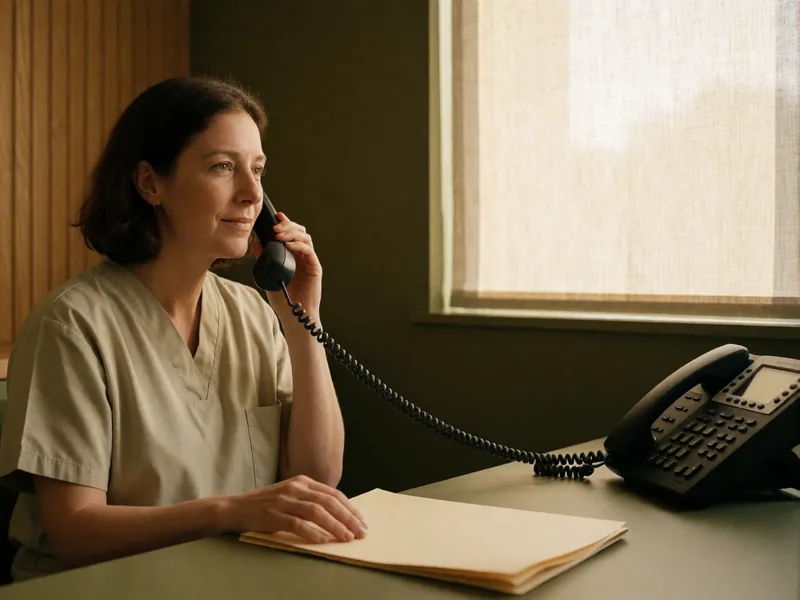
Skin Cancer & Lesions
Melanoma
The least common of the major skin cancers and the one that matters most, because it can spread. Found early it is usually dealt with by removing it. This page is about recognising change and getting seen — not about self-diagnosis.
Read more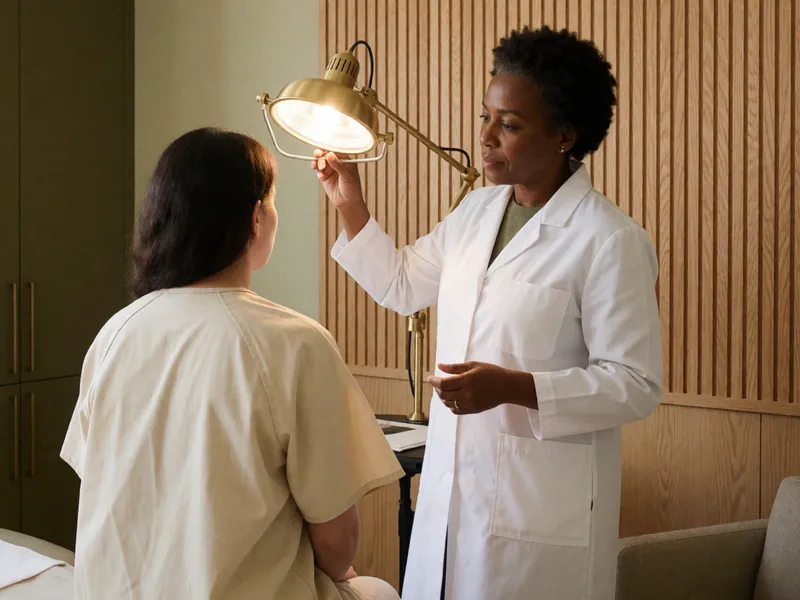
Skin Cancer & Lesions
Basal & Squamous Cell Cancer
The two common skin cancers. Both are usually slow, both are usually cured by removing them, and both are routinely ignored for a year because they look like a sore that will not heal. Most are treated in this building.
Read moreA named diagnosis and a written plan you leave holding
Book an appointment
Pick a physician and a time from the calendar — it shows only the hours each of them genuinely has free. A new patient appointment is thirty minutes, a full skin examination forty-five, and you leave with a named diagnosis written down. If something on your skin has changed, telephone instead and say that word: it is triaged differently.