
Some things should not wait for the next free routine appointment. Some things should not wait for the next free routine appointment. Telephone the practice and say what is happening, or go to an emergency room, if you have a mole or a mark that has changed shape, colour or size, that has become raised or uneven, or that bleeds, itches or will not heal; a sore anywhere that has not healed in three weeks; a rash that is spreading quickly, especially with fever, blistering, or peeling skin; a painful rash in a band on one side of the body, particularly near an eye; redness that is hot, swollen, tender and spreading, which can be a deep skin infection; a new rash after starting a medicine, especially with mouth or eye involvement; or a child under three months with any widespread rash. If you have been treated here and something is worse rather than better after a procedure, telephone us rather than waiting for the review appointment. We would far rather field a call that turns out to be nothing.
Birthmarks fall broadly into two groups: those made of blood vessels, and those made of pigment. Within each there are several distinct types that behave quite differently, and the reason to have one looked at is chiefly to know which it is — because the natural history varies from disappearing entirely within a few years to persisting and darkening for life.
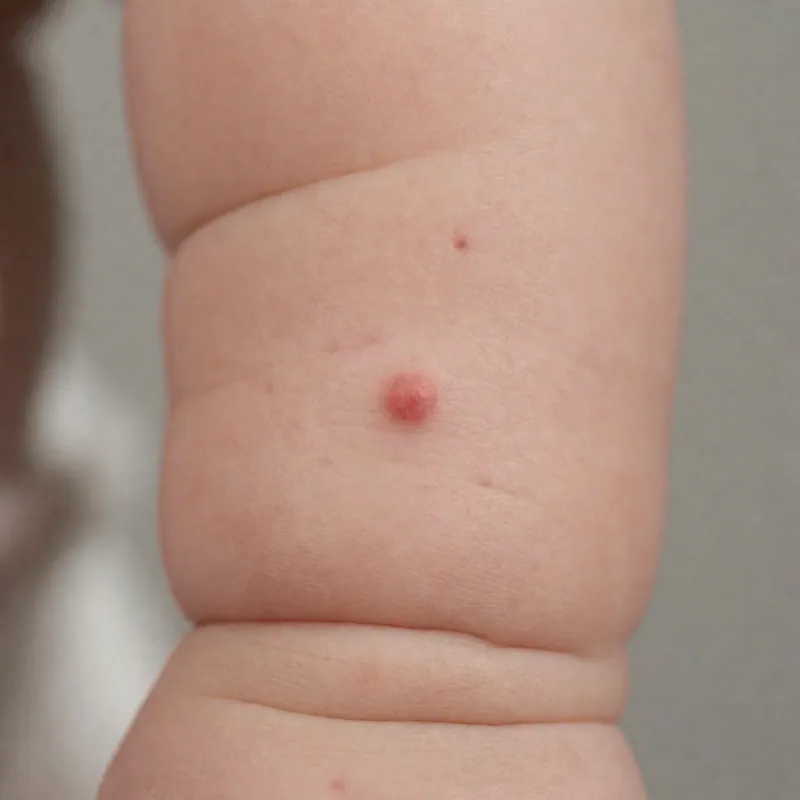
The single time-critical item on this page is the raised red birthmark that appears in the first weeks of life and grows rapidly. These are not usually present at birth; they appear in the first days or weeks, grow quickly for several months and then slowly shrink over years, and the great majority need no treatment at all. But where one is on the eyelid, the nose, the lip, the airway or the nappy area, or where it is very large or ulcerating, treatment is genuinely effective and the window in which it works best is early. That is why a rapidly growing red lump in a small baby is worth an appointment promptly rather than at a routine check.
For everything else, the honest message is reassurance with specifics. Parents arrive having read alarming things, and what helps is not being told not to worry but being told what the mark is, what it will do, what would change the advice, and when — if ever — it is worth doing anything about it.
Vascular birthmarks
Made of blood vessels, and behaving very differently from one another.
The flat pink patches on the face and neck of a newborn
Extremely common, on the eyelids, forehead and the nape of the neck. Those on the face nearly always fade over the first year or two; those on the back of the neck often persist under the hairline where nobody sees them. They need nothing.
The raised red lump that appears and grows in the first weeks
Typically not present at birth, appearing in the first days or weeks, growing rapidly for several months, then slowly involuting over years. Most need no treatment. Assessment is warranted promptly when one is near the eye, nose, lip or nappy area, when it is very large, when there are many of them, or when it ulcerates — effective treatment exists and it works best early.
The flat red or purple patch present at birth that does not fade
This type persists and typically darkens and thickens over decades rather than fading. Laser treatment is effective and works best when started early, and is referred to a centre with the appropriate device. A particular distribution on the face warrants investigation for associated conditions, which is one of the specific reasons to have a facial one assessed rather than watched.
Small red spots appearing in older children and adults
Harmless collections of vessels, increasingly common with age, sometimes bleeding impressively if caught. Removable if troublesome, which is cosmetic.
Pigmented birthmarks
Made of pigment cells, and mostly requiring nothing beyond an explanation.
Congenital moles
Present at birth, ranging from small to, rarely, very large. Small ones are usually monitored rather than removed and the risk associated with them is low. Large ones warrant specialist assessment, because both the risk profile and the management differ. Photographing them for comparison over time is sensible; removing them routinely is not.
Flat light-brown patches
Common and harmless individually. A larger number of them, particularly in a child with other features, is a recognised reason to look further — which is a reason to have several counted rather than a reason for alarm.
The bluish-grey patches over the lower back and buttocks
Common in babies with deeper skin tones, entirely harmless, and fading over the early years. Worth having documented in the notes, because they have been mistaken for bruising.
Pale patches present from birth or early infancy
Usually harmless. Several of them, particularly a characteristic leaf shape, is a recognised reason for further assessment. This is the counterpart to the brown patches above, and the same proportionate approach applies.
When to have one looked at
The short list, because most birthmarks genuinely need nothing.
A red lump growing rapidly in a small baby
Particularly near the eye, nose, mouth or nappy area, if very large, if there are several, or if it is breaking down. This is the time-critical one — treatment works and it works best early.
Any birthmark that ulcerates or bleeds persistently
Needs assessment for wound care and to prevent scarring.
A flat red or purple patch on the face present from birth
For discussion of laser treatment while it is still flat, and to check whether the distribution warrants investigation.
A large congenital mole
For specialist assessment and a monitoring plan.
A birthmark that is changing in an unexpected way
Growing after it should have stopped, changing colour, becoming raised, itching or bleeding.
Multiple patches of the same type
Several brown patches or several pale patches, particularly in a child with other differences, is a reason to have them counted and considered together.
Birthmarks in western Queens
Most birthmarks need nothing but a name and an explanation. A few need prompt assessment — particularly the raised red ones that grow rapidly in the early weeks, where the effective treatment window is early.
Every appointment here starts the same way: a proper history, an examination in good light, and a named diagnosis said out loud and written down for you to take home. If there is genuine doubt you will be told that, and told what would settle it — usually a biopsy. You leave with a plan that has a strength, a site, a frequency and a date to stop or come back on it, and, where the condition is one that relapses, what to do on the first day of the next flare. If the honest answer is that this is better left alone, or that it belongs somewhere other than here, that is what you get instead, and it costs exactly the same.

This page is not medical advice, and it is not a diagnosis. Nothing on this website is medical advice for you in particular, and it is not a diagnosis. These pages describe conditions in general terms so that you arrive knowing what the questions are — they cannot tell you which condition you have, because that requires somebody to look at your skin, feel it, ask you a hundred questions and frequently take a sample of it. Two conditions on this website can look identical in a photograph and need opposite treatments. If something on your skin is new, changing, painful or not healing, the useful next step is an appointment rather than more reading.
No before-and-after photographs, and no promised outcome. There are no before-and-after photographs on this website and there never will be. Every set you have seen somewhere else was chosen from a much larger pile, and the second picture is usually taken in different light, at a different angle, at a different point in a flare cycle. In dermatology the dishonesty is sharper than in most fields, because nearly every condition here fluctuates on its own — photograph any relapsing skin disease at its worst and again at its best and you have a persuasive pair of images that demonstrates nothing about the treatment in between. What we publish instead is what a treatment typically achieves, in how long, in what proportion of people, and how often it does not work.
The risks, plainly. Every treatment described here has side effects, and some carry real risks. Topical steroids thin skin if they are used at the wrong strength on the wrong site for too long, which is why they are prescribed with a site, a strength and a stopping point rather than handed over indefinitely. Light-based and laser treatment can burn, blister and cause pigment change that lasts months, and that risk is higher on deeper skin tones and on recently tanned skin. Any procedure that breaks the skin can bleed, become infected and leave a scar; on the chest, the shoulders and the jawline, scars are more likely to thicken. Several of the medicines used in this speciality require blood tests, and some cannot be taken during pregnancy. We tell you your own risk rather than the average one, and where the honest answer is that a condition is better left alone, that is the advice you will get.
Nothing is diagnosed from a photograph. We do not diagnose skin from photographs, and we do not answer "what is this?" by email, by message or through a form. This is not caution for its own sake. A photograph has no history attached to it, cannot be felt, cannot be stretched or pressed to see whether the colour blanches, cannot be examined under a dermatoscope, and misreports colour badly — which matters enormously on skin that is not pale. The examination that actually distinguishes a harmless growth from an early cancer involves magnification, cross-polarised light and, when there is any doubt at all, a biopsy. An application that offers to tell you whether a mole is dangerous from a picture taken on a telephone is selling reassurance, and reassurance is the one product in this field that is dangerous when it is wrong. Bring the mark to a room where somebody can look at it.
Questions
Birthmarks — the questions we are asked most
Will my baby's birthmark go away?
It depends entirely which one it is, and the range runs from disappearing within a year or two to persisting and darkening for life. That is the main value of the appointment: knowing which type it is and therefore what it will do. The flat pink patches on a newborn's face nearly always fade; a flat red or purple patch present at birth generally does not.
There is a red lump on my baby's face that is growing. Should I worry?
You should have it seen promptly — not because it is likely to be dangerous, but because this is the type where effective treatment exists and works best early. Most need no treatment at all. Those near the eye, nose, lip or nappy area, very large ones, multiple ones, or any that is ulcerating are the ones where early assessment genuinely changes things.
Should moles present at birth be removed?
Small congenital moles are usually monitored rather than removed, and the associated risk is low. Large ones warrant specialist assessment because both the risk and the management differ. Photographing them for comparison over time is sensible; routine removal is not.
Can birthmarks be removed with laser?
Some. The flat red and purple ones respond well to laser, best started early, and that is referred to a centre with the right device. Pigmented birthmarks respond less predictably and are generally not treated with laser. We will tell you honestly which category yours falls into.
My baby has bluish-grey patches on their lower back.
Very common in babies with deeper skin tones, entirely harmless, and fading over the early years. Worth having noted in the medical record, because they have on occasion been mistaken for bruising, and a documented note prevents that conversation.
My child has several brown patches. Does that mean something?
Individually they are common and harmless. A larger number, particularly alongside other features, is a recognised reason to look further — which is a reason to have them counted rather than a reason for alarm. That is a straightforward appointment and usually a reassuring one.
Related
Often seen alongside this

Pediatric Dermatology
Children's Skin
Longer appointments, a low chair, and the plan explained to the child as well as to the adult. A great deal of what worries parents most needs nothing at all — and knowing which part is which is the whole job.
Read more
Pediatric Dermatology
Childhood Eczema
The most under-treated condition in children's dermatology, because everybody involved is nervous of the treatment. A child scratching through the night is not managing, and the plan you leave with should include what to do at the start of the next flare.
Read more
Pediatric Dermatology
Warts & Molluscum
Both are viral, both are harmless, and both resolve on their own given enough time. The honest default is to leave them alone — and the honest exceptions are pain, rapid spread, and a child who is genuinely distressed.
Read moreA named diagnosis and a written plan you leave holding
Book an appointment
Pick a physician and a time from the calendar — it shows only the hours each of them genuinely has free. A new patient appointment is thirty minutes, a full skin examination forty-five, and you leave with a named diagnosis written down. If something on your skin has changed, telephone instead and say that word: it is triaged differently.