Some things should not wait for the next free routine appointment. Some things should not wait for the next free routine appointment. Telephone the practice and say what is happening, or go to an emergency room, if you have a mole or a mark that has changed shape, colour or size, that has become raised or uneven, or that bleeds, itches or will not heal; a sore anywhere that has not healed in three weeks; a rash that is spreading quickly, especially with fever, blistering, or peeling skin; a painful rash in a band on one side of the body, particularly near an eye; redness that is hot, swollen, tender and spreading, which can be a deep skin infection; a new rash after starting a medicine, especially with mouth or eye involvement; or a child under three months with any widespread rash. If you have been treated here and something is worse rather than better after a procedure, telephone us rather than waiting for the review appointment. We would far rather field a call that turns out to be nothing.
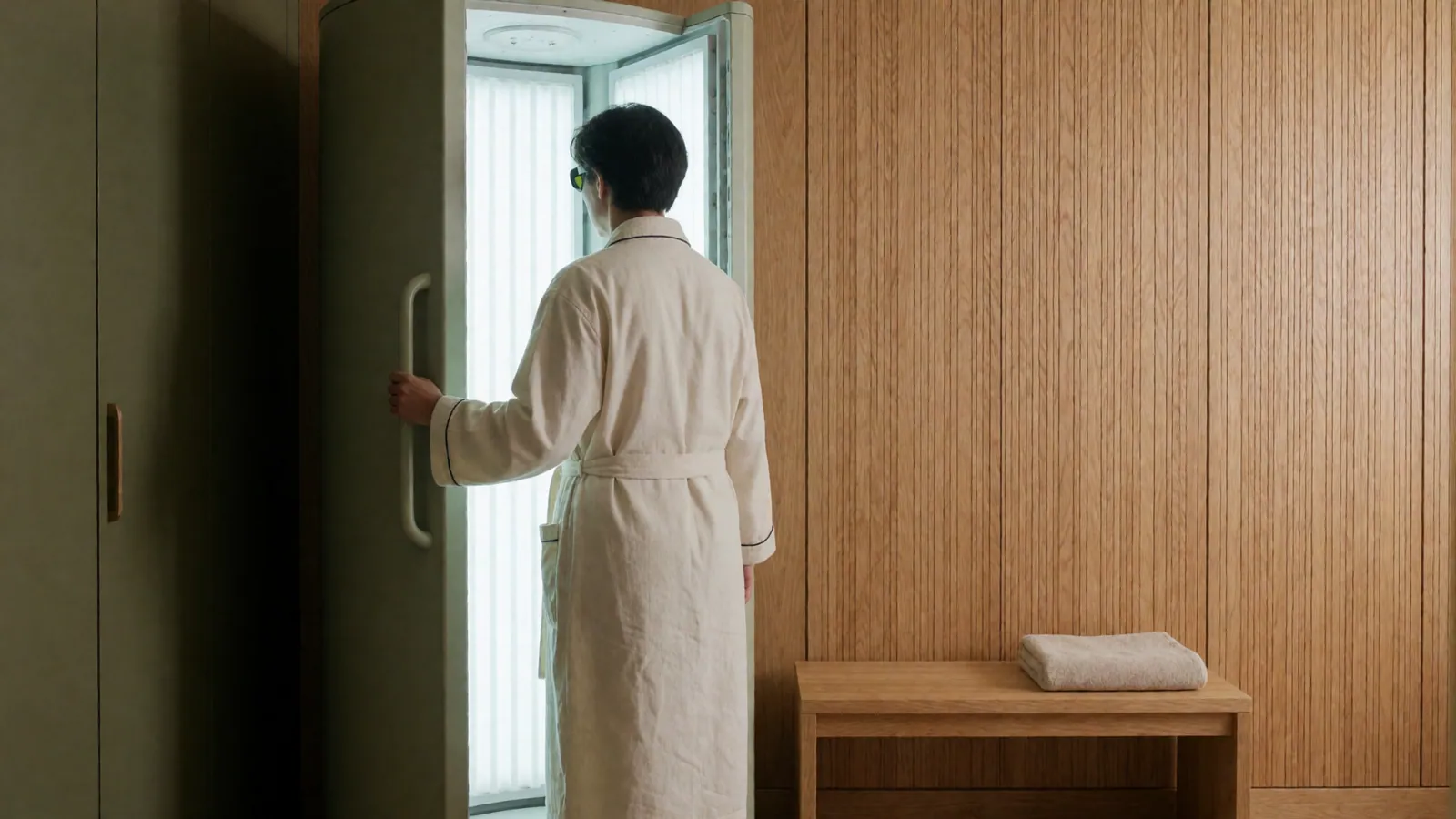
Phototherapy uses a narrow band of ultraviolet light, delivered in a cabinet lined with tubes, to reduce the immune activity driving inflammatory skin disease. It is not a sunbed and it is not the same wavelength: sunbeds emit mostly a different part of the spectrum, at doses chosen for tanning rather than for treatment, without medical supervision or dose recording. Using one instead of this is not a substitute.
Sessions start at a few seconds and build gradually according to how your skin responds. By the middle of a course a session may last a couple of minutes. You stand in the cabinet in underwear with goggles on, the face is covered if it is not affected, and men shield the genital area throughout — that last point is not optional and it is the one most worth stating plainly.
The trade-off is straightforward. Phototherapy avoids systemic medication and all of its monitoring, and for many people it produces excellent control. What it costs is time: two or three visits a week for two to three months is somewhere between twenty and forty appointments, and people with inflexible working hours frequently cannot do it. That is a legitimate reason to choose a different treatment, and it is better established at the start than discovered in week four.

What it treats and how a course runs
The practical shape of it.
Psoriasis
The classic indication and the one it works best for. Widespread plaque psoriasis frequently responds very well over eight to twelve weeks.
Widespread eczema
Effective for extensive disease not controlled by topical treatment, and often the step taken before systemic medication.
Vitiligo
Both slows progression and stimulates repigmentation. Courses here are longer — six months or more — and the face responds best.
Persistent itch and several less common conditions
Including generalised itch without a rash where other causes have been excluded, and a number of less common inflammatory conditions.
The first appointment sets the starting dose
Based on your skin type and how easily you burn, and sometimes on a small test exposure. Every session is recorded, and the dose is increased incrementally provided the previous one caused no burning.
Missing sessions sets the dose back
Skin loses its adaptation, so a gap means reducing the dose and rebuilding. A course that is attended erratically takes far longer and works less well, which is why the time commitment is discussed honestly before starting.
Risks, and why the lifetime total is recorded
Short-term risks are minor and manageable. The long-term one is real and is why we count.
Burning, which is the main short-term risk
Redness like sunburn, occasionally with blistering, if the dose is advanced too quickly or a session is missed and not accounted for. Tell us if you were pink after the last one — the dose is then held rather than increased.
Some medicines make you burn far more easily
A number of common medicines increase photosensitivity substantially, including some antibiotics, diuretics and anti-inflammatories. Tell us about anything new at every visit, including anything started by another doctor. This is the commonest cause of an unexpected burn.
Itch and dryness
Common early in a course, and managed with moisturiser.
Cold sores can be reactivated
If you are prone to them, say so — the face can be covered, and preventive treatment is possible.
Long-term skin cancer risk, which is why lifetime dose is totalled
Repeated ultraviolet exposure carries a cumulative long-term risk of skin cancer and of photoageing. Narrowband treatment is considered lower risk than older forms, and the risk is not zero. Your cumulative number of treatments is recorded across your whole life rather than per course, and it influences whether further courses are appropriate. Anybody who has had a lot of phototherapy should have regular skin examinations afterwards.
Eye protection is not negotiable
Goggles throughout every session. Ultraviolet exposure to the eyes carries a cataract risk and it is entirely preventable.
Phototherapy in western Queens
A cabinet of narrowband ultraviolet tubes, two or three times a week for a course of months, for psoriasis, widespread eczema and vitiligo. It avoids systemic medication entirely. Its real cost is the number of visits.
Every appointment here starts the same way: a proper history, an examination in good light, and a named diagnosis said out loud and written down for you to take home. If there is genuine doubt you will be told that, and told what would settle it — usually a biopsy. You leave with a plan that has a strength, a site, a frequency and a date to stop or come back on it, and, where the condition is one that relapses, what to do on the first day of the next flare. If the honest answer is that this is better left alone, or that it belongs somewhere other than here, that is what you get instead, and it costs exactly the same.

This page is not medical advice, and it is not a diagnosis. Nothing on this website is medical advice for you in particular, and it is not a diagnosis. These pages describe conditions in general terms so that you arrive knowing what the questions are — they cannot tell you which condition you have, because that requires somebody to look at your skin, feel it, ask you a hundred questions and frequently take a sample of it. Two conditions on this website can look identical in a photograph and need opposite treatments. If something on your skin is new, changing, painful or not healing, the useful next step is an appointment rather than more reading.
No before-and-after photographs, and no promised outcome. There are no before-and-after photographs on this website and there never will be. Every set you have seen somewhere else was chosen from a much larger pile, and the second picture is usually taken in different light, at a different angle, at a different point in a flare cycle. In dermatology the dishonesty is sharper than in most fields, because nearly every condition here fluctuates on its own — photograph any relapsing skin disease at its worst and again at its best and you have a persuasive pair of images that demonstrates nothing about the treatment in between. What we publish instead is what a treatment typically achieves, in how long, in what proportion of people, and how often it does not work.
The risks, plainly. Every treatment described here has side effects, and some carry real risks. Topical steroids thin skin if they are used at the wrong strength on the wrong site for too long, which is why they are prescribed with a site, a strength and a stopping point rather than handed over indefinitely. Light-based and laser treatment can burn, blister and cause pigment change that lasts months, and that risk is higher on deeper skin tones and on recently tanned skin. Any procedure that breaks the skin can bleed, become infected and leave a scar; on the chest, the shoulders and the jawline, scars are more likely to thicken. Several of the medicines used in this speciality require blood tests, and some cannot be taken during pregnancy. We tell you your own risk rather than the average one, and where the honest answer is that a condition is better left alone, that is the advice you will get.
Nothing is diagnosed from a photograph. We do not diagnose skin from photographs, and we do not answer "what is this?" by email, by message or through a form. This is not caution for its own sake. A photograph has no history attached to it, cannot be felt, cannot be stretched or pressed to see whether the colour blanches, cannot be examined under a dermatoscope, and misreports colour badly — which matters enormously on skin that is not pale. The examination that actually distinguishes a harmless growth from an early cancer involves magnification, cross-polarised light and, when there is any doubt at all, a biopsy. An application that offers to tell you whether a mole is dangerous from a picture taken on a telephone is selling reassurance, and reassurance is the one product in this field that is dangerous when it is wrong. Bring the mark to a room where somebody can look at it.
Questions
Phototherapy — the questions we are asked most
Is this the same as a sunbed?
No. A sunbed emits mostly a different part of the ultraviolet spectrum, at doses chosen for tanning, with no medical supervision and no record of your cumulative exposure. Phototherapy uses a specific narrow band chosen for its effect on skin inflammation, at doses calculated for your skin and recorded every session. Using a sunbed instead is not a cheaper version of this.
How long does each session take?
The exposure itself starts at a few seconds and builds to a couple of minutes by the middle of a course. You are in the building for perhaps fifteen minutes including changing. The burden is the frequency rather than the length — two or three times a week for two to three months.
Will it cure my psoriasis?
No — it controls it. Many people get excellent clearance during a course and the condition returns over the following months, which is the nature of psoriasis rather than a failure of the treatment. Some people have a course once a year; others move to a different treatment for longer-term control.
Is it safe long term?
Repeated ultraviolet exposure carries a cumulative risk of skin cancer and photoageing, which is precisely why your lifetime number of treatments is recorded rather than counted per course. Narrowband treatment is considered lower risk than older forms of phototherapy. Anybody who has had a great deal of it should have regular skin examinations afterwards, and we arrange that.
What if I miss sessions?
The dose has to be reduced and rebuilt, because skin loses its adaptation. A course attended erratically takes considerably longer and works less well. If you cannot reliably attend two or three times a week for a couple of months, say so at the start — that is a genuine reason to choose a different treatment rather than a reason to try anyway.
Do I need to tell you about new medicines?
Yes, at every visit, including anything started by another doctor and anything bought over a counter. A number of common medicines increase photosensitivity substantially, and starting one mid-course is the commonest cause of an unexpected burn.
Related
Often seen alongside this
Procedures & Testing
Skin Biopsy
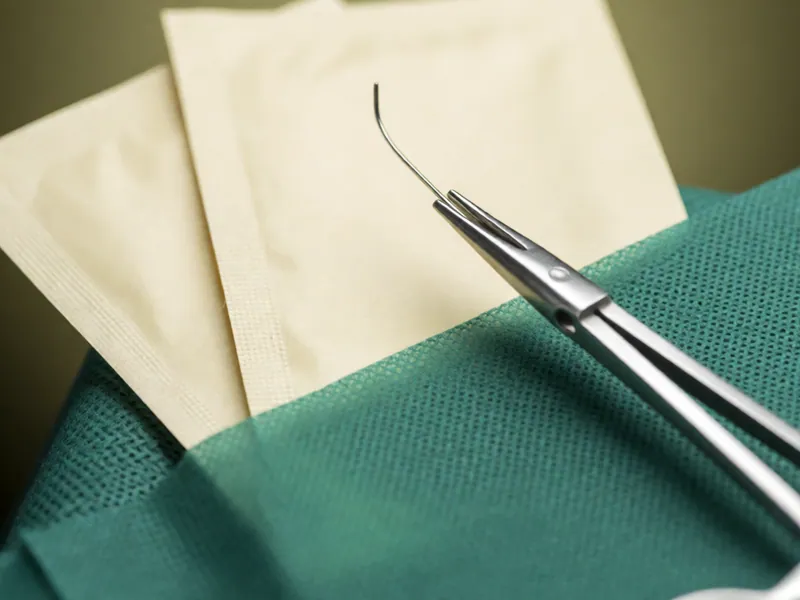
Taking a small sample of skin so a pathologist can say what is actually happening in it. Fifteen minutes, local anaesthetic, a result in about a week — and we telephone you either way, including when the news is good.
Read more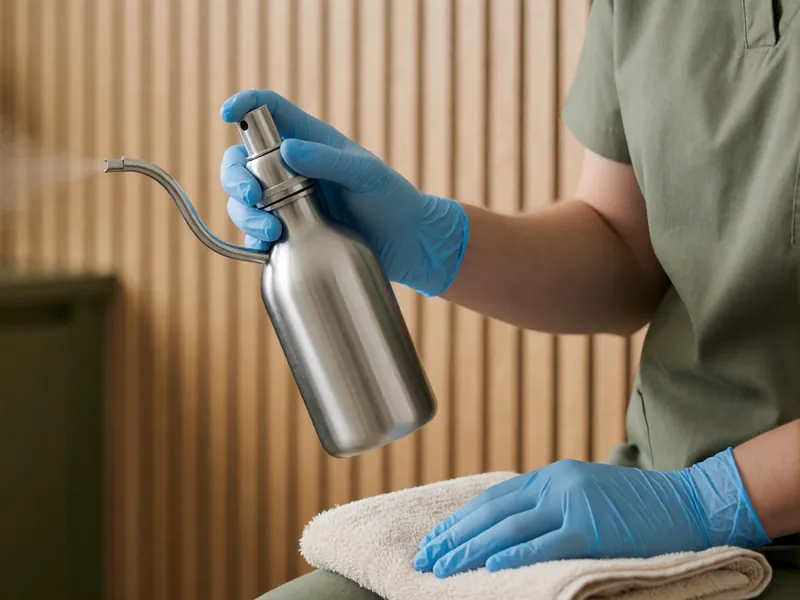
Procedures & Testing
Cryotherapy
Liquid nitrogen, applied in short bursts, to freeze off sun-damage patches, warts and several harmless growths. Quick and effective. It stings for twenty seconds and it usually leaves a pale mark — which on deeper skin tones can be permanent.
Read more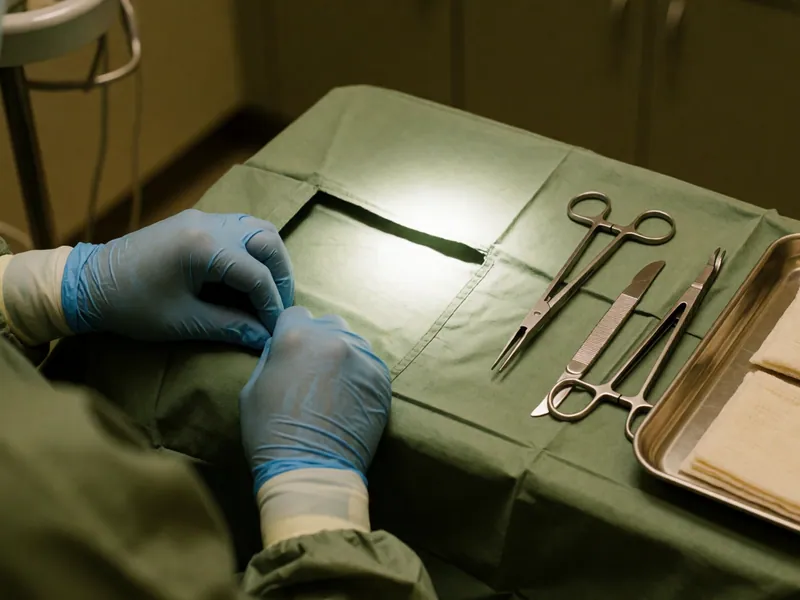
Procedures & Testing
Cyst & Lipoma Removal
Removing a cyst or a fatty lump under local anaesthetic. Both are harmless; both are worth removing when they are growing, catching or repeatedly inflamed. The timing matters — an inflamed cyst is settled first and removed later.
Read moreA named diagnosis and a written plan you leave holding
Book an appointment
Pick a physician and a time from the calendar — it shows only the hours each of them genuinely has free. A new patient appointment is thirty minutes, a full skin examination forty-five, and you leave with a named diagnosis written down. If something on your skin has changed, telephone instead and say that word: it is triaged differently.