
Some things should not wait for the next free routine appointment. Some things should not wait for the next free routine appointment. Telephone the practice and say what is happening, or go to an emergency room, if you have a mole or a mark that has changed shape, colour or size, that has become raised or uneven, or that bleeds, itches or will not heal; a sore anywhere that has not healed in three weeks; a rash that is spreading quickly, especially with fever, blistering, or peeling skin; a painful rash in a band on one side of the body, particularly near an eye; redness that is hot, swollen, tender and spreading, which can be a deep skin infection; a new rash after starting a medicine, especially with mouth or eye involvement; or a child under three months with any widespread rash. If you have been treated here and something is worse rather than better after a procedure, telephone us rather than waiting for the review appointment. We would far rather field a call that turns out to be nothing.
No before-and-after photographs, and no promised outcome. There are no before-and-after photographs on this website and there never will be. Every set you have seen somewhere else was chosen from a much larger pile, and the second picture is usually taken in different light, at a different angle, at a different point in a flare cycle. In dermatology the dishonesty is sharper than in most fields, because nearly every condition here fluctuates on its own — photograph any relapsing skin disease at its worst and again at its best and you have a persuasive pair of images that demonstrates nothing about the treatment in between. What we publish instead is what a treatment typically achieves, in how long, in what proportion of people, and how often it does not work.
Nothing is diagnosed from a photograph. We do not diagnose skin from photographs, and we do not answer "what is this?" by email, by message or through a form. This is not caution for its own sake. A photograph has no history attached to it, cannot be felt, cannot be stretched or pressed to see whether the colour blanches, cannot be examined under a dermatoscope, and misreports colour badly — which matters enormously on skin that is not pale. The examination that actually distinguishes a harmless growth from an early cancer involves magnification, cross-polarised light and, when there is any doubt at all, a biopsy. An application that offers to tell you whether a mole is dangerous from a picture taken on a telephone is selling reassurance, and reassurance is the one product in this field that is dangerous when it is wrong. Bring the mark to a room where somebody can look at it.
01
Skin Cancer & Lesions
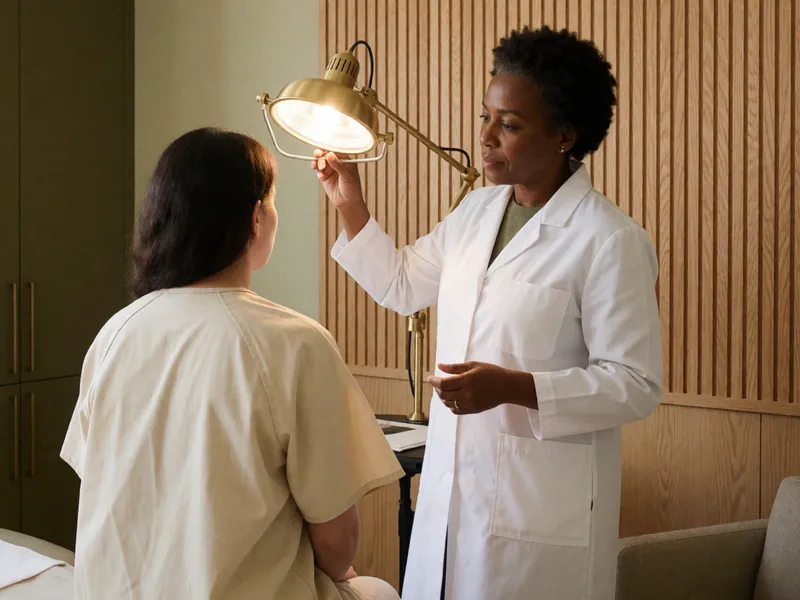
The reason to have a dermatologist at all. Finding a skin cancer early changes what treating it involves from a serious problem into a small one, and the examination that finds it takes fifteen minutes. This is also the group where we are most careful about what we promise: a screening exam finds most of what is there, not all of it, and we say so on every page in it.
Skin Cancer & Lesions
Skin Cancer Screening
A full-body skin examination in good light with a dermatoscope, taking about forty-five minutes. It finds most of what is present on the day it is done — not all of it — and the part that matters as much as the appointment is what you do between appointments.
Read more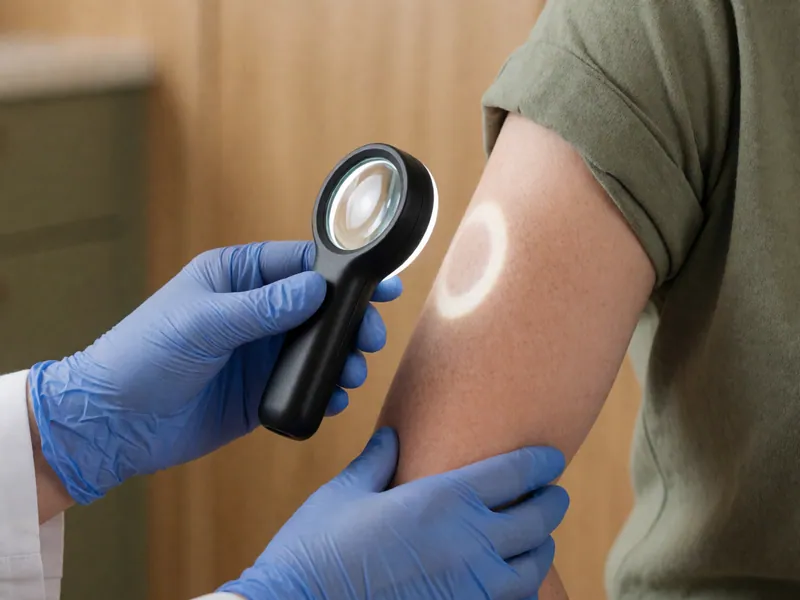
Skin Cancer & Lesions
Mole & Lesion Evaluation
One mark, examined properly: history, naked eye, then dermoscopy. Most moles are entirely ordinary and are left alone with reasons given. Anything genuinely uncertain is sampled rather than watched for a year.
Read more
Skin Cancer & Lesions
Melanoma
The least common of the major skin cancers and the one that matters most, because it can spread. Found early it is usually dealt with by removing it. This page is about recognising change and getting seen — not about self-diagnosis.
Read more
Skin Cancer & Lesions
Basal & Squamous Cell Cancer
The two common skin cancers. Both are usually slow, both are usually cured by removing them, and both are routinely ignored for a year because they look like a sore that will not heal. Most are treated in this building.
Read more
Skin Cancer & Lesions
Sun Damage & Precancers
The rough scaly patches that decades of sun leave on the face, scalp, forearms and hands. Most never become anything; a small proportion do. Treating them is one of the few genuinely preventive things in this building.
Read more
Skin Cancer & Lesions
Skin Cancer Surgery
Removing a skin cancer with a margin, under local anaesthetic, in the procedure room downstairs from where you were diagnosed. Most take under an hour. What we do not do here is the eyelid, the lip margin, the nose tip and the ear cartilage.
Read more02
Inflammatory Skin Disease
Eczema, psoriasis, rosacea, hidradenitis and the rest of the long-term conditions that flare, settle and flare again. These are controlled rather than cured, treatment is a long relationship rather than a prescription, and the honest measure of success is how much of your year you spend comfortable.

Inflammatory Skin Disease
Acne
The commonest reason anybody sees a dermatologist. It is treatable in almost everybody, it takes about three months before you can judge whether a treatment worked, and treating it properly is how you avoid the scars.
Read more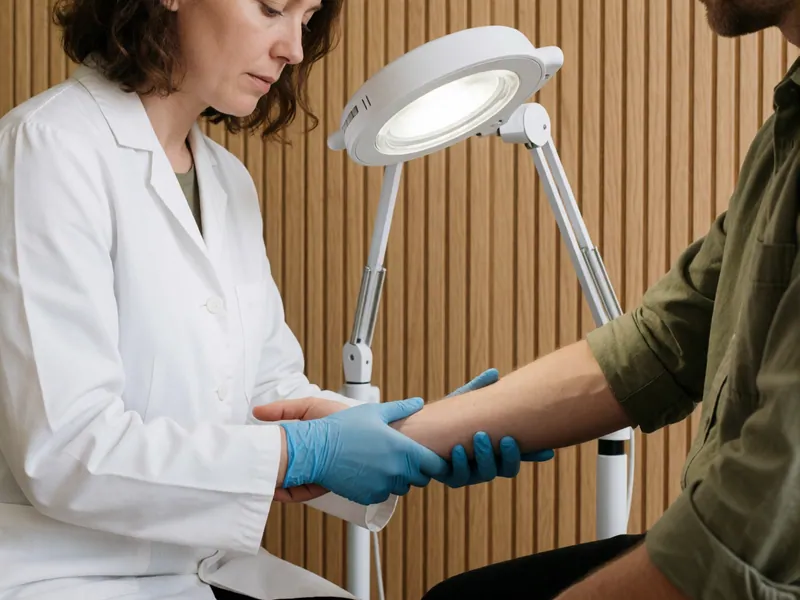
Inflammatory Skin Disease
Eczema & Dermatitis
Itchy, inflamed, dry skin that flares and settles. It is controlled rather than cured, most of it is under-treated rather than over-treated, and the plan you leave with should include what to do on the first day of the next flare.
Read more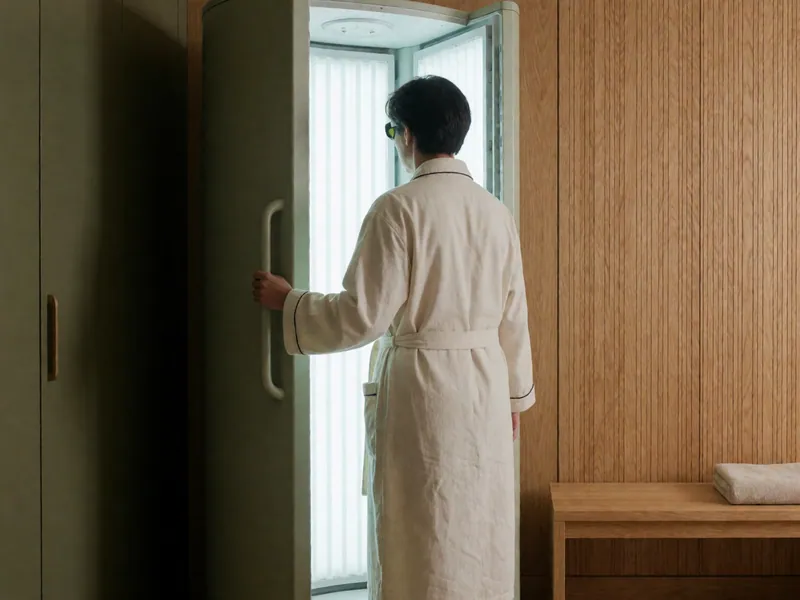
Inflammatory Skin Disease
Psoriasis
An immune-driven condition, not a skin infection and not contagious. Treatment ranges from creams through light therapy to targeted injections, and what has become achievable for severe psoriasis in the last decade is genuinely different from what came before.
Read more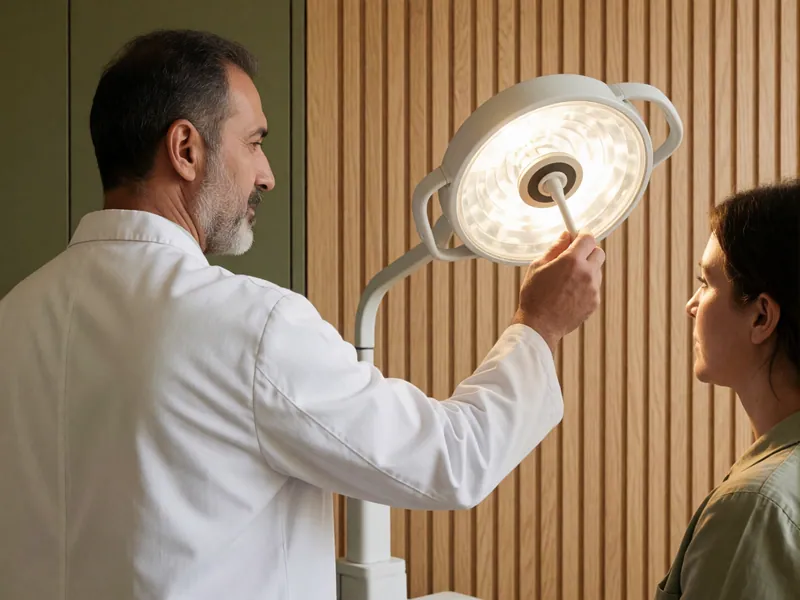
Inflammatory Skin Disease
Rosacea
Persistent central facial redness, flushing, visible vessels and inflammatory bumps. It is not acne, it is not caused by drinking, and the single most effective thing most people do for it is daily sun protection.
Read more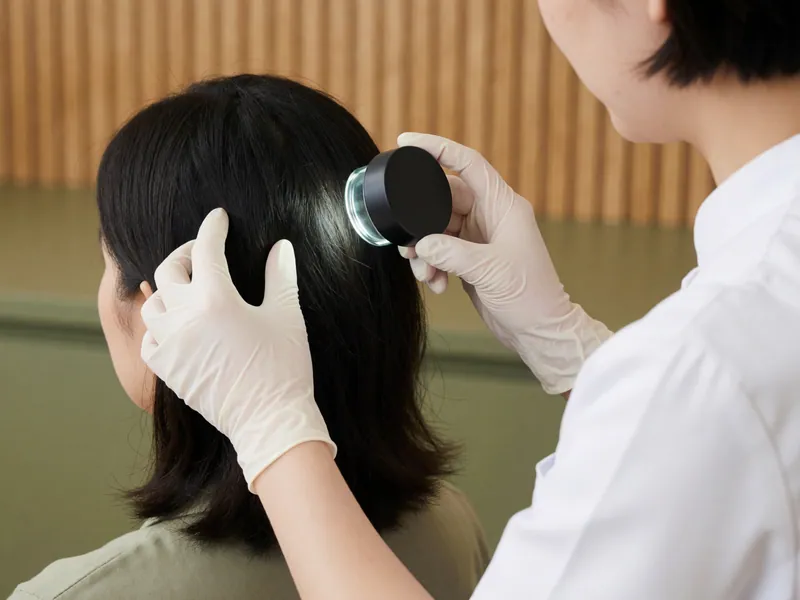
Inflammatory Skin Disease
Seborrheic Dermatitis
Greasy scaling and redness on the scalp, eyebrows, sides of the nose and chest — the grown-up version of cradle cap. Common, harmless, easily controlled, and relapsing the moment treatment stops.
Read more
Inflammatory Skin Disease
Hidradenitis Suppurativa
Painful recurring lumps and abscesses in the armpits, groin, under the breasts and between the buttocks. Frequently misdiagnosed as boils for a decade. It is an inflammatory disease, it is treatable, and the average delay to diagnosis is the scandal of this condition.
Read more
Inflammatory Skin Disease
Hives & Urticaria
Itchy weals that come up and go down within a day, moving around the body. Usually not an allergy, usually not caused by food, and usually controlled well by antihistamines at the right dose — which is often higher than the packet says.
Read more03
Hair, Nails & Sweat
The complaints people apologise for raising and then turn out to have been living with for years. Hair loss has perhaps twenty causes and they need different treatments; a nail that has changed can be a fungus, an injury, psoriasis or, rarely, something serious; and sweating heavily enough to change how you dress is a treatable medical condition rather than a personality trait.
Hair, Nails & Sweat
Hair Loss
Around twenty different causes that look similar to a patient and quite different under magnification. The question that governs everything is whether the scalp is scarred, because scarring is permanent and the window to prevent it is while the condition is still active.
Read more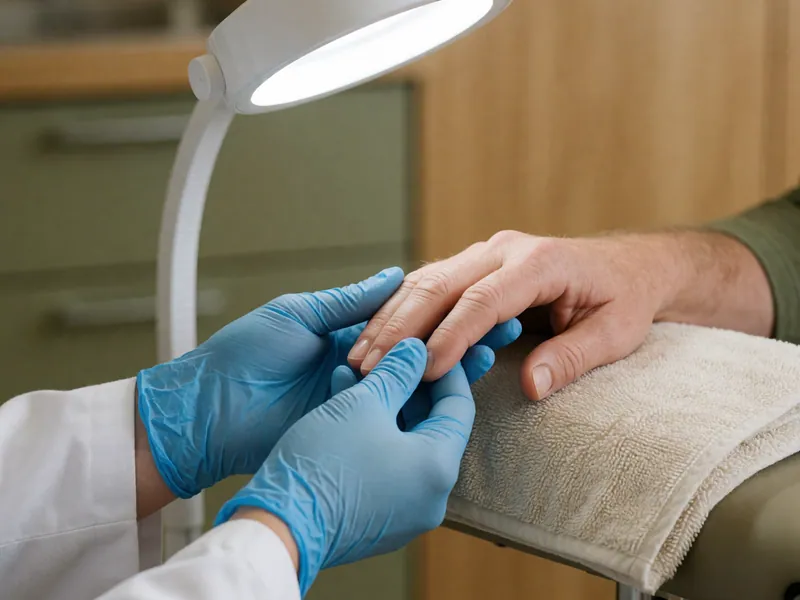
Hair, Nails & Sweat
Nail Disorders
Thickened, discoloured, crumbling or lifting nails. About half of what is assumed to be fungus is not, which is why nails are sampled here before treatment rather than after months of it.
Read more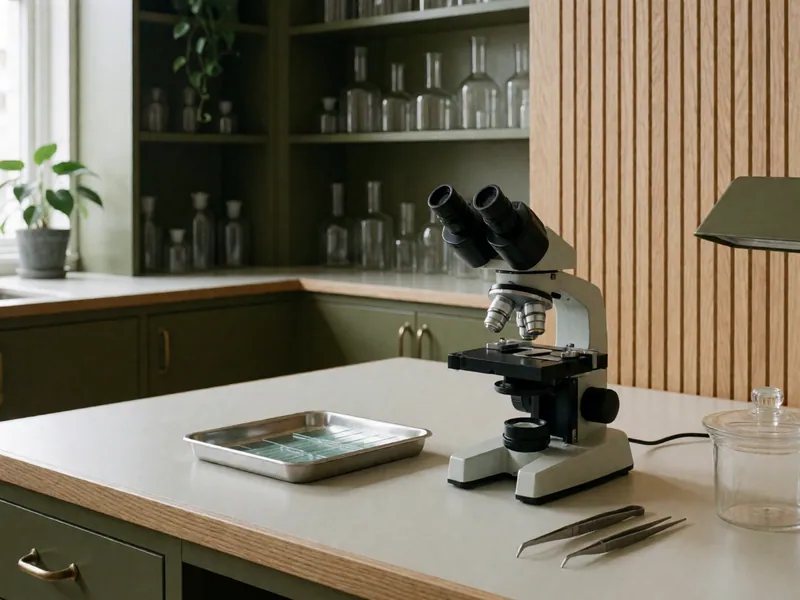
Hair, Nails & Sweat
Fungal Skin Infections
Ringworm, athlete's foot, jock itch and yeast infections in the folds. Straightforward to treat once correctly identified — and routinely made much worse by a steroid cream applied in good faith.
Read more
Hair, Nails & Sweat
Excessive Sweating
Sweating far beyond what temperature requires, enough to change what you wear and what you avoid. It is a recognised medical condition with a ladder of treatments, and it is not a sign of poor hygiene or nervousness.
Read more04
Pigment & Skin Tone
Patches lighter or darker than the skin around them, and the marks left behind after inflammation. This group needs the most careful hands in dermatology, because several of the treatments that lighten a patch will also lighten the skin around it, and because the risk profile of every light-based treatment changes with skin tone. Woodside is one of the most diverse neighbourhoods in the country and this practice is built around that fact rather than around a default.
Pigment & Skin Tone
Marks After Inflammation
The brown, grey or purple marks left behind by acne, eczema, an injury or an insect bite. They are not scars and they do fade — slowly, over six to eighteen months, and far faster with daily sun protection than with anything else.
Read more
Pigment & Skin Tone
Melasma
Symmetrical brown patches across the cheeks, forehead and upper lip, driven by hormones and light. It is the most stubborn pigmentation in dermatology, it relapses reliably, and daily sun protection is not advice here — it is the treatment.
Read more
Pigment & Skin Tone
Vitiligo
An autoimmune condition in which pigment cells are lost, producing well-defined pale patches. It is not contagious, it is not caused by diet, and treatment has genuinely improved — repigmentation is possible, slow, and better at some sites than others.
Read more
Pigment & Skin Tone
Skin of Color Dermatology
Not a separate speciality — a set of things that are genuinely different and that this field's defaults were not built around. Redness reads differently, pigment change is the presenting complaint more often than the disease, and every light-based treatment carries different risk.
Read more05
Pediatric Dermatology
Children's skin is not adult skin scaled down: it absorbs more of what is put on it, some conditions resolve on their own if left alone, and the things that frighten parents most are frequently the ones that need nothing. Appointments are longer, the room has a low chair in it, and we explain the plan to the child as well as to the adult.

Pediatric Dermatology
Children's Skin
Longer appointments, a low chair, and the plan explained to the child as well as to the adult. A great deal of what worries parents most needs nothing at all — and knowing which part is which is the whole job.
Read more
Pediatric Dermatology
Childhood Eczema
The most under-treated condition in children's dermatology, because everybody involved is nervous of the treatment. A child scratching through the night is not managing, and the plan you leave with should include what to do at the start of the next flare.
Read more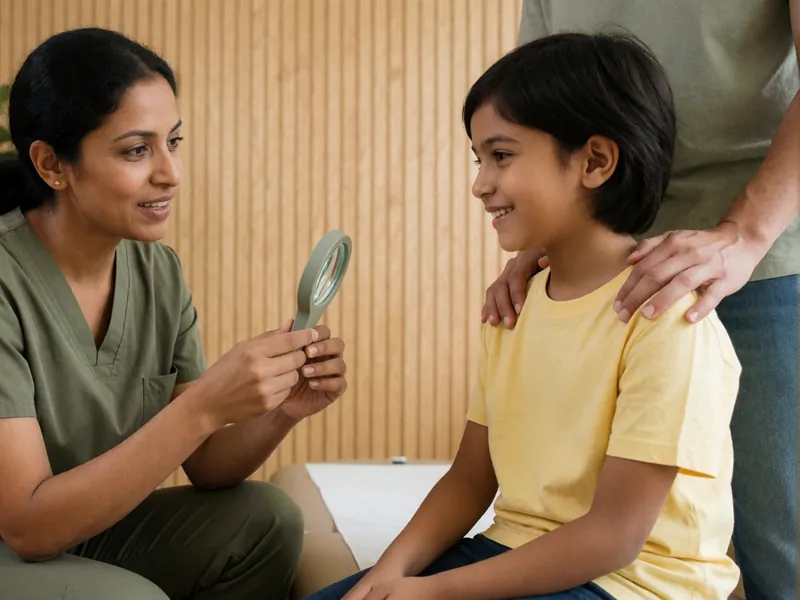
Pediatric Dermatology
Warts & Molluscum
Both are viral, both are harmless, and both resolve on their own given enough time. The honest default is to leave them alone — and the honest exceptions are pain, rapid spread, and a child who is genuinely distressed.
Read more
Pediatric Dermatology
Birthmarks
Most birthmarks need nothing but a name and an explanation. A few need prompt assessment — particularly the raised red ones that grow rapidly in the early weeks, where the effective treatment window is early.
Read more06
Procedures & Testing
The practical half of dermatology: taking a sample so a diagnosis can be certain, removing something that needs removing, testing to find out what a person is genuinely allergic to, and treating widespread disease with light. All of it under local anaesthetic or none at all, all of it in this building, and all of it explained before it starts.
Procedures & Testing
Skin Biopsy
Taking a small sample of skin so a pathologist can say what is actually happening in it. Fifteen minutes, local anaesthetic, a result in about a week — and we telephone you either way, including when the news is good.
Read more
Procedures & Testing
Cryotherapy
Liquid nitrogen, applied in short bursts, to freeze off sun-damage patches, warts and several harmless growths. Quick and effective. It stings for twenty seconds and it usually leaves a pale mark — which on deeper skin tones can be permanent.
Read more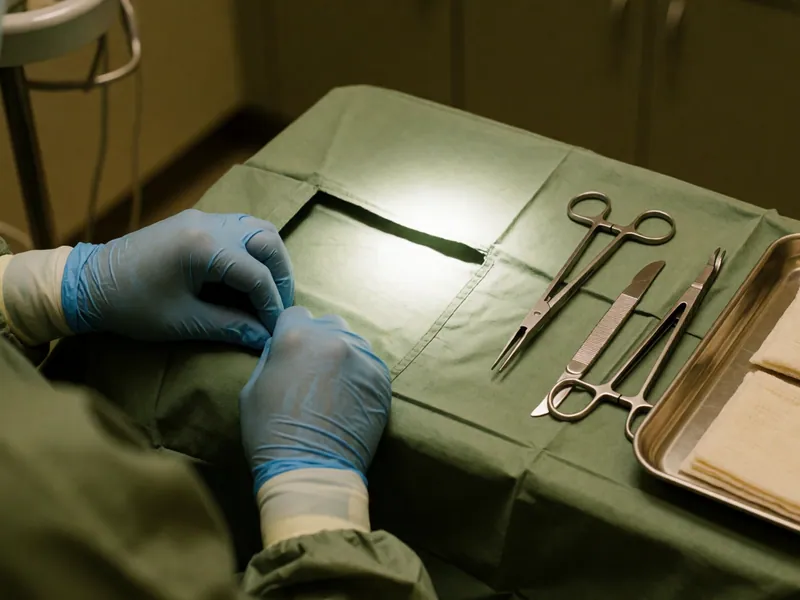
Procedures & Testing
Cyst & Lipoma Removal
Removing a cyst or a fatty lump under local anaesthetic. Both are harmless; both are worth removing when they are growing, catching or repeatedly inflamed. The timing matters — an inflamed cyst is settled first and removed later.
Read more
Procedures & Testing
Patch Testing
Panels of standardised allergens taped to the back for two days and read twice across a week. Unglamorous, slow, and the only reliable way to find out what you are genuinely allergic to. It ends more long-running dermatitis than anything else in this building.
Read more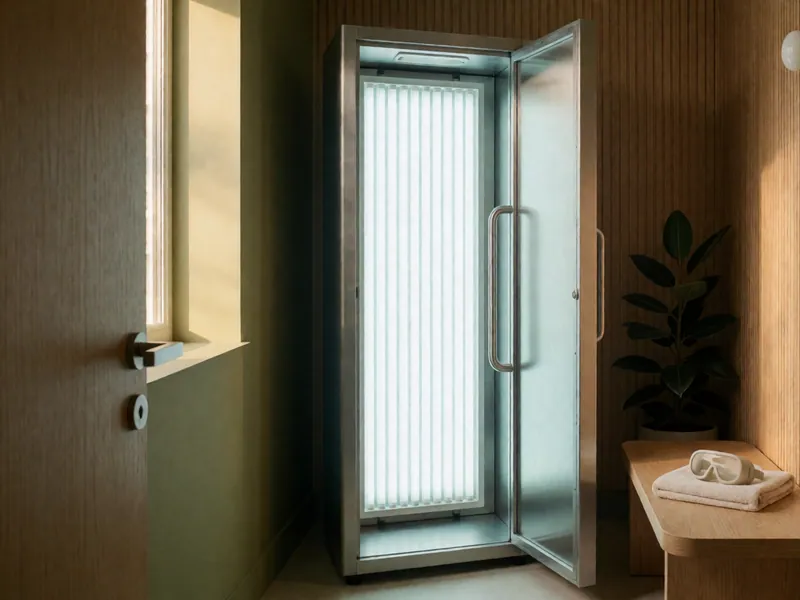
Procedures & Testing
Phototherapy
A cabinet of narrowband ultraviolet tubes, two or three times a week for a course of months, for psoriasis, widespread eczema and vitiligo. It avoids systemic medication entirely. Its real cost is the number of visits.
Read more
Procedures & Testing
Scars & Keloids
Scars are improved, not removed, and that word is chosen deliberately. Keloids can be flattened and softened with a course of injections, and the most effective thing available is preventing them in the first place.
Read moreAlso worth reading
The pages that are not treatments
Start from what you would actually say
Almost nobody arrives with a diagnosis. This page starts from the sentence people say at the desk and maps it to what is usually behind it. /concerns.html
Why we will not look at a photograph
The firmest rule in the practice, at length: what an examination does that an image cannot, what mole-checking applications actually sell, and the limited things a photograph is genuinely good for. /no-diagnosis-online.html
What results really look like
Why there are no before-and-after photographs anywhere on this site — the argument is stronger in dermatology than anywhere else, because nearly every condition here fluctuates on its own. /results-and-expectations.html
Safety and risks
What can go wrong with each family of treatment, how likely it is, and how we screen for it — including the risk of doing nothing, which belongs on the same page. /safety-and-risks.html
Scope of care
What leaves this building and where it goes, plus the six things we refuse to do at all. Printed out rather than left to be inferred. /scope-of-care.html
How an appointment actually runs
Six stages, and the second — the history — is where most of the diagnosis is made. /process.html
Sun protection
The only genuinely preventive page here, and the one we would keep if we could keep one. No product is named. /sun-protection.html
A named diagnosis and a written plan you leave holding
Book an appointment
Pick a physician and a time from the calendar — it shows only the hours each of them genuinely has free. A new patient appointment is thirty minutes, a full skin examination forty-five, and you leave with a named diagnosis written down. If something on your skin has changed, telephone instead and say that word: it is triaged differently.