
Some things should not wait for the next free routine appointment. Some things should not wait for the next free routine appointment. Telephone the practice and say what is happening, or go to an emergency room, if you have a mole or a mark that has changed shape, colour or size, that has become raised or uneven, or that bleeds, itches or will not heal; a sore anywhere that has not healed in three weeks; a rash that is spreading quickly, especially with fever, blistering, or peeling skin; a painful rash in a band on one side of the body, particularly near an eye; redness that is hot, swollen, tender and spreading, which can be a deep skin infection; a new rash after starting a medicine, especially with mouth or eye involvement; or a child under three months with any widespread rash. If you have been treated here and something is worse rather than better after a procedure, telephone us rather than waiting for the review appointment. We would far rather field a call that turns out to be nothing.
Childhood eczema is a barrier defect plus inflammation. The skin does not hold water well, which lets irritants and allergens in, which provokes inflammation, which damages the barrier further. Treatment has two halves and both matter: relentless daily moisturising to hold the barrier together, and adequate anti-inflammatory treatment when it flares. Doing only the first leaves a child itching; doing only the second produces a cycle of flare, treat, relapse.
The honest measure of whether it is controlled is sleep. A child who is waking to scratch several nights a week has active disease, however mild it looks in a clinic in the morning. Broken sleep affects behaviour, concentration, school and the whole household, and it is the reason to escalate treatment rather than to persevere. Parents frequently apologise for bringing this up, having been told it is "just eczema" — it is a serious condition and it is treated here as one.
The barrier to treating it well is nearly always fear of topical steroids, which is understandable and has usually been reinforced by well-meaning advice. The honest position is that under-treatment causes more harm than over-treatment in children: chronically inflamed skin also thins and scars, the itching continues, and the child scratches the skin open, which invites infection. Correctly prescribed — right strength, right site, defined period, written down, reviewed — the risk is small and the benefit is large.
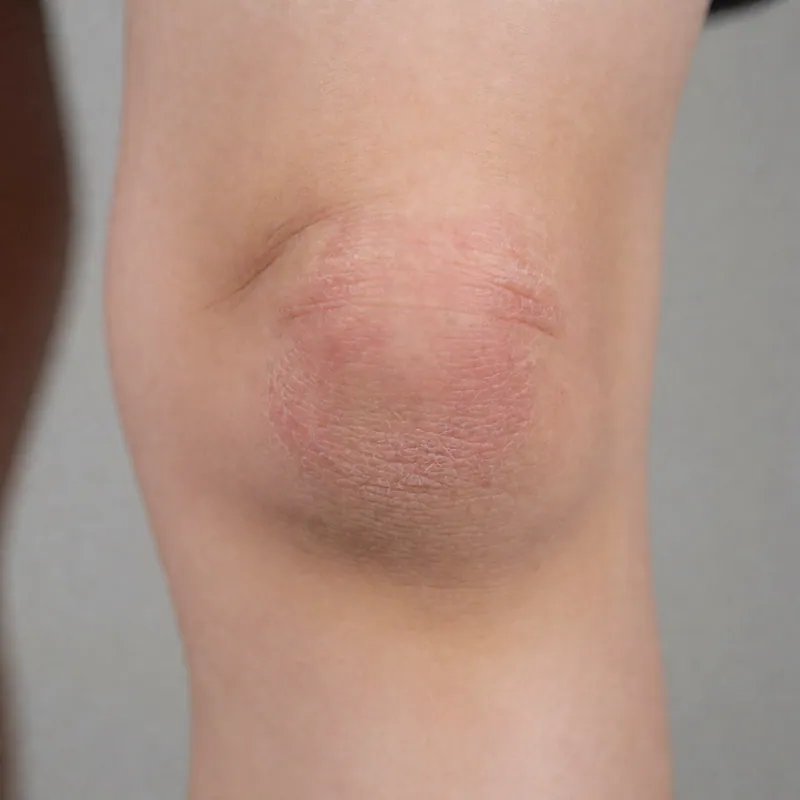
The daily half
Boring, cheap, and where most of the improvement actually comes from.
Far more moisturiser than you are using
A child with widespread eczema needs roughly 250 grams a week, and a teenager more. If a tub lasts a month, that is a tenth of what would help. It goes on at least twice a day and after every bath, in the direction the hair grows, smoothed on rather than rubbed in.
Bath, then moisturise within three minutes
Short, lukewarm baths — not hot — with a soap substitute rather than bubble bath or foaming wash. Pat dry rather than rubbing, and apply moisturiser while the skin is still damp.
Thicker in winter, lighter in summer
Ointments hold water best and are ideal overnight; creams are more practical for school. If a product stings, tell us — it usually means the barrier is broken enough to feel the preservatives, and occasionally it means an allergy.
Cotton, short nails, cool bedroom
Wool and synthetics next to the skin provoke it, overheated bedrooms drive the night-time itch, and nails cut right down limit the damage done during sleep that nobody is awake to prevent. Cotton mittens for babies who scratch their faces.
Keep using it when the skin looks fine
Moisturiser is not a treatment for a flare — it is what prevents the next one. Stopping when the skin clears is the commonest reason a child cycles.
The flare half
How topical steroids are actually meant to be used in a child.
The right strength for the site
Mild preparations for the face and the skin folds; something stronger for thick patches on limbs. Using the mildest available everywhere is not the safe option — it is the ineffective one, and the flare then lasts for months instead of a fortnight.
Enough of it, until the skin is smooth
Usually twice daily until the skin feels smooth to the touch rather than merely looking less red, then stopped or stepped down. Stopping at the point the redness fades is what produces the relapse cycle.
Measured by fingertip units, so nobody guesses
The amount squeezed from the tip of an adult finger to the first crease treats about two adult palm areas. We will show you this at the appointment, because "apply sparingly" is the instruction that causes most under-treatment.
Weekend maintenance for sites that keep flaring
Applying treatment twice a week to the places that repeatedly flare, on top of daily moisturiser, substantially reduces how often flares happen. This is the step most often missing from a plan that is nearly working.
Steroid-free options for the face and eyelids
Non-steroid prescription creams control inflammation at delicate sites without a thinning risk, which makes them well suited to faces and to children needing longer-term control. They sting for the first few applications in some children and that settles.
Wet wrapping for a severe flare
Damp bandages or damp cotton clothing over moisturiser and treatment, usually overnight. It is dramatically effective for a bad flare, it cools and protects the skin from scratching, and it is shown to you here rather than described — because done wrongly it is uncomfortable and done rightly it can turn a week around.
Infection, allergy and the questions parents actually ask
The three things that most often complicate the picture.
Recognising infected eczema
Weeping, yellow or honey-coloured crusting, sudden worsening, or a child who is unwell with it. That needs treatment for the infection alongside the eczema.
The blistering viral infection that is urgent
Clusters of small painful punched-out blisters spreading over eczema, often with fever and a miserable child. This is a recognised complication and it needs same-day medical care rather than a routine appointment. Worth knowing about, and worth not panicking about — it is uncommon.
Food allergy testing is usually not the answer
In a child with ordinary eczema and no history of immediate reactions, broad testing produces positives that are not causing the eczema and leads to food restriction that carries its own risk in a growing child. Where there is a clear history of immediate reaction — swelling, hives or vomiting within minutes — that is a different question and worth investigating properly.
Eczema does not mean your house is dirty
Nor that you did anything wrong. It is largely genetic, it runs with asthma and hay fever in families, and the amount of guilt parents arrive carrying about this is out of all proportion to anything they could have controlled.
Most children improve substantially
A large share improve markedly as they grow, and many are clear of it by adolescence. That is a real and reasonable thing to hold onto — it is not a reason to leave a child uncomfortable for the years in between.
Childhood Eczema in western Queens
The most under-treated condition in children's dermatology, because everybody involved is nervous of the treatment. A child scratching through the night is not managing, and the plan you leave with should include what to do at the start of the next flare.
Every appointment here starts the same way: a proper history, an examination in good light, and a named diagnosis said out loud and written down for you to take home. If there is genuine doubt you will be told that, and told what would settle it — usually a biopsy. You leave with a plan that has a strength, a site, a frequency and a date to stop or come back on it, and, where the condition is one that relapses, what to do on the first day of the next flare. If the honest answer is that this is better left alone, or that it belongs somewhere other than here, that is what you get instead, and it costs exactly the same.
This page is not medical advice, and it is not a diagnosis. Nothing on this website is medical advice for you in particular, and it is not a diagnosis. These pages describe conditions in general terms so that you arrive knowing what the questions are — they cannot tell you which condition you have, because that requires somebody to look at your skin, feel it, ask you a hundred questions and frequently take a sample of it. Two conditions on this website can look identical in a photograph and need opposite treatments. If something on your skin is new, changing, painful or not healing, the useful next step is an appointment rather than more reading.
No before-and-after photographs, and no promised outcome. There are no before-and-after photographs on this website and there never will be. Every set you have seen somewhere else was chosen from a much larger pile, and the second picture is usually taken in different light, at a different angle, at a different point in a flare cycle. In dermatology the dishonesty is sharper than in most fields, because nearly every condition here fluctuates on its own — photograph any relapsing skin disease at its worst and again at its best and you have a persuasive pair of images that demonstrates nothing about the treatment in between. What we publish instead is what a treatment typically achieves, in how long, in what proportion of people, and how often it does not work.
The risks, plainly. Every treatment described here has side effects, and some carry real risks. Topical steroids thin skin if they are used at the wrong strength on the wrong site for too long, which is why they are prescribed with a site, a strength and a stopping point rather than handed over indefinitely. Light-based and laser treatment can burn, blister and cause pigment change that lasts months, and that risk is higher on deeper skin tones and on recently tanned skin. Any procedure that breaks the skin can bleed, become infected and leave a scar; on the chest, the shoulders and the jawline, scars are more likely to thicken. Several of the medicines used in this speciality require blood tests, and some cannot be taken during pregnancy. We tell you your own risk rather than the average one, and where the honest answer is that a condition is better left alone, that is the advice you will get.
Nothing is diagnosed from a photograph. We do not diagnose skin from photographs, and we do not answer "what is this?" by email, by message or through a form. This is not caution for its own sake. A photograph has no history attached to it, cannot be felt, cannot be stretched or pressed to see whether the colour blanches, cannot be examined under a dermatoscope, and misreports colour badly — which matters enormously on skin that is not pale. The examination that actually distinguishes a harmless growth from an early cancer involves magnification, cross-polarised light and, when there is any doubt at all, a biopsy. An application that offers to tell you whether a mole is dangerous from a picture taken on a telephone is selling reassurance, and reassurance is the one product in this field that is dangerous when it is wrong. Bring the mark to a room where somebody can look at it.
Questions
Childhood Eczema — the questions we are asked most
I am frightened of steroid creams. Is that reasonable?
The fear is understandable and it has usually been reinforced by advice given in good faith. The honest position is that under-treatment causes more harm than over-treatment in children — chronically inflamed skin thins too, the itching continues, and scratched skin becomes infected. Used at the right strength for the right site for a defined period, with a written stopping point, the risk is small. Bring your worries to the appointment rather than acting on them alone.
How much moisturiser should my child be using?
Roughly 250 grams a week for a child with widespread eczema, and more for a teenager. That number surprises every parent. If a tub lasts a month you are using about a tenth of what would help, and quantity matters more than which product it is.
My child scratches all night. What can we do tonight?
Cool the bedroom, cotton nightwear, nails cut right down, a generous layer of ointment before bed, and — if we have shown you how — damp wrapping over treated skin. Antihistamines do less for eczema itch than people expect, though a sedating one occasionally buys a night. A child waking to scratch several nights a week is a reason to be seen sooner rather than to persevere.
Is it caused by something in their diet?
Usually not, and testing broadly in a child with ordinary eczema tends to produce misleading results and unnecessary food restriction, which carries real risk in a growing child. Where there is a genuine history of an immediate reaction to a specific food, that is a different question and worth investigating.
How do I know if it is infected?
Weeping, yellow or honey-coloured crusting, a sudden worsening, or a child who seems unwell. Separately, clusters of small painful punched-out blisters spreading across eczema, often with fever, is a viral complication that needs same-day care rather than a routine appointment.
Will my child grow out of it?
A large proportion improve substantially with age and many are clear by adolescence. It is genuinely reasonable to hold onto that. It is not a reason to accept broken sleep and daily discomfort in the meantime — treating it well now does not affect whether they grow out of it later.
Related
Often seen alongside this

Pediatric Dermatology
Children's Skin
Longer appointments, a low chair, and the plan explained to the child as well as to the adult. A great deal of what worries parents most needs nothing at all — and knowing which part is which is the whole job.
Read more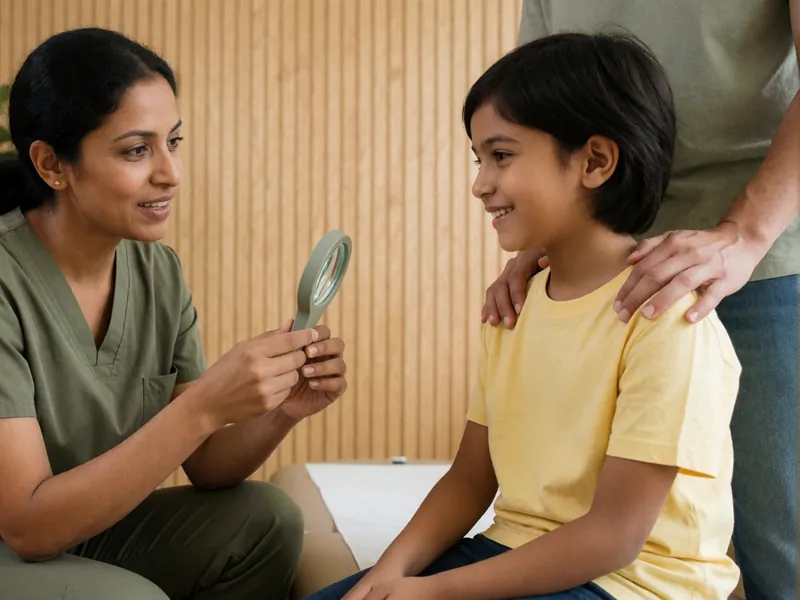
Pediatric Dermatology
Warts & Molluscum
Both are viral, both are harmless, and both resolve on their own given enough time. The honest default is to leave them alone — and the honest exceptions are pain, rapid spread, and a child who is genuinely distressed.
Read more
Pediatric Dermatology
Birthmarks
Most birthmarks need nothing but a name and an explanation. A few need prompt assessment — particularly the raised red ones that grow rapidly in the early weeks, where the effective treatment window is early.
Read moreA named diagnosis and a written plan you leave holding
Book an appointment
Pick a physician and a time from the calendar — it shows only the hours each of them genuinely has free. A new patient appointment is thirty minutes, a full skin examination forty-five, and you leave with a named diagnosis written down. If something on your skin has changed, telephone instead and say that word: it is triaged differently.