
Some things should not wait for the next free routine appointment. Some things should not wait for the next free routine appointment. Telephone the practice and say what is happening, or go to an emergency room, if you have a mole or a mark that has changed shape, colour or size, that has become raised or uneven, or that bleeds, itches or will not heal; a sore anywhere that has not healed in three weeks; a rash that is spreading quickly, especially with fever, blistering, or peeling skin; a painful rash in a band on one side of the body, particularly near an eye; redness that is hot, swollen, tender and spreading, which can be a deep skin infection; a new rash after starting a medicine, especially with mouth or eye involvement; or a child under three months with any widespread rash. If you have been treated here and something is worse rather than better after a procedure, telephone us rather than waiting for the review appointment. We would far rather field a call that turns out to be nothing.
Acne happens where a hair follicle blocks with skin cells and oil, the blockage becomes inflamed, and bacteria that live on everyone's skin multiply inside it. That is four separate processes, which is why effective treatment is usually more than one thing: something that stops the blockage forming, something that reduces the bacteria and the inflammation, and, where hormones are driving it, something that addresses that.
Two things are worth saying at the start because they change how people approach it. Acne is not caused by being unclean, and washing more makes it worse rather than better — a stripped, scrubbed face is an inflamed one. And the timescale is fixed by biology: a spot appearing today began forming under the surface around eight weeks ago, so a treatment that works cannot show its full effect for about twelve weeks. Anything promising a difference in a fortnight is describing a coincidence.
The most important reason to treat acne properly rather than wait to grow out of it is that inflammation leaves marks, and some of those marks are permanent. The brown or purple discolouration left after a spot will fade, though it takes months and takes longer on darker skin. The small dents are scars, they do not fade, and treating them afterwards is harder, longer and more expensive than preventing them. If you are scarring, that alone is a reason to escalate treatment rather than persevere.
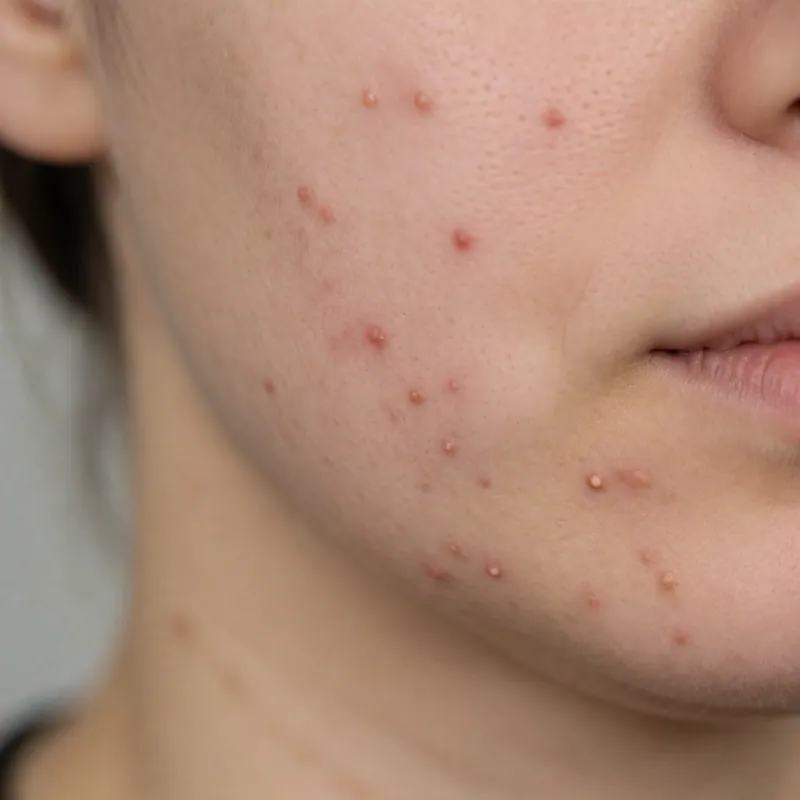
How it is treated, in the order it is usually tried
Nothing here is named as a product. Each is described by what it does, and the choice depends on the type of acne, its severity and on you.
Topical retinoids — the foundation of nearly every plan
A vitamin A derivative applied at night that stops the blockage forming in the first place, which makes it the only topical treatment that prevents new spots rather than treating existing ones. It causes dryness, flaking and irritation for the first month in most people, and that is the reason most people abandon it. Start twice a week, build up, moisturise, and give it twelve weeks.
Topical antimicrobials and anti-inflammatories
Reduce the bacteria within the blocked follicle and calm the inflammation around it. Frequently combined with a retinoid, because they work on different steps. One widely used option bleaches towels and pillowcases, which nobody mentions and everybody discovers.
Oral antibiotics, for a defined period
Used for inflammatory acne, mainly for their anti-inflammatory effect rather than as an infection treatment. They work, and they are prescribed for a limited course of a few months alongside a topical treatment that continues afterwards — indefinite antibiotics for acne is poor practice and produces resistance for no additional benefit.
Hormonal treatment, where the pattern fits
For acne along the jawline and lower face, flaring with the menstrual cycle, or arriving in the twenties and thirties. Certain oral contraceptives and a particular anti-androgen tablet are genuinely effective for this pattern. It takes three to six months and it is often the missing piece for somebody who has already tried everything topical.
The strong oral course, for severe or scarring acne
The strong oral option, taken for several months, which addresses all four processes at once and produces long remission in most people who complete a course. It requires monthly review and blood tests, it causes significant dryness of the lips, skin and eyes throughout, and it cannot be taken during pregnancy — anyone able to become pregnant needs strict contraception and regular testing throughout. It is prescribed here with a full discussion of all of that, including the mood monitoring, and it is not started casually.
Procedures, as an adjunct rather than a treatment
Extraction of blocked pores, and a steroid injection into a large painful nodule which settles it within a day or two. Useful, occasionally the reason somebody gets through an important week, and not a substitute for treating the disease.
The marks afterwards, which are two different problems
Getting these two confused wastes more money than anything else in this field.
Flat brown, purple or red marks — these fade
Post-inflammatory pigmentation, which is the skin's response to inflammation rather than a scar. It fades on its own over six to eighteen months, faster with daily sun protection, faster still with treatment. It is more pronounced and lasts longer on deeper skin tones, and it is frequently the thing that bothers the patient more than the acne. See /post-inflammatory-pigmentation.html.
Dents, pits and raised lumps — these are scars
Actual loss or excess of tissue, permanent without treatment, and not improved by any cream. The existence of scarring is the single strongest argument for escalating acne treatment quickly rather than waiting.
Do not treat the marks while the acne is active
Every session of resurfacing, peeling or laser undertaken while new inflammatory lesions are still appearing produces new marks to replace the ones being treated. Control first, then address what is left. Somebody who does it in the other order spends a great deal of money standing still.
Picking is the mechanism by which marks become scars
This is said so often that it has stopped being heard, so here is the specific version: squeezing an inflamed lesion ruptures it deeper into the skin, which enlarges the area of inflammation and makes both the mark and the scar more likely and worse. If picking is compulsive rather than casual — and for a fair number of people it is — say so, because that is a treatable thing in itself and not a character failing.
What we tell people to stop doing
Most people arrive doing several of these, in good faith, and stopping them helps within weeks.
Washing more than twice a day
And scrubbing, and using anything that leaves the face feeling tight. A stripped barrier is an inflamed barrier. Lukewarm water, a gentle cleanser, twice a day.
Using six actives at once
The commonest shelf we are shown contains four things doing the same job, two that cancel each other out, and one that is causing all the irritation being blamed on the others. Bring the actual bottles to the appointment.
Changing treatment every three weeks
Nothing in acne can be judged before twelve weeks, and switching at week four means never finding out whether anything works. If a plan is going to be given a fair trial it has to be given a fair trial.
Avoiding moisturiser because the skin is oily
Oily skin can still have a damaged barrier, and the dryness caused by acne treatment is the main reason people stop it. A light moisturiser makes the treatment tolerable, which makes it effective.
Assuming it is a food
Diet's role is modest and much smaller than the internet suggests. There is reasonable evidence for a connection with high-glycaemic diets and, in some people, skimmed milk. Eliminating whole food groups on the basis of a website is a large intervention for a small effect, and it delays treatment that works.
Acne in western Queens
The commonest reason anybody sees a dermatologist. It is treatable in almost everybody, it takes about three months before you can judge whether a treatment worked, and treating it properly is how you avoid the scars.
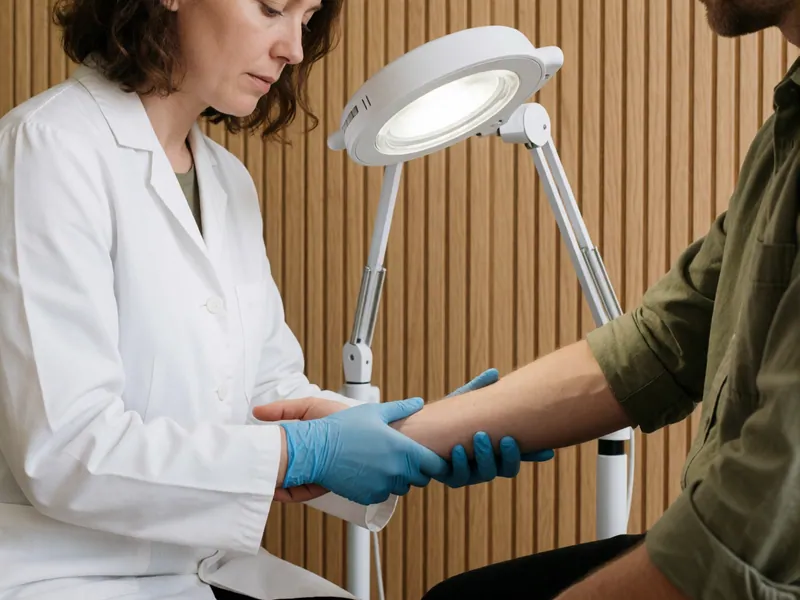
Every appointment here starts the same way: a proper history, an examination in good light, and a named diagnosis said out loud and written down for you to take home. If there is genuine doubt you will be told that, and told what would settle it — usually a biopsy. You leave with a plan that has a strength, a site, a frequency and a date to stop or come back on it, and, where the condition is one that relapses, what to do on the first day of the next flare. If the honest answer is that this is better left alone, or that it belongs somewhere other than here, that is what you get instead, and it costs exactly the same.
This page is not medical advice, and it is not a diagnosis. Nothing on this website is medical advice for you in particular, and it is not a diagnosis. These pages describe conditions in general terms so that you arrive knowing what the questions are — they cannot tell you which condition you have, because that requires somebody to look at your skin, feel it, ask you a hundred questions and frequently take a sample of it. Two conditions on this website can look identical in a photograph and need opposite treatments. If something on your skin is new, changing, painful or not healing, the useful next step is an appointment rather than more reading.
No before-and-after photographs, and no promised outcome. There are no before-and-after photographs on this website and there never will be. Every set you have seen somewhere else was chosen from a much larger pile, and the second picture is usually taken in different light, at a different angle, at a different point in a flare cycle. In dermatology the dishonesty is sharper than in most fields, because nearly every condition here fluctuates on its own — photograph any relapsing skin disease at its worst and again at its best and you have a persuasive pair of images that demonstrates nothing about the treatment in between. What we publish instead is what a treatment typically achieves, in how long, in what proportion of people, and how often it does not work.
The risks, plainly. Every treatment described here has side effects, and some carry real risks. Topical steroids thin skin if they are used at the wrong strength on the wrong site for too long, which is why they are prescribed with a site, a strength and a stopping point rather than handed over indefinitely. Light-based and laser treatment can burn, blister and cause pigment change that lasts months, and that risk is higher on deeper skin tones and on recently tanned skin. Any procedure that breaks the skin can bleed, become infected and leave a scar; on the chest, the shoulders and the jawline, scars are more likely to thicken. Several of the medicines used in this speciality require blood tests, and some cannot be taken during pregnancy. We tell you your own risk rather than the average one, and where the honest answer is that a condition is better left alone, that is the advice you will get.
Nothing is diagnosed from a photograph. We do not diagnose skin from photographs, and we do not answer "what is this?" by email, by message or through a form. This is not caution for its own sake. A photograph has no history attached to it, cannot be felt, cannot be stretched or pressed to see whether the colour blanches, cannot be examined under a dermatoscope, and misreports colour badly — which matters enormously on skin that is not pale. The examination that actually distinguishes a harmless growth from an early cancer involves magnification, cross-polarised light and, when there is any doubt at all, a biopsy. An application that offers to tell you whether a mole is dangerous from a picture taken on a telephone is selling reassurance, and reassurance is the one product in this field that is dangerous when it is wrong. Bring the mark to a room where somebody can look at it.
Questions
Acne — the questions we are asked most
How long before I know whether the treatment is working?
Twelve weeks, and this is the single most useful fact on the page. A spot appearing today started forming about eight weeks ago, so no treatment can show its full effect sooner than that. You should see some improvement by six to eight weeks; you judge it at twelve. Most treatments people describe as having failed were stopped at week five.
Will my acne get worse before it gets better?
Often, briefly, in the first few weeks — particularly with retinoids, which bring existing blockages to the surface faster. It usually settles by week six. It is worth knowing in advance, because otherwise it reads as proof that the treatment is wrong.
Is it caused by my diet, or by not washing?
Not by washing — acne is not dirt, and washing more makes it worse. Diet has a modest role: there is reasonable evidence for high-glycaemic diets and, in some people, skimmed milk. It is a much smaller factor than the internet suggests, and cutting out food groups is a big intervention for a small return.
Can you get rid of the marks left behind?
The flat brown, purple or red marks fade on their own over six to eighteen months, faster with daily sun protection and faster again with treatment. The dents are scars and they do not fade — they can be improved with procedures but not removed. The order matters: control the acne first, then treat what is left, or you will simply be creating new marks while treating old ones.
I have darker skin and the marks bother me more than the spots.
That is the commonest thing said in this room, it is entirely reasonable, and it changes the plan. Pigment change after inflammation is more pronounced and longer-lasting on deeper skin, so controlling the inflammation quickly matters more, not less. It also means being careful with anything aggressive, because irritation itself causes pigmentation. See /post-inflammatory-pigmentation.html.
Is the strong oral treatment as bad as people say?
It is a serious medicine with real and predictable side effects — dryness of lips, skin and eyes throughout, monthly blood tests, and an absolute requirement to avoid pregnancy during and for a period afterwards. It is also the most effective treatment for severe or scarring acne by a distance, and most people who complete a course get a long remission. It is prescribed here after a full conversation about all of it, including mood, and not as a first move.
Does acne always resolve on its own eventually?
Often, but the timescale is years and it is not universal — a meaningful number of people have it well into their thirties and forties, particularly along the jawline. Waiting is a reasonable choice for mild acne that is not scarring and not distressing you. If it is doing either of those, waiting has a cost that is paid permanently.
Related
Often seen alongside this
Inflammatory Skin Disease
Eczema & Dermatitis
Itchy, inflamed, dry skin that flares and settles. It is controlled rather than cured, most of it is under-treated rather than over-treated, and the plan you leave with should include what to do on the first day of the next flare.
Read more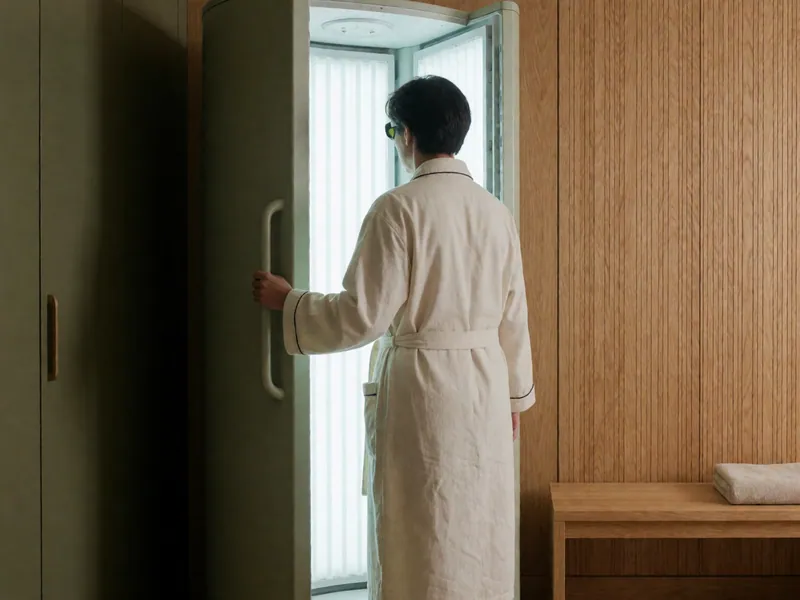
Inflammatory Skin Disease
Psoriasis
An immune-driven condition, not a skin infection and not contagious. Treatment ranges from creams through light therapy to targeted injections, and what has become achievable for severe psoriasis in the last decade is genuinely different from what came before.
Read more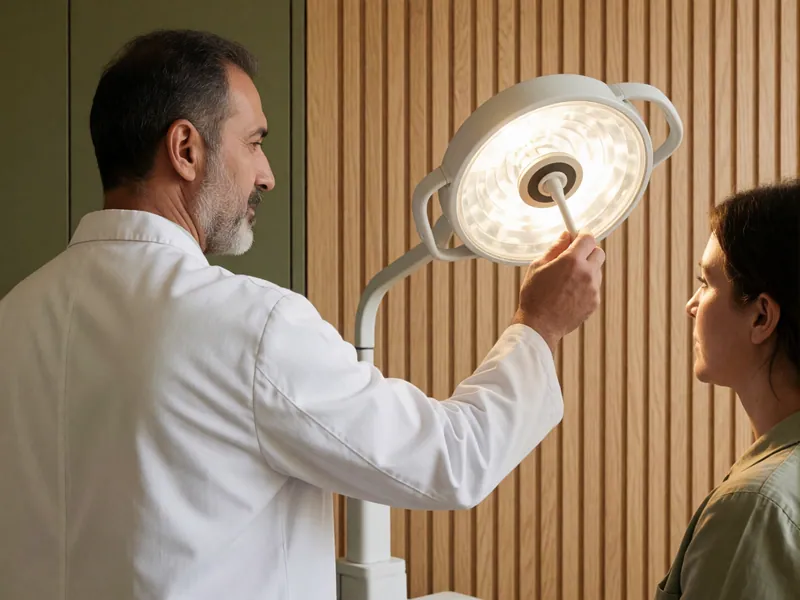
Inflammatory Skin Disease
Rosacea
Persistent central facial redness, flushing, visible vessels and inflammatory bumps. It is not acne, it is not caused by drinking, and the single most effective thing most people do for it is daily sun protection.
Read moreA named diagnosis and a written plan you leave holding
Book an appointment
Pick a physician and a time from the calendar — it shows only the hours each of them genuinely has free. A new patient appointment is thirty minutes, a full skin examination forty-five, and you leave with a named diagnosis written down. If something on your skin has changed, telephone instead and say that word: it is triaged differently.