Some things should not wait for the next free routine appointment. Some things should not wait for the next free routine appointment. Telephone the practice and say what is happening, or go to an emergency room, if you have a mole or a mark that has changed shape, colour or size, that has become raised or uneven, or that bleeds, itches or will not heal; a sore anywhere that has not healed in three weeks; a rash that is spreading quickly, especially with fever, blistering, or peeling skin; a painful rash in a band on one side of the body, particularly near an eye; redness that is hot, swollen, tender and spreading, which can be a deep skin infection; a new rash after starting a medicine, especially with mouth or eye involvement; or a child under three months with any widespread rash. If you have been treated here and something is worse rather than better after a procedure, telephone us rather than waiting for the review appointment. We would far rather field a call that turns out to be nothing.
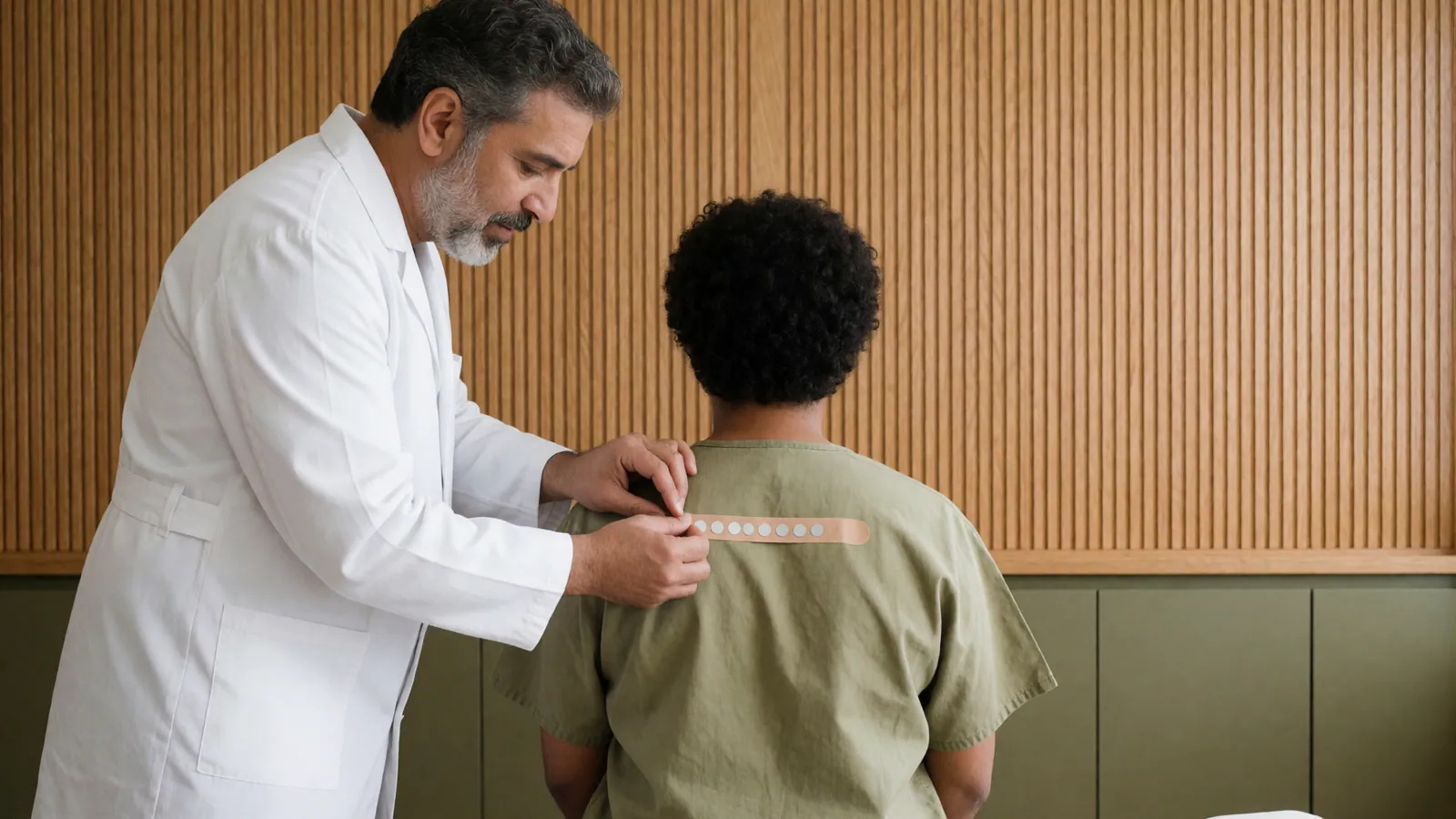
Patch testing identifies delayed contact allergy — the kind that produces eczema a day or two after exposure rather than an immediate reaction. Small chambers containing standardised concentrations of common allergens are taped to the back, left in place for forty-eight hours, and then read. Crucially they are read a second time two days later, because many genuine reactions appear late and a single reading misses them.
It is worth being clear about what this test is not. It is not the prick testing used for immediate allergies to foods, pollens or animals, and it does not detect them — those cause reactions within minutes and are investigated differently. Patch testing answers a specific question: is the eczema on your hands, face, eyelids or wherever caused by something touching your skin?
It is most worth doing when the pattern suggests contact: dermatitis confined to the hands, the face or the eyelids; a rash corresponding to where something touches you, such as under a watch strap or a waistband; dermatitis starting in adulthood in somebody who never had eczema as a child; occupational dermatitis in hairdressers, cleaners, carers, cooks, mechanics and construction workers; a leg ulcer surrounded by eczema; or eczema that has stopped responding to treatment that used to work — because a fair number of people become allergic to an ingredient in their own treatment.

How the week runs
Three visits, and the constraints between them are the awkward part.
Monday — application
About an hour. The panels are applied to your upper back and taped down, and their positions are marked. You go home wearing them and carry on with ordinary life within the limits below.
Wednesday — first reading
The patches come off and the first reading is taken. About thirty minutes. The marks are refreshed, because the second reading depends on knowing exactly which chamber was where.
Friday — second reading
The important one. Many genuine allergic reactions appear only at this point, and a test read once at forty-eight hours misses a meaningful share of them. This is also when the results are explained and you are given a written list of what to avoid and where it hides.
Keep the back completely dry until Wednesday
No showering that wets the back, no swimming, no baths. Wash carefully at a basin. This is the single most common reason a test has to be repeated.
No sweating heavily and no exercise that does
Sweat loosens the patches. Sport is out for those two days.
No sun or sunbed on the back
For a fortnight beforehand and during. Tanned or recently sunburned skin gives unreliable results.
Preparing, and what can invalidate the test
Several ordinary things suppress the reaction and produce a falsely negative result.
Stop topical steroids on the back for a week beforehand
They suppress exactly the reaction being looked for. Continue treating elsewhere unless told otherwise.
Tell us about oral steroids and immune-suppressing medicines
These can suppress the response substantially. Never stop a prescribed medicine to have this test — tell us and we will decide together whether to proceed or postpone.
Antihistamines are fine
They do not affect patch testing, unlike immediate allergy testing. Carry on with them.
Bring your own products
Everything that touches your skin, in the actual containers: skincare, cosmetics, shampoo, hair dye, nail products, gloves, sunscreen, and anything from work. Products of your own can be tested alongside the standard panels, and the answer is frequently in a bottle somebody brought in.
Tell us what you do all day
Occupation, hobbies, what you handle, what you wear and what you use to clean it. Specific panels exist for hairdressers, dental workers, bakers, mechanics and others, and the history decides which are applied.
The back may itch
Under a positive patch, and that is the point. Try not to scratch or rub the area, and avoid tight clothing over it.
Reading the results honestly
A positive result is not automatically the answer, and interpreting it is most of the value.
A positive means allergy, not necessarily cause
You can be genuinely allergic to something you never encounter. The clinical question is whether this allergen is present in your life and whether the pattern of your rash fits it. That interpretation is the appointment, not the result sheet.
A negative does not mean nothing is wrong
The standard series covers the common allergens rather than all of them. It also does not exclude irritant contact dermatitis, which is damage from repeated exposure to water, detergents and friction rather than an allergy — very common in wet-work occupations, and needing entirely different advice.
You leave with a written list of where it hides
Which is the practical half. An allergen has many names on ingredient labels and appears in unexpected products, so the useful output is a list of synonyms and a list of product categories to check rather than a single word.
Improvement takes weeks after avoidance starts
Skin does not settle immediately once the allergen is removed. Six to eight weeks of genuine avoidance is a fair trial, and stopping short of that is why some people conclude the result was wrong.
Occasionally a reaction appears later still
A small number appear after a week. If a spot on your back flares after the final reading, photograph it and telephone us — it counts.
Patch Testing in western Queens
Panels of standardised allergens taped to the back for two days and read twice across a week. Unglamorous, slow, and the only reliable way to find out what you are genuinely allergic to. It ends more long-running dermatitis than anything else in this building.
Every appointment here starts the same way: a proper history, an examination in good light, and a named diagnosis said out loud and written down for you to take home. If there is genuine doubt you will be told that, and told what would settle it — usually a biopsy. You leave with a plan that has a strength, a site, a frequency and a date to stop or come back on it, and, where the condition is one that relapses, what to do on the first day of the next flare. If the honest answer is that this is better left alone, or that it belongs somewhere other than here, that is what you get instead, and it costs exactly the same.

This page is not medical advice, and it is not a diagnosis. Nothing on this website is medical advice for you in particular, and it is not a diagnosis. These pages describe conditions in general terms so that you arrive knowing what the questions are — they cannot tell you which condition you have, because that requires somebody to look at your skin, feel it, ask you a hundred questions and frequently take a sample of it. Two conditions on this website can look identical in a photograph and need opposite treatments. If something on your skin is new, changing, painful or not healing, the useful next step is an appointment rather than more reading.
No before-and-after photographs, and no promised outcome. There are no before-and-after photographs on this website and there never will be. Every set you have seen somewhere else was chosen from a much larger pile, and the second picture is usually taken in different light, at a different angle, at a different point in a flare cycle. In dermatology the dishonesty is sharper than in most fields, because nearly every condition here fluctuates on its own — photograph any relapsing skin disease at its worst and again at its best and you have a persuasive pair of images that demonstrates nothing about the treatment in between. What we publish instead is what a treatment typically achieves, in how long, in what proportion of people, and how often it does not work.
The risks, plainly. Every treatment described here has side effects, and some carry real risks. Topical steroids thin skin if they are used at the wrong strength on the wrong site for too long, which is why they are prescribed with a site, a strength and a stopping point rather than handed over indefinitely. Light-based and laser treatment can burn, blister and cause pigment change that lasts months, and that risk is higher on deeper skin tones and on recently tanned skin. Any procedure that breaks the skin can bleed, become infected and leave a scar; on the chest, the shoulders and the jawline, scars are more likely to thicken. Several of the medicines used in this speciality require blood tests, and some cannot be taken during pregnancy. We tell you your own risk rather than the average one, and where the honest answer is that a condition is better left alone, that is the advice you will get.
Nothing is diagnosed from a photograph. We do not diagnose skin from photographs, and we do not answer "what is this?" by email, by message or through a form. This is not caution for its own sake. A photograph has no history attached to it, cannot be felt, cannot be stretched or pressed to see whether the colour blanches, cannot be examined under a dermatoscope, and misreports colour badly — which matters enormously on skin that is not pale. The examination that actually distinguishes a harmless growth from an early cancer involves magnification, cross-polarised light and, when there is any doubt at all, a biopsy. An application that offers to tell you whether a mole is dangerous from a picture taken on a telephone is selling reassurance, and reassurance is the one product in this field that is dangerous when it is wrong. Bring the mark to a room where somebody can look at it.
Questions
Patch Testing — the questions we are asked most
Is this the same as allergy testing for foods and pollen?
No, and they answer different questions. Prick and blood testing look for immediate allergies — reactions within minutes to foods, pollens or animals. Patch testing looks for delayed contact allergy, which produces eczema a day or two after something touches the skin. Patch testing will not tell you whether you are allergic to peanuts.
Does it hurt?
No needles and no pain. The awkward parts are keeping your back completely dry from Monday to Wednesday, and the itching under a positive patch, which is the reaction being looked for.
Why do I have to come three times?
Because many genuine reactions appear late. A test read only when the patches come off at forty-eight hours misses a meaningful proportion of positives, so the reading at day four is essential rather than a convenience. It is also when the results are explained and the avoidance list is written.
Can I shower?
Not in a way that wets your back, until after the patches come off on Wednesday. Wash carefully at a basin. Getting the back wet is the single commonest reason a test has to be repeated, and repeating it means another week.
What if everything comes back negative?
That is a useful result too. It makes contact allergy to the common allergens unlikely and points towards irritant dermatitis — damage from repeated water, detergent and friction exposure — or towards another diagnosis entirely. Irritant dermatitis is extremely common in wet-work occupations and needs different advice rather than avoidance of an allergen.
I found out I am allergic to something. Will my skin clear up now?
It should improve, and not immediately. Give genuine avoidance six to eight weeks before judging, because skin takes time to settle and because an allergen appears under many names and in unexpected products. The written list you leave with is the part that makes avoidance actually work.
Related
Often seen alongside this
Procedures & Testing
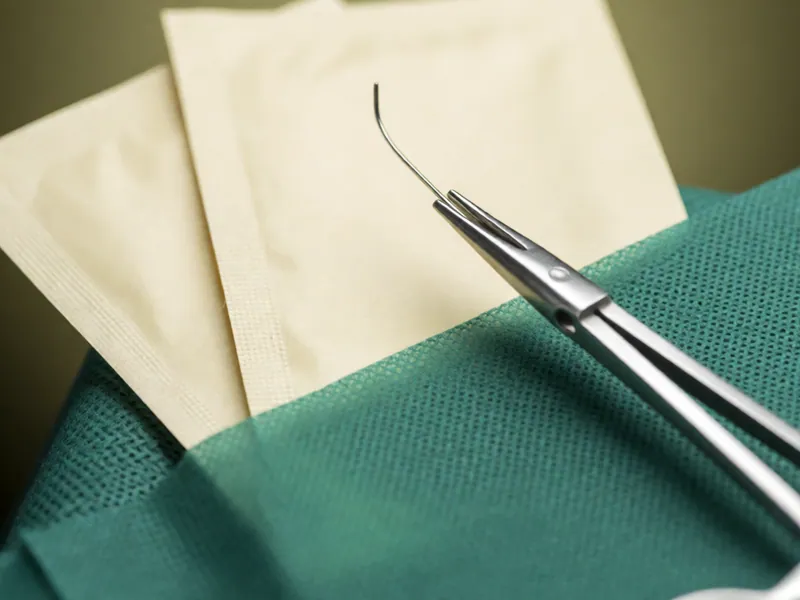
Skin Biopsy
Taking a small sample of skin so a pathologist can say what is actually happening in it. Fifteen minutes, local anaesthetic, a result in about a week — and we telephone you either way, including when the news is good.
Read more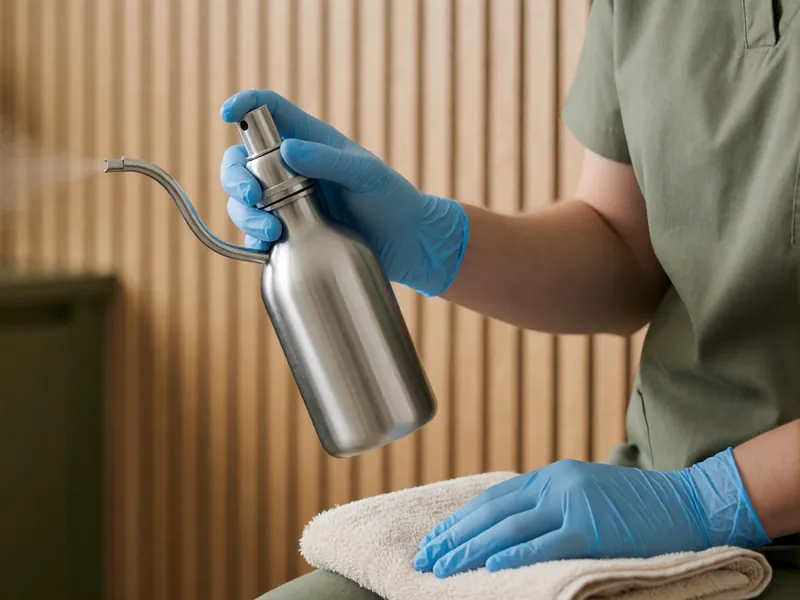
Procedures & Testing
Cryotherapy
Liquid nitrogen, applied in short bursts, to freeze off sun-damage patches, warts and several harmless growths. Quick and effective. It stings for twenty seconds and it usually leaves a pale mark — which on deeper skin tones can be permanent.
Read more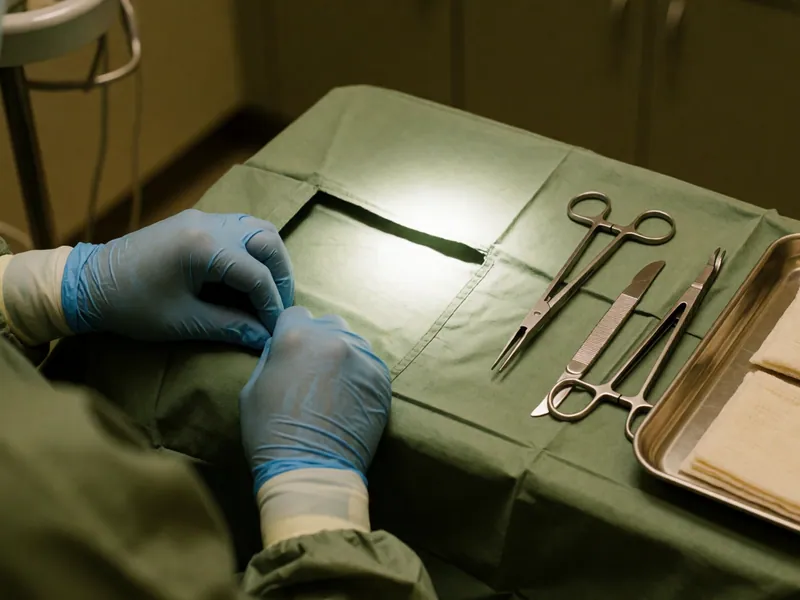
Procedures & Testing
Cyst & Lipoma Removal
Removing a cyst or a fatty lump under local anaesthetic. Both are harmless; both are worth removing when they are growing, catching or repeatedly inflamed. The timing matters — an inflamed cyst is settled first and removed later.
Read moreA named diagnosis and a written plan you leave holding
Book an appointment
Pick a physician and a time from the calendar — it shows only the hours each of them genuinely has free. A new patient appointment is thirty minutes, a full skin examination forty-five, and you leave with a named diagnosis written down. If something on your skin has changed, telephone instead and say that word: it is triaged differently.