Some things should not wait for the next free routine appointment. Some things should not wait for the next free routine appointment. Telephone the practice and say what is happening, or go to an emergency room, if you have a mole or a mark that has changed shape, colour or size, that has become raised or uneven, or that bleeds, itches or will not heal; a sore anywhere that has not healed in three weeks; a rash that is spreading quickly, especially with fever, blistering, or peeling skin; a painful rash in a band on one side of the body, particularly near an eye; redness that is hot, swollen, tender and spreading, which can be a deep skin infection; a new rash after starting a medicine, especially with mouth or eye involvement; or a child under three months with any widespread rash. If you have been treated here and something is worse rather than better after a procedure, telephone us rather than waiting for the review appointment. We would far rather field a call that turns out to be nothing.
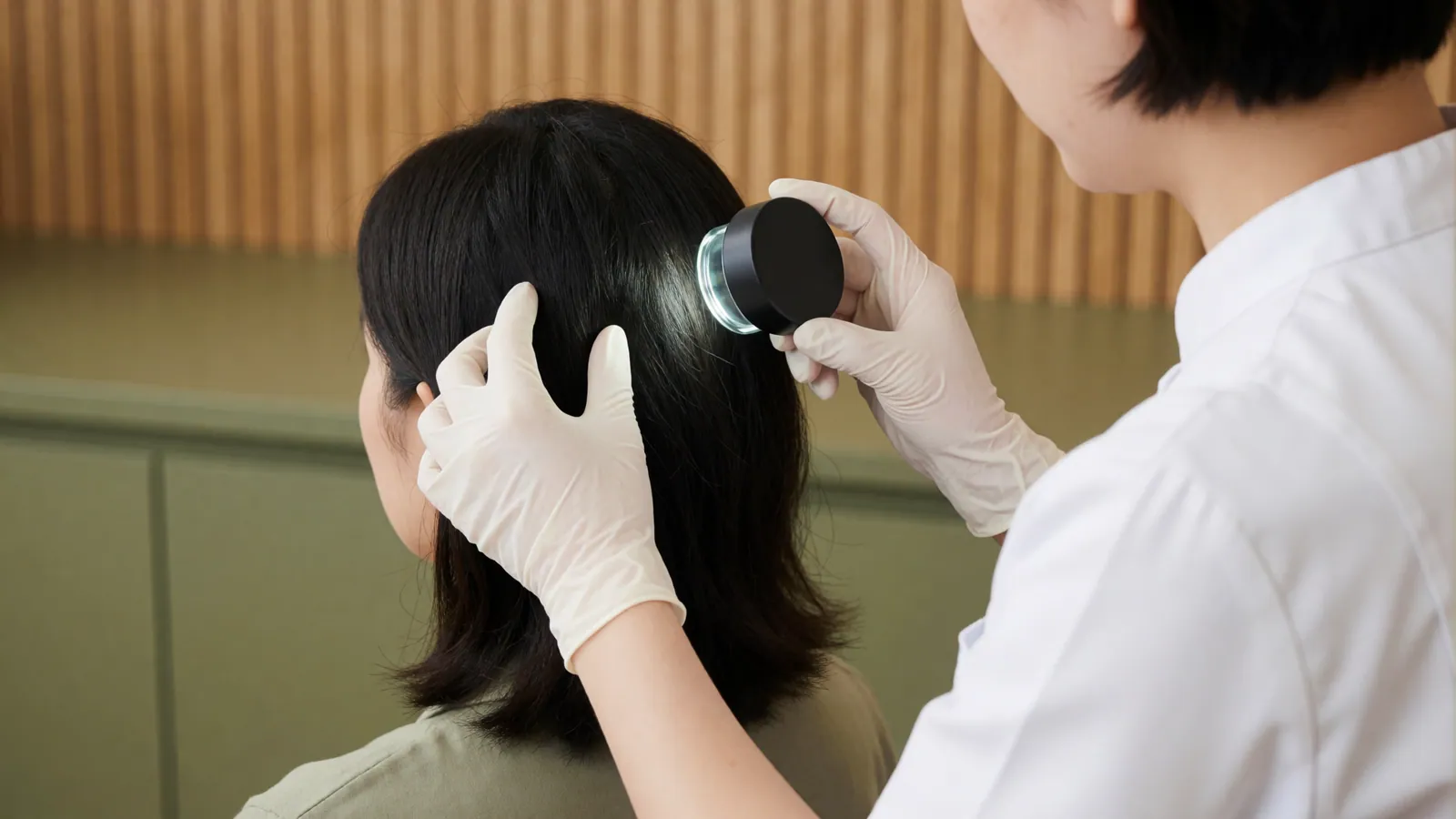
The first job is not treatment, it is telling apart the categories. Non-scarring hair loss leaves the follicles intact, which means regrowth is possible even after years. Scarring hair loss destroys the follicle and replaces it with fibrous tissue, and once that has happened at a given spot no treatment will bring hair back there — which is why the entire aim in scarring alopecia is to stop the process while there is still hair left to save. Distinguishing the two is done by examining the scalp under magnification, and it is why a hair loss appointment involves looking at your scalp rather than at your hair.
Trichoscopy — dermoscopy of the scalp — shows things that are simply invisible otherwise: whether follicular openings are still present or have been lost, the calibre variation that characterises pattern hair loss, the short exclamation-mark hairs of an autoimmune patch, the perifollicular scale and redness of an inflammatory scarring process. It takes a few minutes and it converts a guess into a diagnosis. Where it is still uncertain, a small scalp biopsy settles it.
The second job is looking beyond the scalp. Thyroid disease, iron deficiency, recent illness, surgery, childbirth, significant weight loss, a new medicine and severe stress all cause hair shedding, generally two to three months after the event rather than at the time — which is why patients so often cannot connect them. Those causes are worth finding because they are reversible. Bring any recent blood results with you.
The common causes, and what can honestly be expected
Different diagnoses, different treatments, very different prognoses.
Pattern hair loss
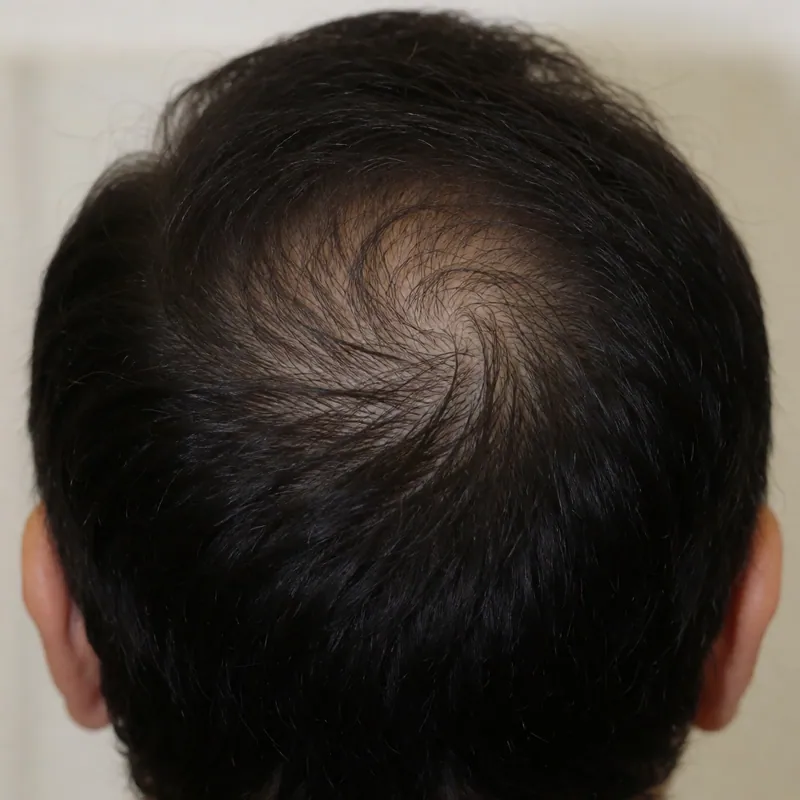
The commonest cause in both men and women, gradual, following a recognisable pattern — a receding hairline and crown in men, a widening part with the frontal hairline preserved in women. Treatment slows the loss and can produce modest regrowth; its main job is holding what you have, and it works only while it is being used. Topical and oral options exist, some are not suitable in pregnancy, and results take six to twelve months to assess. Starting earlier gives you more to keep.
Telogen effluvium — diffuse shedding after an event
Sudden noticeable shedding all over, typically two to three months after illness, surgery, childbirth, a crash diet, a new medicine or a severe stress. It looks alarming — handfuls in the shower — and it is the best-prognosis cause on this list. It recovers on its own over six to nine months once the trigger has passed, and the treatment is finding and fixing the trigger rather than anything applied to the scalp.
Alopecia areata
Smooth, well-defined round patches of complete hair loss, autoimmune, and unpredictable. Many single patches regrow on their own within a year; extensive or repeated disease behaves less kindly. Treatment options include steroid injections into the patches, topical treatment, and newer oral medicines for severe disease that have genuinely changed what is achievable. Its unpredictability is part of the honest conversation — it can relapse after complete regrowth.
Scarring alopecias
A group of inflammatory conditions that destroy follicles permanently. Signs include a scalp that itches, burns or is tender, redness or scale around individual hairs, and loss of the visible follicular openings. These are the urgent ones. Treatment cannot restore what is lost and is aimed entirely at stopping progression, so time to diagnosis directly determines how much hair you keep.
Traction alopecia
Caused by sustained pulling — tight braids, weaves, extensions, ponytails, some religious and cultural styles worn tightly for years. It is preventable and reversible in its early stage, when the hairline hair is thinning and there are small bumps around the follicles. Left long enough it becomes permanent. It is discussed here practically rather than as a lecture: the aim is finding a way to wear your hair that you actually like and that does not pull.
Central centrifugal cicatricial alopecia
A scarring alopecia starting at the crown and spreading outward, occurring predominantly in Black women, frequently under-recognised, and often presenting late because early symptoms are subtle tenderness or itch. Early diagnosis genuinely changes the outcome. If you have a spreading area of thinning at your crown, this is a reason to be examined rather than to try another product.
What the appointment involves
Forty-five minutes, most of it questions and looking.
The history, in detail
When it started, whether it is shedding or thinning, the pattern, whether the scalp itches or hurts, your family history, your medicines, recent illnesses or surgery, pregnancy, weight change, your diet, and how you wear and treat your hair. This is most of the diagnosis.
Examination of the scalp itself
Looking at the skin rather than the hair: the pattern of loss, whether follicular openings remain, redness, scale, tenderness. A gentle pull test tells us whether hair is actively shedding now.
Trichoscopy
Dermoscopy of the scalp at several sites, which distinguishes most of the categories above and identifies scarring reliably.
Blood tests where indicated
Thyroid function, iron stores, and others depending on the history. Iron in particular is worth checking properly rather than assuming; the number that matters is the stored iron rather than the haemoglobin.
A scalp biopsy where it is still unclear
A small punch under local anaesthetic, usually two samples, which reliably distinguishes scarring from non-scarring and identifies the specific inflammatory pattern. It leaves a small mark hidden in the hair, and where scarring is suspected it is worth doing promptly rather than after another six months of watching.
Hair Loss in western Queens
Around twenty different causes that look similar to a patient and quite different under magnification. The question that governs everything is whether the scalp is scarred, because scarring is permanent and the window to prevent it is while the condition is still active.
Every appointment here starts the same way: a proper history, an examination in good light, and a named diagnosis said out loud and written down for you to take home. If there is genuine doubt you will be told that, and told what would settle it — usually a biopsy. You leave with a plan that has a strength, a site, a frequency and a date to stop or come back on it, and, where the condition is one that relapses, what to do on the first day of the next flare. If the honest answer is that this is better left alone, or that it belongs somewhere other than here, that is what you get instead, and it costs exactly the same.
This page is not medical advice, and it is not a diagnosis. Nothing on this website is medical advice for you in particular, and it is not a diagnosis. These pages describe conditions in general terms so that you arrive knowing what the questions are — they cannot tell you which condition you have, because that requires somebody to look at your skin, feel it, ask you a hundred questions and frequently take a sample of it. Two conditions on this website can look identical in a photograph and need opposite treatments. If something on your skin is new, changing, painful or not healing, the useful next step is an appointment rather than more reading.
No before-and-after photographs, and no promised outcome. There are no before-and-after photographs on this website and there never will be. Every set you have seen somewhere else was chosen from a much larger pile, and the second picture is usually taken in different light, at a different angle, at a different point in a flare cycle. In dermatology the dishonesty is sharper than in most fields, because nearly every condition here fluctuates on its own — photograph any relapsing skin disease at its worst and again at its best and you have a persuasive pair of images that demonstrates nothing about the treatment in between. What we publish instead is what a treatment typically achieves, in how long, in what proportion of people, and how often it does not work.
The risks, plainly. Every treatment described here has side effects, and some carry real risks. Topical steroids thin skin if they are used at the wrong strength on the wrong site for too long, which is why they are prescribed with a site, a strength and a stopping point rather than handed over indefinitely. Light-based and laser treatment can burn, blister and cause pigment change that lasts months, and that risk is higher on deeper skin tones and on recently tanned skin. Any procedure that breaks the skin can bleed, become infected and leave a scar; on the chest, the shoulders and the jawline, scars are more likely to thicken. Several of the medicines used in this speciality require blood tests, and some cannot be taken during pregnancy. We tell you your own risk rather than the average one, and where the honest answer is that a condition is better left alone, that is the advice you will get.
Nothing is diagnosed from a photograph. We do not diagnose skin from photographs, and we do not answer "what is this?" by email, by message or through a form. This is not caution for its own sake. A photograph has no history attached to it, cannot be felt, cannot be stretched or pressed to see whether the colour blanches, cannot be examined under a dermatoscope, and misreports colour badly — which matters enormously on skin that is not pale. The examination that actually distinguishes a harmless growth from an early cancer involves magnification, cross-polarised light and, when there is any doubt at all, a biopsy. An application that offers to tell you whether a mole is dangerous from a picture taken on a telephone is selling reassurance, and reassurance is the one product in this field that is dangerous when it is wrong. Bring the mark to a room where somebody can look at it.
Questions
Hair Loss — the questions we are asked most
Is my hair loss permanent?
That depends entirely on whether the follicles have been scarred, which is the question the appointment answers. Non-scarring causes — pattern loss, shedding after an illness, autoimmune patches, early traction — leave the follicles intact and regrowth is possible. Scarring alopecias destroy them, and there the whole aim is stopping progression while there is still hair to protect. That is why a scalp that itches, burns or is tender warrants an appointment sooner rather than later.
I am losing handfuls in the shower. Should I panic?
Sudden diffuse shedding is usually telogen effluvium, which is the best-prognosis cause here. It typically follows an illness, an operation, childbirth, a crash diet, a new medicine or a severe stress by two to three months, and it recovers on its own over six to nine months. It looks far more alarming than it is. What is worth doing is finding the trigger and checking iron and thyroid.
Do the treatments actually work?
For pattern hair loss, yes, with an honest caveat: their main effect is holding what you have rather than regrowing what has gone, results take six to twelve months to judge, and they work only while you keep using them. Anybody promising dramatic regrowth from a bottle is selling. For alopecia areata and for the scarring alopecias the treatments are quite different and so are the expectations.
Should I have blood tests?
Usually some, guided by your history — thyroid function and iron stores most often. Iron matters and the useful measurement is stored iron rather than whether you are anaemic. Bring any recent results rather than repeating them.
Can wearing braids or a weave cause this?
Sustained tension can, and traction alopecia is entirely preventable and reversible if it is caught while the hairline is only thinning. Left for years it becomes permanent. The conversation here is practical rather than moralising — looser styles, changing style regularly, avoiding tension on the same spot and not styling relaxed or chemically treated hair tightly.
My scalp itches and burns. Does that mean anything?
It is one of the more important symptoms you can report, because itch, burning and tenderness are characteristic of the scarring alopecias, and those are the ones where time matters most. Combined with redness or scale around individual hairs, or loss of the visible pores, it warrants an appointment promptly rather than at your convenience.
Related
Often seen alongside this
Hair, Nails & Sweat
Nail Disorders
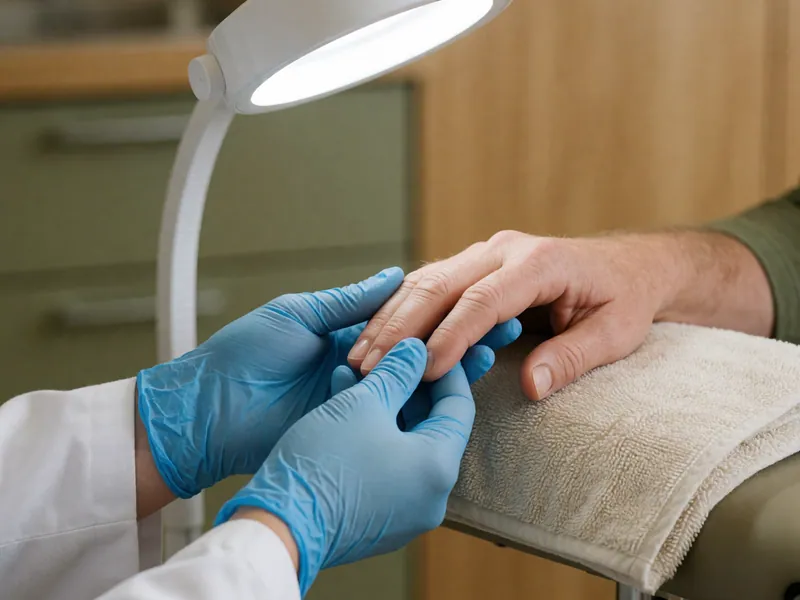
Thickened, discoloured, crumbling or lifting nails. About half of what is assumed to be fungus is not, which is why nails are sampled here before treatment rather than after months of it.
Read more
Hair, Nails & Sweat
Fungal Skin Infections
Ringworm, athlete's foot, jock itch and yeast infections in the folds. Straightforward to treat once correctly identified — and routinely made much worse by a steroid cream applied in good faith.
Read more
Hair, Nails & Sweat
Excessive Sweating
Sweating far beyond what temperature requires, enough to change what you wear and what you avoid. It is a recognised medical condition with a ladder of treatments, and it is not a sign of poor hygiene or nervousness.
Read moreA named diagnosis and a written plan you leave holding
Book an appointment
Pick a physician and a time from the calendar — it shows only the hours each of them genuinely has free. A new patient appointment is thirty minutes, a full skin examination forty-five, and you leave with a named diagnosis written down. If something on your skin has changed, telephone instead and say that word: it is triaged differently.