Some things should not wait for the next free routine appointment. Some things should not wait for the next free routine appointment. Telephone the practice and say what is happening, or go to an emergency room, if you have a mole or a mark that has changed shape, colour or size, that has become raised or uneven, or that bleeds, itches or will not heal; a sore anywhere that has not healed in three weeks; a rash that is spreading quickly, especially with fever, blistering, or peeling skin; a painful rash in a band on one side of the body, particularly near an eye; redness that is hot, swollen, tender and spreading, which can be a deep skin infection; a new rash after starting a medicine, especially with mouth or eye involvement; or a child under three months with any widespread rash. If you have been treated here and something is worse rather than better after a procedure, telephone us rather than waiting for the review appointment. We would far rather field a call that turns out to be nothing.
Rosacea affects the central face — cheeks, nose, chin and forehead — and it usually begins as flushing that gradually stops settling completely. Over time the redness becomes persistent, fine blood vessels become visible, and in some people inflammatory papules and pustules appear. It is a disorder of blood vessel reactivity and inflammation rather than of blocked pores, which is the reason acne treatments frequently make it worse.
The single most useful thing to understand is that the different subtypes need different treatments. Persistent redness with visible vessels responds to a completely different approach from inflammatory bumps, and the thickening of the nose that occurs in a minority responds to neither. A treatment plan that fails is very often a plan aimed at the wrong component. This is also why rosacea is worth being assessed for rather than self-treating from a shelf.
It is also worth clearing up two things people arrive carrying. Rosacea is not caused by drinking — alcohol is a common trigger for flushing in people who already have it, which is not the same thing, and the association has caused a great deal of unfair assumption over the years. And it is not a hygiene problem: the aggressive washing and scrubbing many people adopt in response makes it substantially worse.
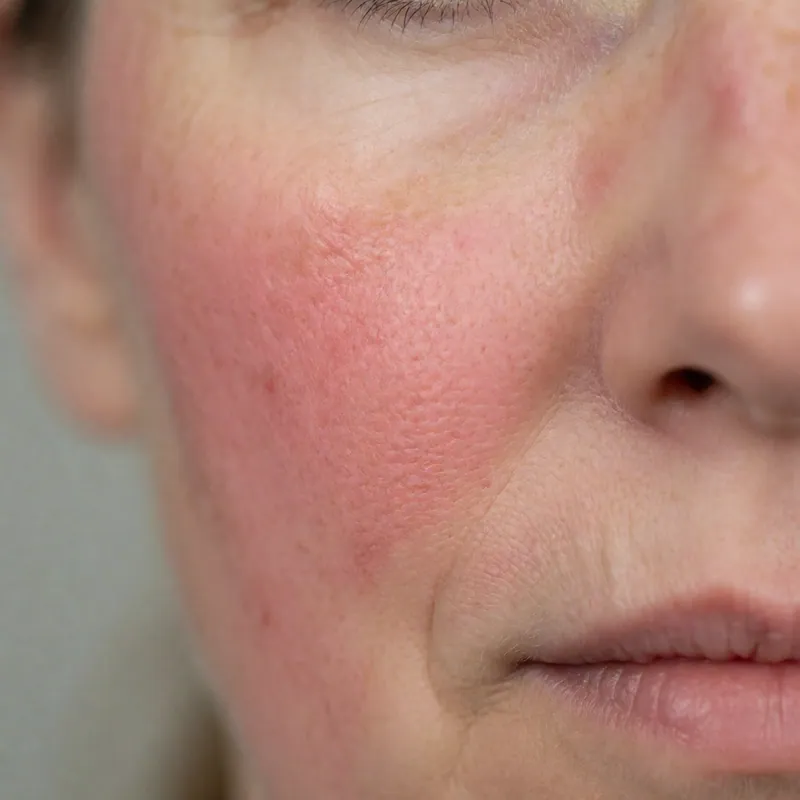
What responds to what
Matching the treatment to the component is most of the skill here.
Persistent redness and visible vessels
Topical preparations that constrict the vessels can reduce redness for a number of hours, and they suit an event more than daily life — some people get a rebound flush as they wear off. Vascular laser and intense pulsed light treat the visible vessels themselves and are the most effective option for that specific component, over a course of sessions. It is cosmetic for billing purposes in most cases, and you will be told that before it happens.
Inflammatory bumps and pustules
These respond well to topical anti-inflammatory preparations, and to a low-dose oral antibiotic used for its anti-inflammatory effect rather than as an antibacterial. That is the component most likely to improve substantially and the one people are most pleased about.
Flushing itself
The hardest to treat, and the one where trigger identification does more than any prescription. Certain blood pressure medicines used off-licence help some people; the honest position is that results vary considerably.
Thickening of the nose
Occurs in a minority, mostly in men, and is caused by overgrowth of the tissue rather than by inflammation. It does not respond to creams or antibiotics. It is treated by reshaping the tissue — a procedure we refer out.
The eyes, which are involved more often than people realise
Gritty, dry, burning or persistently red eyes, recurrent styes, or lids that are crusted in the morning. Ocular involvement is common, is frequently missed, and occasionally appears before the skin does. Lid hygiene helps most people; anything affecting vision or persistent needs an eye specialist, and we ask about this at every appointment.
Triggers, and how to find your own
The list is long and general; the useful version is short and specific to you.
Keep a fortnight's diary rather than avoiding everything
Published trigger lists include most of the enjoyable things in life, and avoiding all of them is a large cost for an uncertain benefit. Write down what you ate, drank, did and where you were, alongside your flushing, for two weeks. Almost everybody finds two or three genuine triggers and a long list of things they had been avoiding for nothing.
Sun is the commonest, by a distance
Daily broad-spectrum sunscreen is the most effective single measure most people take for rosacea. Mineral-based sunscreens are often better tolerated on reactive skin than chemical ones.
Heat more than spice
Hot drinks, hot rooms, hot showers, saunas and exercise in heat trigger flushing in most people. It is frequently the temperature rather than the chilli — a hot curry and an iced one are not the same test.
Alcohol, especially red wine
A common trigger for flushing in people who already have rosacea. It did not cause the condition, and that distinction matters to a lot of patients who have been assumed about.
Skincare that is doing damage
Scrubs, astringents, alcohol-based toners, strong acids and anything that stings. A great deal of stubborn rosacea is rosacea plus an aggressive routine adopted in response to it. The instruction is usually to stop nearly everything and rebuild with a gentle cleanser, a moisturiser and a sunscreen.
Exercise is worth keeping
Exercise triggers flushing and stopping exercise is a poor trade. Cooler rooms, a cold drink to hold, shorter more frequent sessions and swimming in a cool pool all make it manageable.
Rosacea in western Queens
Persistent central facial redness, flushing, visible vessels and inflammatory bumps. It is not acne, it is not caused by drinking, and the single most effective thing most people do for it is daily sun protection.
Every appointment here starts the same way: a proper history, an examination in good light, and a named diagnosis said out loud and written down for you to take home. If there is genuine doubt you will be told that, and told what would settle it — usually a biopsy. You leave with a plan that has a strength, a site, a frequency and a date to stop or come back on it, and, where the condition is one that relapses, what to do on the first day of the next flare. If the honest answer is that this is better left alone, or that it belongs somewhere other than here, that is what you get instead, and it costs exactly the same.
This page is not medical advice, and it is not a diagnosis. Nothing on this website is medical advice for you in particular, and it is not a diagnosis. These pages describe conditions in general terms so that you arrive knowing what the questions are — they cannot tell you which condition you have, because that requires somebody to look at your skin, feel it, ask you a hundred questions and frequently take a sample of it. Two conditions on this website can look identical in a photograph and need opposite treatments. If something on your skin is new, changing, painful or not healing, the useful next step is an appointment rather than more reading.
No before-and-after photographs, and no promised outcome. There are no before-and-after photographs on this website and there never will be. Every set you have seen somewhere else was chosen from a much larger pile, and the second picture is usually taken in different light, at a different angle, at a different point in a flare cycle. In dermatology the dishonesty is sharper than in most fields, because nearly every condition here fluctuates on its own — photograph any relapsing skin disease at its worst and again at its best and you have a persuasive pair of images that demonstrates nothing about the treatment in between. What we publish instead is what a treatment typically achieves, in how long, in what proportion of people, and how often it does not work.
The risks, plainly. Every treatment described here has side effects, and some carry real risks. Topical steroids thin skin if they are used at the wrong strength on the wrong site for too long, which is why they are prescribed with a site, a strength and a stopping point rather than handed over indefinitely. Light-based and laser treatment can burn, blister and cause pigment change that lasts months, and that risk is higher on deeper skin tones and on recently tanned skin. Any procedure that breaks the skin can bleed, become infected and leave a scar; on the chest, the shoulders and the jawline, scars are more likely to thicken. Several of the medicines used in this speciality require blood tests, and some cannot be taken during pregnancy. We tell you your own risk rather than the average one, and where the honest answer is that a condition is better left alone, that is the advice you will get.
Nothing is diagnosed from a photograph. We do not diagnose skin from photographs, and we do not answer "what is this?" by email, by message or through a form. This is not caution for its own sake. A photograph has no history attached to it, cannot be felt, cannot be stretched or pressed to see whether the colour blanches, cannot be examined under a dermatoscope, and misreports colour badly — which matters enormously on skin that is not pale. The examination that actually distinguishes a harmless growth from an early cancer involves magnification, cross-polarised light and, when there is any doubt at all, a biopsy. An application that offers to tell you whether a mole is dangerous from a picture taken on a telephone is selling reassurance, and reassurance is the one product in this field that is dangerous when it is wrong. Bring the mark to a room where somebody can look at it.
Questions
Rosacea — the questions we are asked most
Is rosacea caused by drinking?
No. Alcohol is a common trigger for flushing in somebody who already has rosacea, which is a different statement, and the assumption has caused a great deal of unfair judgement over the years — including of people who do not drink at all.
Can it be cured?
No. It is controlled rather than cured, and it tends to relapse if treatment stops. The inflammatory bumps generally improve a great deal; persistent redness and visible vessels improve with vascular laser and come back gradually over years; flushing is the hardest part to change.
Why did acne treatment make mine worse?
Because rosacea is not acne. It is a disorder of vessel reactivity and inflammation rather than of blocked pores, and the drying, stripping and scrubbing that helps acne inflames rosacea. The two do look similar when there are pustules, which is why the assessment matters.
Do I need to avoid everything on the trigger list?
No, and trying to is a poor trade. Keep a fortnight's diary and find your own two or three. Most people discover they have been avoiding a long list of things that never affected them while missing the one that does — which is usually heat or sun rather than food.
My eyes are gritty and red. Is that related?
Very possibly. Ocular rosacea is common, frequently missed, and occasionally appears before the skin changes. Lid hygiene — warm compresses and cleaning the lid margins daily — helps most people. Anything affecting your vision, or not settling, needs an eye specialist, and we will say so.
Will laser get rid of the redness permanently?
It reduces it substantially over a course of sessions by treating the visible vessels. New vessels develop over years, so maintenance sessions are usually needed. It is also generally treated as cosmetic for billing purposes, which we will tell you before rather than after.
Related
Often seen alongside this

Inflammatory Skin Disease
Acne
The commonest reason anybody sees a dermatologist. It is treatable in almost everybody, it takes about three months before you can judge whether a treatment worked, and treating it properly is how you avoid the scars.
Read more
Inflammatory Skin Disease
Eczema & Dermatitis
Itchy, inflamed, dry skin that flares and settles. It is controlled rather than cured, most of it is under-treated rather than over-treated, and the plan you leave with should include what to do on the first day of the next flare.
Read more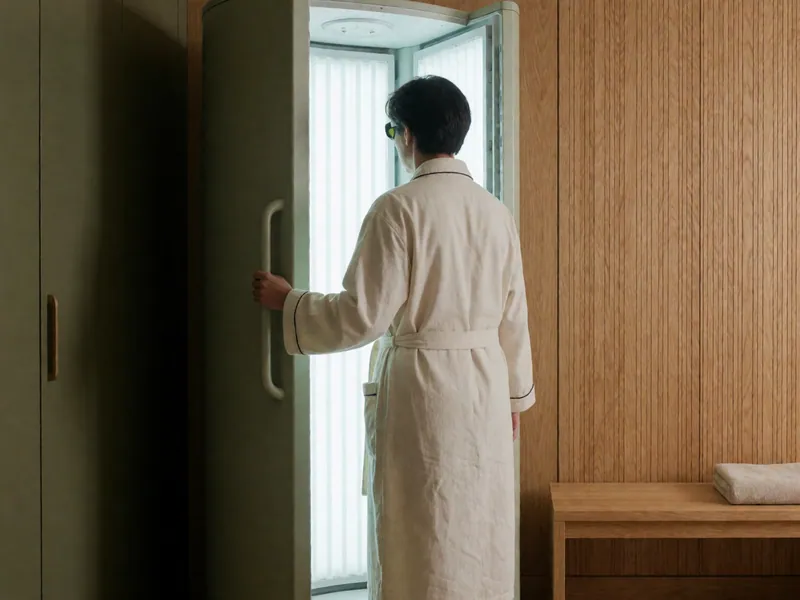
Inflammatory Skin Disease
Psoriasis
An immune-driven condition, not a skin infection and not contagious. Treatment ranges from creams through light therapy to targeted injections, and what has become achievable for severe psoriasis in the last decade is genuinely different from what came before.
Read moreA named diagnosis and a written plan you leave holding
Book an appointment
Pick a physician and a time from the calendar — it shows only the hours each of them genuinely has free. A new patient appointment is thirty minutes, a full skin examination forty-five, and you leave with a named diagnosis written down. If something on your skin has changed, telephone instead and say that word: it is triaged differently.