Some things should not wait for the next free routine appointment. Some things should not wait for the next free routine appointment. Telephone the practice and say what is happening, or go to an emergency room, if you have a mole or a mark that has changed shape, colour or size, that has become raised or uneven, or that bleeds, itches or will not heal; a sore anywhere that has not healed in three weeks; a rash that is spreading quickly, especially with fever, blistering, or peeling skin; a painful rash in a band on one side of the body, particularly near an eye; redness that is hot, swollen, tender and spreading, which can be a deep skin infection; a new rash after starting a medicine, especially with mouth or eye involvement; or a child under three months with any widespread rash. If you have been treated here and something is worse rather than better after a procedure, telephone us rather than waiting for the review appointment. We would far rather field a call that turns out to be nothing.
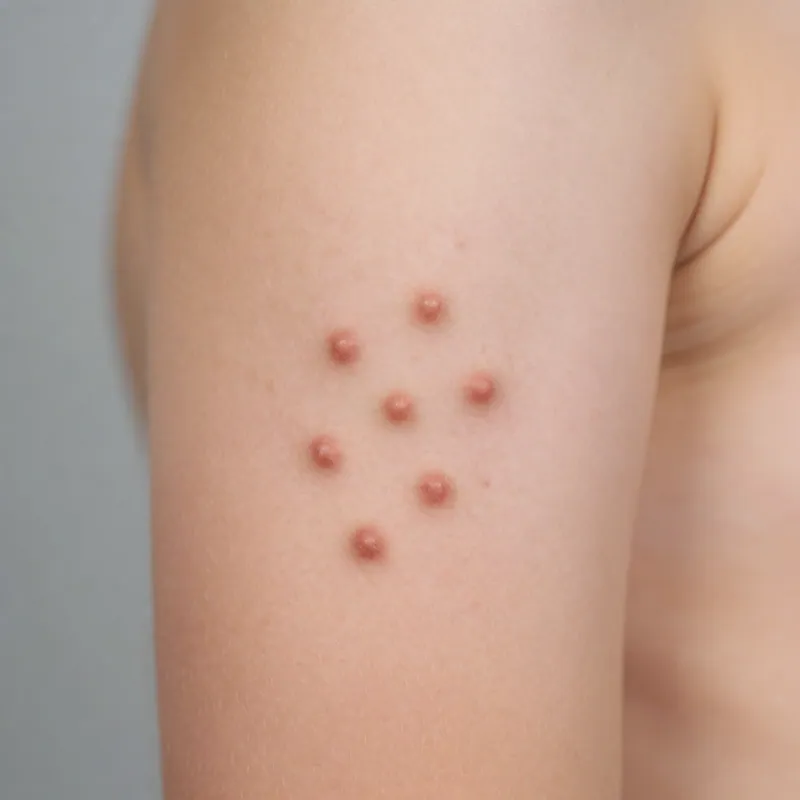
Warts are caused by a common virus infecting the top layer of skin, producing rough raised growths, most often on hands, fingers and feet. On the sole a wart grows inward under pressure and can be genuinely painful. Molluscum contagiosum is a different virus producing small, smooth, pearly bumps with a characteristic central dimple, often in clusters, frequently in the folds of the body, and very common in young children.
Both are self-limiting. Most warts in children clear within about two years as the immune system recognises and eliminates the virus; molluscum typically takes six to eighteen months, occasionally longer. Neither causes any long-term harm. This is the central fact of the appointment, and it means that treatment is a choice rather than a necessity — which is not how it is usually presented.
The reason to be cautious about treating is that the treatments are uncomfortable, they frequently need repeating, and none of them is reliably effective. Freezing a wart on a six-year-old's finger hurts, is repeated fortnightly for months, and may not work. Weighed against a condition that was going to resolve anyway, the honest calculation frequently favours leaving it. Where a lesion is painful, spreading quickly, in an awkward place or making a child miserable, treating is entirely reasonable, and then we treat properly.
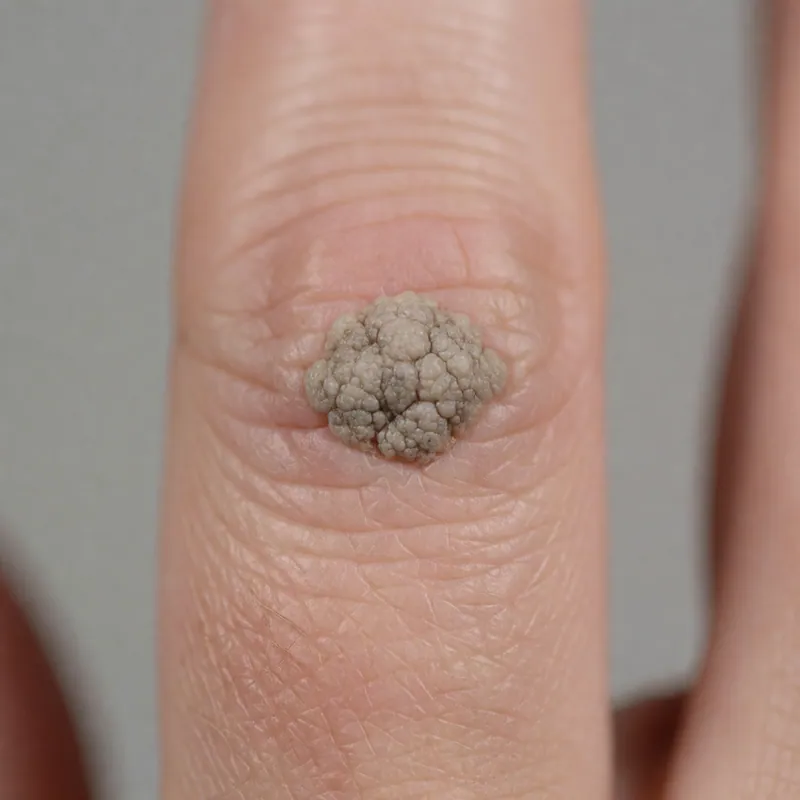
Warts — what works and what does not
Ranked by evidence rather than by how impressive the treatment sounds.
Salicylic acid, applied daily, with filing
The best-evidenced treatment and the most under-performed, because it requires doing every day for twelve weeks. Soak the wart, file the surface down gently, apply, cover. Skipping the filing and skipping days is why it usually fails, and it works about as well as freezing at a fraction of the discomfort and cost.
Cryotherapy
Liquid nitrogen every two to three weeks. It hurts, which matters a great deal in a young child, and it typically needs several sessions. Reasonable for a painful wart on a foot or a stubborn one in an older child who is bothered enough to want it; a poor first choice for a small child with a wart on a knuckle that is not troubling them.
Duct tape, which is not a joke
Occlusion under tape, changed every few days, has modest evidence and effectively no downside. Worth trying in a child who will not tolerate anything else, and combines well with filing and acid.
Other treatments for resistant warts
Preparations that provoke a local immune response, and treatments that induce an immune reaction to the virus, are used for stubborn or widespread warts. These are for the resistant cases rather than the first move.
What does not work
Cutting a wart out is not appropriate — it leaves a scar that can be more painful than the wart, particularly on a sole, and the wart frequently recurs at the scar edge. Nor does any single dramatic treatment reliably clear them, which is why so many exist.
Warts on the face or genitals are a different conversation
They are not treated with the same methods, and in a child genital warts warrant a careful and unhurried assessment rather than immediate treatment.
Molluscum — the case for patience
The condition where the gap between what is offered and what is needed is widest.
It always resolves, and it takes six to eighteen months
Occasionally longer, particularly in children with eczema. There is no long-term consequence. Knowing the timescale up front is what makes waiting bearable.
The red angry stage means it is clearing
Individual lesions often become red, inflamed and sore shortly before they resolve, and parents reasonably interpret this as infection or worsening. It is usually the immune system finally recognising the virus, and it is a good sign.
Treat the eczema around it
Children with eczema get more molluscum, spread it further by scratching, and keep it longer. Controlling the eczema does more for the molluscum than treating the molluscum does.
Where treatment is worthwhile
Lesions on the eyelid, spreading rapidly, becoming secondarily infected, or where an older child is genuinely distressed and asking. Options include a preparation that provokes a controlled blister, careful physical removal, or cryotherapy — all uncomfortable to varying degrees, which is why the default is patience.
Ordinary life does not need to stop
Children can swim and go to school. Cover lesions with clothing or a plaster for swimming, do not share towels, and discourage scratching and picking, which is how it spreads across a child's own body. Excluding a child from activities for this is out of proportion to it.
Warts & Molluscum in western Queens
Both are viral, both are harmless, and both resolve on their own given enough time. The honest default is to leave them alone — and the honest exceptions are pain, rapid spread, and a child who is genuinely distressed.
Every appointment here starts the same way: a proper history, an examination in good light, and a named diagnosis said out loud and written down for you to take home. If there is genuine doubt you will be told that, and told what would settle it — usually a biopsy. You leave with a plan that has a strength, a site, a frequency and a date to stop or come back on it, and, where the condition is one that relapses, what to do on the first day of the next flare. If the honest answer is that this is better left alone, or that it belongs somewhere other than here, that is what you get instead, and it costs exactly the same.
This page is not medical advice, and it is not a diagnosis. Nothing on this website is medical advice for you in particular, and it is not a diagnosis. These pages describe conditions in general terms so that you arrive knowing what the questions are — they cannot tell you which condition you have, because that requires somebody to look at your skin, feel it, ask you a hundred questions and frequently take a sample of it. Two conditions on this website can look identical in a photograph and need opposite treatments. If something on your skin is new, changing, painful or not healing, the useful next step is an appointment rather than more reading.
No before-and-after photographs, and no promised outcome. There are no before-and-after photographs on this website and there never will be. Every set you have seen somewhere else was chosen from a much larger pile, and the second picture is usually taken in different light, at a different angle, at a different point in a flare cycle. In dermatology the dishonesty is sharper than in most fields, because nearly every condition here fluctuates on its own — photograph any relapsing skin disease at its worst and again at its best and you have a persuasive pair of images that demonstrates nothing about the treatment in between. What we publish instead is what a treatment typically achieves, in how long, in what proportion of people, and how often it does not work.
The risks, plainly. Every treatment described here has side effects, and some carry real risks. Topical steroids thin skin if they are used at the wrong strength on the wrong site for too long, which is why they are prescribed with a site, a strength and a stopping point rather than handed over indefinitely. Light-based and laser treatment can burn, blister and cause pigment change that lasts months, and that risk is higher on deeper skin tones and on recently tanned skin. Any procedure that breaks the skin can bleed, become infected and leave a scar; on the chest, the shoulders and the jawline, scars are more likely to thicken. Several of the medicines used in this speciality require blood tests, and some cannot be taken during pregnancy. We tell you your own risk rather than the average one, and where the honest answer is that a condition is better left alone, that is the advice you will get.
Nothing is diagnosed from a photograph. We do not diagnose skin from photographs, and we do not answer "what is this?" by email, by message or through a form. This is not caution for its own sake. A photograph has no history attached to it, cannot be felt, cannot be stretched or pressed to see whether the colour blanches, cannot be examined under a dermatoscope, and misreports colour badly — which matters enormously on skin that is not pale. The examination that actually distinguishes a harmless growth from an early cancer involves magnification, cross-polarised light and, when there is any doubt at all, a biopsy. An application that offers to tell you whether a mole is dangerous from a picture taken on a telephone is selling reassurance, and reassurance is the one product in this field that is dangerous when it is wrong. Bring the mark to a room where somebody can look at it.
Questions
Warts & Molluscum — the questions we are asked most
Will they go away on their own?
Yes. Most warts in children clear within about two years and molluscum within six to eighteen months, as the immune system recognises the virus. Neither causes long-term harm. That is the central fact, and it makes treatment a choice rather than a necessity.
Then why would we treat them at all?
Where a wart is painful — particularly on a sole — where lesions are spreading quickly, where they are somewhere awkward such as an eyelid, where they are becoming infected, or where an older child is genuinely distressed by them. Those are good reasons. "They are there" is a weaker one when the treatment hurts and may not work.
Does freezing hurt?
Yes, sharply, for about twenty seconds, and then it aches. In a young child that matters a great deal and it typically needs repeating every two to three weeks for several months. For a small child with a wart that is not troubling them, daily salicylic acid with filing is about as effective, far less distressing, and can be done at home.
My child's molluscum has gone red and angry. Is it infected?
Usually it is the opposite — individual lesions commonly become red and inflamed shortly before they resolve, as the immune system finally recognises the virus. Genuine infection means spreading redness, heat, pain and a child who is unwell, which is worth a look. The angry-then-gone sequence is a good sign.
Can my child still go swimming and to school?
Yes to both. Cover lesions with clothing or a waterproof plaster for swimming, do not share towels, and discourage picking, which is how it spreads across a child's own skin. Keeping a child out of activities for molluscum is disproportionate to a harmless self-resolving condition.
Why does my child keep getting more molluscum?
Autoinoculation — spreading it to themselves by scratching — is the usual reason, and it is much more pronounced in children with eczema, who get more lesions and keep them longer. Controlling the eczema and keeping the skin moisturised does more for the molluscum than any treatment aimed at the lesions.
Related
Often seen alongside this

Pediatric Dermatology
Children's Skin
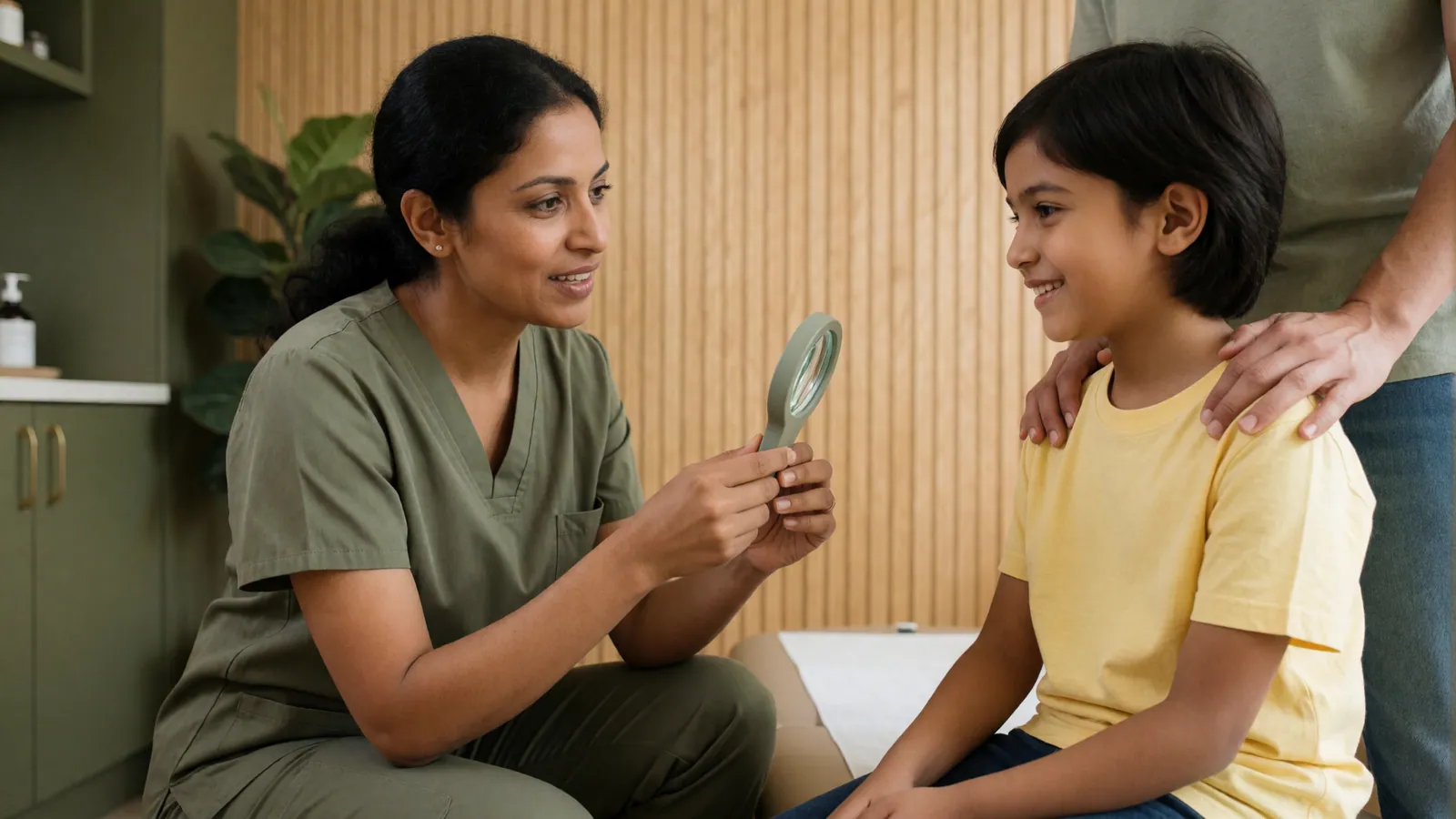
Longer appointments, a low chair, and the plan explained to the child as well as to the adult. A great deal of what worries parents most needs nothing at all — and knowing which part is which is the whole job.
Read more
Pediatric Dermatology
Childhood Eczema
The most under-treated condition in children's dermatology, because everybody involved is nervous of the treatment. A child scratching through the night is not managing, and the plan you leave with should include what to do at the start of the next flare.
Read more
Pediatric Dermatology
Birthmarks
Most birthmarks need nothing but a name and an explanation. A few need prompt assessment — particularly the raised red ones that grow rapidly in the early weeks, where the effective treatment window is early.
Read moreA named diagnosis and a written plan you leave holding
Book an appointment
Pick a physician and a time from the calendar — it shows only the hours each of them genuinely has free. A new patient appointment is thirty minutes, a full skin examination forty-five, and you leave with a named diagnosis written down. If something on your skin has changed, telephone instead and say that word: it is triaged differently.