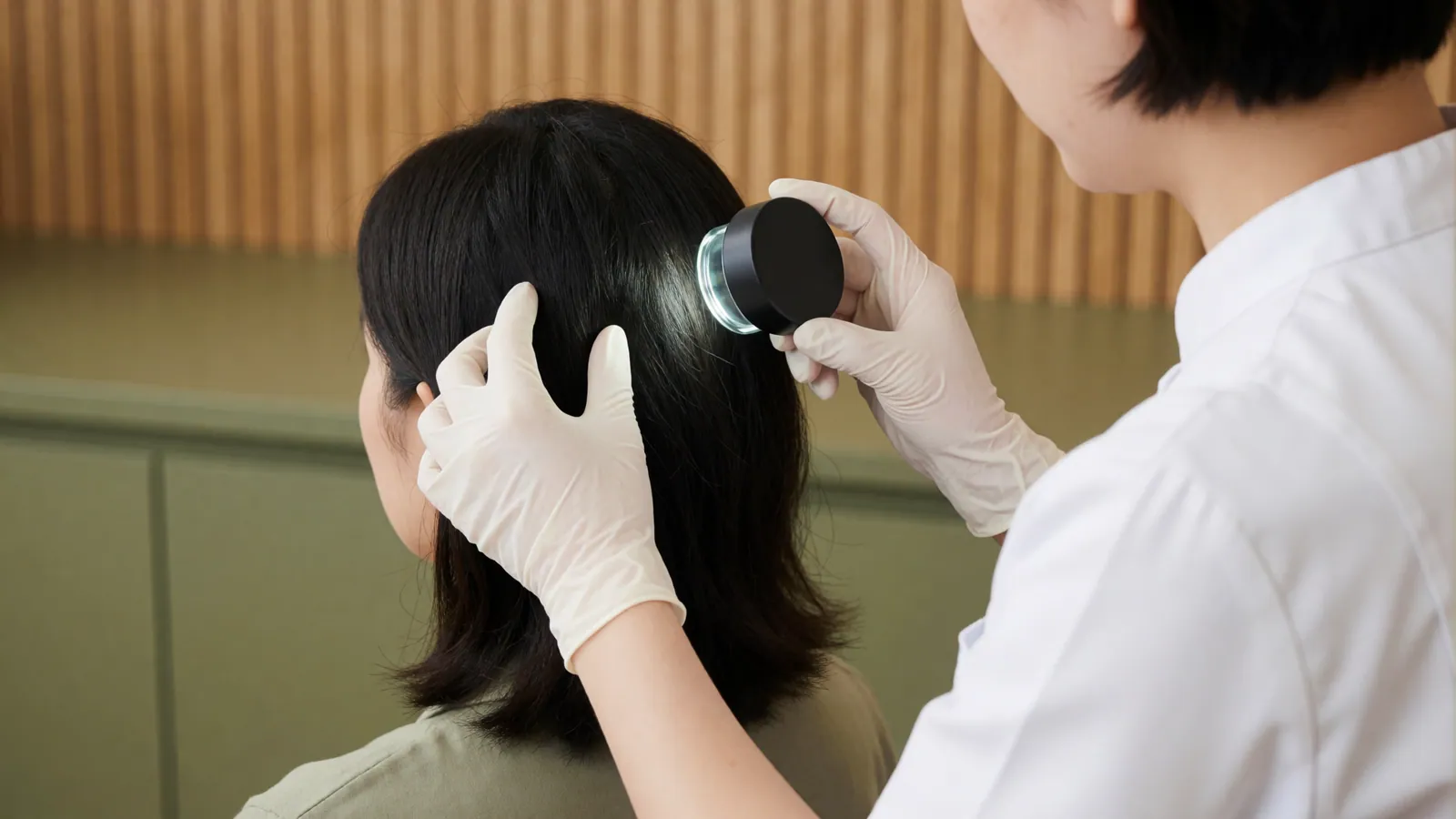
Some things should not wait for the next free routine appointment. Some things should not wait for the next free routine appointment. Telephone the practice and say what is happening, or go to an emergency room, if you have a mole or a mark that has changed shape, colour or size, that has become raised or uneven, or that bleeds, itches or will not heal; a sore anywhere that has not healed in three weeks; a rash that is spreading quickly, especially with fever, blistering, or peeling skin; a painful rash in a band on one side of the body, particularly near an eye; redness that is hot, swollen, tender and spreading, which can be a deep skin infection; a new rash after starting a medicine, especially with mouth or eye involvement; or a child under three months with any widespread rash. If you have been treated here and something is worse rather than better after a procedure, telephone us rather than waiting for the review appointment. We would far rather field a call that turns out to be nothing.
Seborrheic dermatitis is an inflammatory reaction to a yeast that lives on everybody's skin, occurring where sebaceous glands are densest. It is not an infection in the ordinary sense — the yeast is present on everyone and it is the immune response to it that differs. It is also not a hygiene problem, and it is worth saying because the visible flaking makes people wash more aggressively, which strips and irritates and makes it worse.
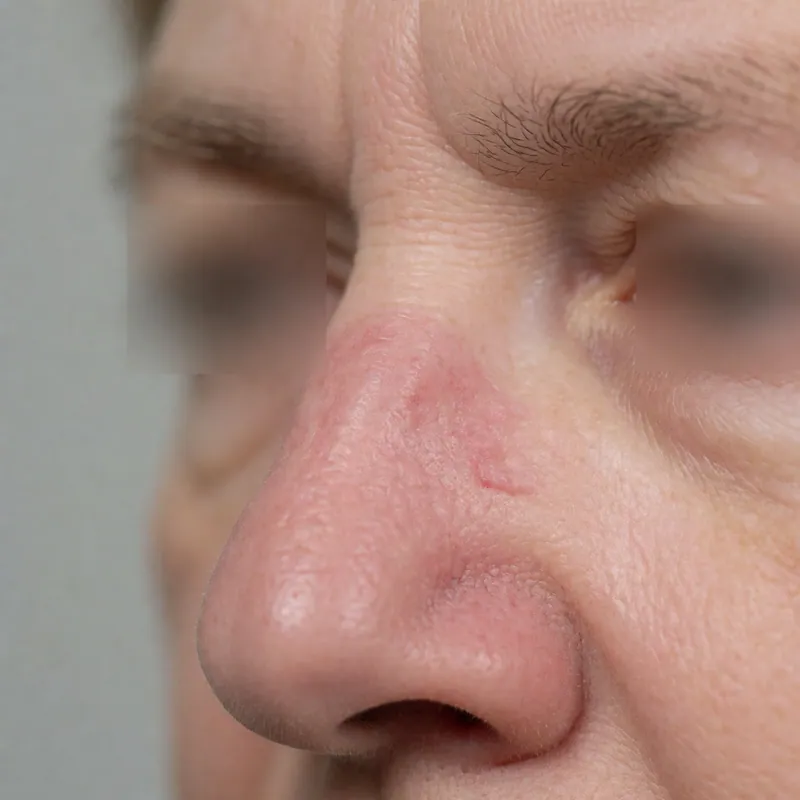
It is common, it is harmless, and it fluctuates. Most people find it worse in winter, worse under stress and better with sunlight. On the scalp it presents as dandruff, ranging from fine flakes to thick adherent scale with redness. On the face it favours the eyebrows, the creases beside the nose, behind the ears and sometimes the beard area, where the redness and greasy scale are frequently mistaken for dry skin and treated with a moisturiser that does nothing.
The one thing worth being straightforward about is that treatment controls it rather than removing it. It relapses when treatment stops, which is the nature of the condition and not evidence that the treatment failed. Successful management is nearly always intermittent maintenance — a medicated shampoo once or twice a week indefinitely rather than a two-week course that ends.
Treating the scalp
Medicated shampoos work well and are almost universally used incorrectly.
Leave it on for five minutes
The single commonest error. An antifungal shampoo applied and rinsed immediately does very little; the active ingredient needs contact time. Lather, leave it for five minutes by a clock, then rinse. That one change fixes a great many treatment failures.
Apply it to the scalp, not to the hair
The condition is on the skin. Part the hair and work the shampoo into the scalp itself rather than washing the lengths, which is what most people actually do.
Rotate between different active ingredients
Several different actives are available across the medicated shampoos: antifungals, tar, salicylic acid, selenium and zinc among them. Effectiveness tends to wane with continuous use of one, so alternating two is more effective than persisting with a single product.
Then keep using it, at a lower frequency
Twice weekly during a flare, once a week or once a fortnight to maintain. Stopping entirely means it returns within weeks. Maintenance is what distinguishes people who describe this as controlled from people who describe it as constant.
Lift thick scale first
Adherent plaques need a scale-softening preparation or an overnight oil before anything else can reach the skin. Treating on top of thick scale achieves very little.
A short course of a scalp steroid for the itch
A lotion or foam for a week or two settles the inflammation quickly while the antifungal treatment does the longer work. Not for indefinite use.
Treating the face, the ears and the folds
Delicate skin, so the strength and the duration are different.
Antifungal cream to the affected areas
The creases beside the nose, the eyebrows, behind the ears, the beard area. Used daily during a flare and then a couple of times a week to maintain. Safe for long-term use at these sites.
Only mild steroids on the face, and only briefly
A short course settles inflammation quickly. Potent steroids on facial skin, used repeatedly, cause thinning, visible vessels and a rebound redness that is worse than what was being treated. This is one of the commonest iatrogenic problems seen in this room.
Steroid-free anti-inflammatory creams for maintenance
The non-steroid prescription options are well suited to faces and eyelids that need ongoing control without a thinning risk. They sting for the first few applications in some people and that settles.
Stop stripping the skin
Foaming cleansers, scrubs, astringents and hot water all worsen it. A gentle cleanser, lukewarm water and a light moisturiser. Greasy skin still has a barrier that can be damaged.
Beards need the treatment worked underneath
The skin beneath a beard is a classic site and is routinely missed because product sits on the hair. Work it into the skin with fingertips.
When it warrants a closer look
Almost all of this is straightforward. These are the exceptions worth knowing about.
Sudden, severe or unusually widespread onset in an adult
Abrupt and extensive seborrheic dermatitis is occasionally associated with an underlying medical condition, and it is a recognised reason to consider further investigation rather than simply treating the skin.
Alongside a neurological condition
It is notably more common and more difficult to control in people with certain neurological conditions, which does not change the treatment but does change the expectation.
When it does not respond at all
Psoriasis of the scalp, tinea, contact dermatitis to a hair product and, on the face, lupus can all resemble this. A patch that is asymmetrical, sharply defined, or spreading despite adequate treatment deserves a fresh look and sometimes a biopsy.
In a baby, it is different and it resolves
Cradle cap is the infant version, it is harmless, and it clears on its own over weeks to months. It needs softening with an oil and gentle removal rather than treatment — see /pediatric-dermatology.html.
Seborrheic Dermatitis in western Queens
Greasy scaling and redness on the scalp, eyebrows, sides of the nose and chest — the grown-up version of cradle cap. Common, harmless, easily controlled, and relapsing the moment treatment stops.
Every appointment here starts the same way: a proper history, an examination in good light, and a named diagnosis said out loud and written down for you to take home. If there is genuine doubt you will be told that, and told what would settle it — usually a biopsy. You leave with a plan that has a strength, a site, a frequency and a date to stop or come back on it, and, where the condition is one that relapses, what to do on the first day of the next flare. If the honest answer is that this is better left alone, or that it belongs somewhere other than here, that is what you get instead, and it costs exactly the same.
This page is not medical advice, and it is not a diagnosis. Nothing on this website is medical advice for you in particular, and it is not a diagnosis. These pages describe conditions in general terms so that you arrive knowing what the questions are — they cannot tell you which condition you have, because that requires somebody to look at your skin, feel it, ask you a hundred questions and frequently take a sample of it. Two conditions on this website can look identical in a photograph and need opposite treatments. If something on your skin is new, changing, painful or not healing, the useful next step is an appointment rather than more reading.
No before-and-after photographs, and no promised outcome. There are no before-and-after photographs on this website and there never will be. Every set you have seen somewhere else was chosen from a much larger pile, and the second picture is usually taken in different light, at a different angle, at a different point in a flare cycle. In dermatology the dishonesty is sharper than in most fields, because nearly every condition here fluctuates on its own — photograph any relapsing skin disease at its worst and again at its best and you have a persuasive pair of images that demonstrates nothing about the treatment in between. What we publish instead is what a treatment typically achieves, in how long, in what proportion of people, and how often it does not work.
The risks, plainly. Every treatment described here has side effects, and some carry real risks. Topical steroids thin skin if they are used at the wrong strength on the wrong site for too long, which is why they are prescribed with a site, a strength and a stopping point rather than handed over indefinitely. Light-based and laser treatment can burn, blister and cause pigment change that lasts months, and that risk is higher on deeper skin tones and on recently tanned skin. Any procedure that breaks the skin can bleed, become infected and leave a scar; on the chest, the shoulders and the jawline, scars are more likely to thicken. Several of the medicines used in this speciality require blood tests, and some cannot be taken during pregnancy. We tell you your own risk rather than the average one, and where the honest answer is that a condition is better left alone, that is the advice you will get.
Nothing is diagnosed from a photograph. We do not diagnose skin from photographs, and we do not answer "what is this?" by email, by message or through a form. This is not caution for its own sake. A photograph has no history attached to it, cannot be felt, cannot be stretched or pressed to see whether the colour blanches, cannot be examined under a dermatoscope, and misreports colour badly — which matters enormously on skin that is not pale. The examination that actually distinguishes a harmless growth from an early cancer involves magnification, cross-polarised light and, when there is any doubt at all, a biopsy. An application that offers to tell you whether a mole is dangerous from a picture taken on a telephone is selling reassurance, and reassurance is the one product in this field that is dangerous when it is wrong. Bring the mark to a room where somebody can look at it.
Questions
Seborrheic Dermatitis — the questions we are asked most
Is this caused by not washing my hair enough?
No. It is an inflammatory reaction to a yeast that lives on everybody, occurring where the skin is oiliest. Washing more aggressively strips the skin and makes it worse, which is the trap most people fall into once they notice flaking.
Why does it come back every time I stop the shampoo?
Because treatment controls it rather than removing it — the yeast is a normal resident and your response to it is what differs. That is why the plan is maintenance: once a week or once a fortnight indefinitely, rather than a course that finishes.
Am I using the shampoo wrong?
Probably, and this is the single most common fixable problem. It needs five minutes of contact time with the scalp itself rather than the hair. Lather, leave it by a clock, then rinse. Rotating between two different active ingredients also works better than persisting with one.
Is it the same as dandruff?
Dandruff is the milder end of the same process — flaking without much redness or itch. Seborrheic dermatitis is the same thing with inflammation, and it can extend beyond the scalp to the face, ears and chest. They are treated the same way.
Can I use a steroid cream on my face for it?
A mild one for a week or two settles a flare, and that is reasonable. What causes trouble is repeated or potent steroid use on facial skin, which produces thinning, visible vessels and a rebound redness worse than the original problem. For ongoing facial control the steroid-free options are the better answer.
My baby has cradle cap. Is it the same thing?
It is the infant version, it is harmless, and unlike the adult form it resolves on its own over weeks to months. Soften the scale with an oil and remove it gently; it does not need medicated treatment in most cases and it is not a sign that your baby will have skin problems later.
Related
Often seen alongside this

Inflammatory Skin Disease
Acne
The commonest reason anybody sees a dermatologist. It is treatable in almost everybody, it takes about three months before you can judge whether a treatment worked, and treating it properly is how you avoid the scars.
Read more
Inflammatory Skin Disease
Eczema & Dermatitis
Itchy, inflamed, dry skin that flares and settles. It is controlled rather than cured, most of it is under-treated rather than over-treated, and the plan you leave with should include what to do on the first day of the next flare.
Read more
Inflammatory Skin Disease
Psoriasis
An immune-driven condition, not a skin infection and not contagious. Treatment ranges from creams through light therapy to targeted injections, and what has become achievable for severe psoriasis in the last decade is genuinely different from what came before.
Read moreA named diagnosis and a written plan you leave holding
Book an appointment
Pick a physician and a time from the calendar — it shows only the hours each of them genuinely has free. A new patient appointment is thirty minutes, a full skin examination forty-five, and you leave with a named diagnosis written down. If something on your skin has changed, telephone instead and say that word: it is triaged differently.