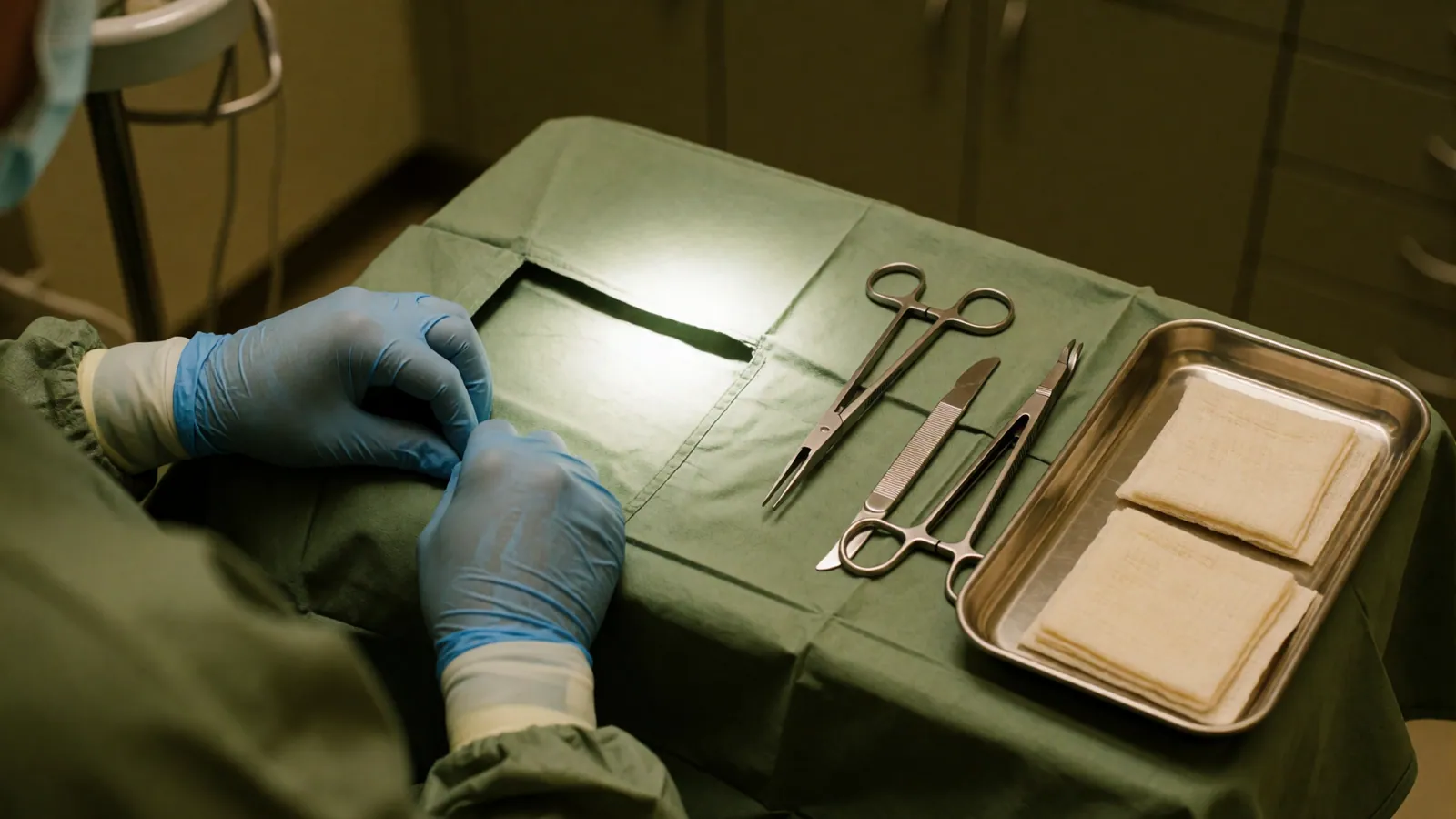
Some things should not wait for the next free routine appointment. Some things should not wait for the next free routine appointment. Telephone the practice and say what is happening, or go to an emergency room, if you have a mole or a mark that has changed shape, colour or size, that has become raised or uneven, or that bleeds, itches or will not heal; a sore anywhere that has not healed in three weeks; a rash that is spreading quickly, especially with fever, blistering, or peeling skin; a painful rash in a band on one side of the body, particularly near an eye; redness that is hot, swollen, tender and spreading, which can be a deep skin infection; a new rash after starting a medicine, especially with mouth or eye involvement; or a child under three months with any widespread rash. If you have been treated here and something is worse rather than better after a procedure, telephone us rather than waiting for the review appointment. We would far rather field a call that turns out to be nothing.
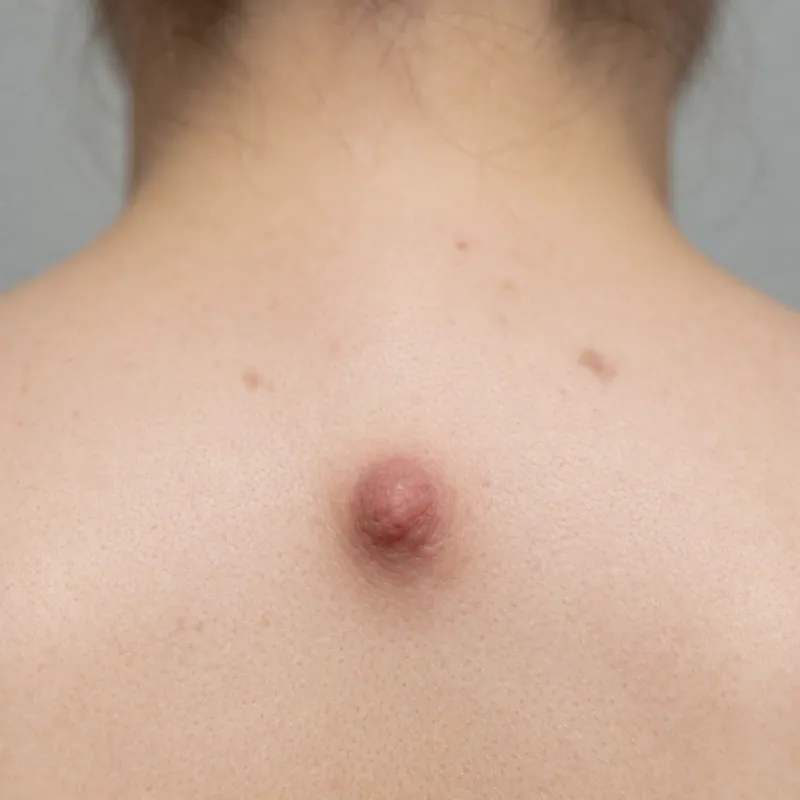
A cyst is a sac lined with skin cells that produces and traps keratin, forming a firm lump under the skin, usually with a small central pore. It is harmless. It can, however, become inflamed and painful, and it can rupture under the skin, which produces a red, swollen, tender lump that is often mistaken for an abscess. A lipoma is a soft, mobile, painless collection of fat cells under the skin, also harmless, usually slow-growing, and generally removed only for size, discomfort or appearance.
The key point about removing a cyst is that the entire wall of the sac has to come out. If any of the lining is left behind, it produces keratin again and the cyst reforms — which is why simply draining a cyst, however satisfying, is not a treatment. It relieves pressure and the lump returns. This is also why an inflamed cyst is generally not removed on the day: inflammation makes the wall friable and the tissue planes indistinct, which makes complete removal considerably harder and recurrence more likely.
So the sequence for an inflamed cyst is to settle it first — usually with a steroid injection, sometimes with drainage if it is under real pressure, occasionally with antibiotics if genuinely infected — and then remove it electively several weeks later once everything is quiet. Patients who arrive with a painful lump wanting it gone that day are frequently disappointed by this, and it is the right advice.
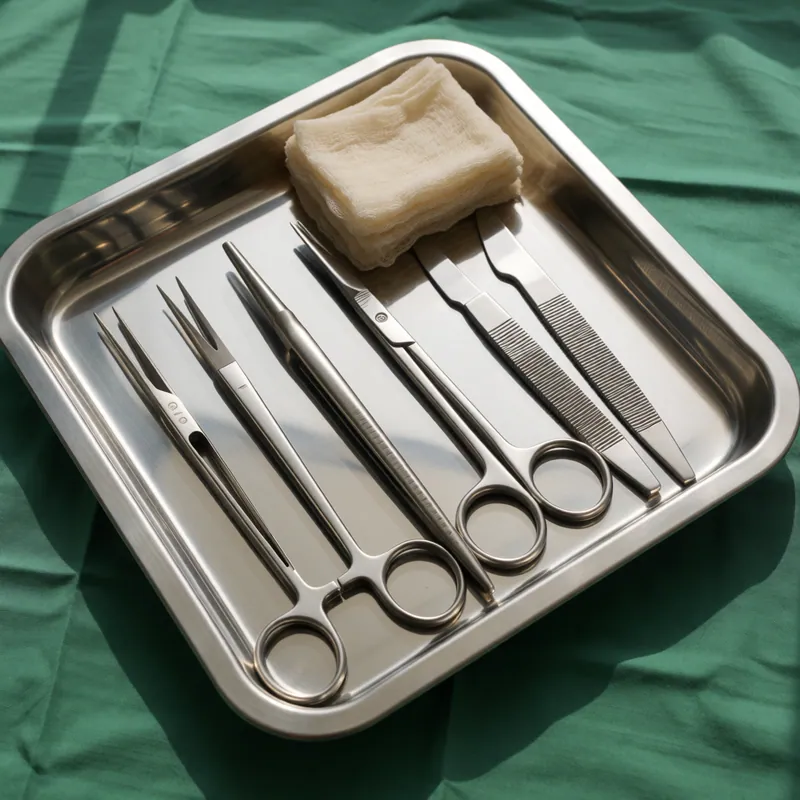
The procedure
Roughly thirty to forty-five minutes, awake, and you drive yourself home.
Local anaesthetic
A sting for about ten seconds and then numbness. You feel pressure and movement afterwards but nothing sharp — and if you do, say so and we put more in.
An incision over the lump
For a cyst, usually an ellipse including the central pore, because that is where the sac is tethered to the surface. For a lipoma, a smaller incision through which the fatty lump is freed and delivered — these can often be removed through an opening considerably smaller than the lump.
Removing it intact where possible
For a cyst the aim is to lift the whole sac out unruptured. Where it has ruptured previously and is scarred to the surrounding tissue, the wall is dissected out piece by piece, which takes longer and carries a slightly higher chance of recurrence.
Closure in layers
Deep sutures to close the space left behind, which reduces the chance of a fluid collection, and surface sutures to align the skin.
It goes to the laboratory
Everything removed here is examined, regardless of how confident we are about what it is. Occasionally a lump assumed to be a lipoma turns out to be something else, and that is exactly why.
Sutures out in seven to fourteen days
Depending on the site. No lifting or stretching of the area for two weeks, particularly on the back and shoulders where the skin is under tension.
What to expect afterwards, and when to worry
Ordinary healing, and the small number of things that are not.
Bruising and firmness for a few weeks
A firm ridge under the scar as the deep tissue heals is expected, and it softens over two to three months. People frequently interpret it as the lump returning.
A scar longer than the lump was wide
The same geometry as any excision: an ellipse allows the skin to close flat rather than with a pucker at each end. On the back and shoulders the scar is more likely to thicken, and if that applies to you it is discussed beforehand.
Some cysts recur
Particularly ones that had ruptured or been drained previously, where the wall is scarred and harder to remove completely. It is not common after a clean removal, and it is a recognised outcome rather than a mistake.
A fluid collection under the scar
More likely after removing a large lipoma, where a space is left behind. Usually resolves; occasionally needs draining.
What is not normal
Increasing pain from day three, spreading redness, heat, discharge or fever. Telephone rather than waiting.
When a lump should be assessed rather than watched
Growing quickly, becoming hard or fixed to deeper tissue, painful without being inflamed, larger than about five centimetres, or arising deep in a muscle rather than just under the skin. Those features warrant imaging or a specialist opinion rather than routine removal.
Cyst & Lipoma Removal in western Queens
Removing a cyst or a fatty lump under local anaesthetic. Both are harmless; both are worth removing when they are growing, catching or repeatedly inflamed. The timing matters — an inflamed cyst is settled first and removed later.
Every appointment here starts the same way: a proper history, an examination in good light, and a named diagnosis said out loud and written down for you to take home. If there is genuine doubt you will be told that, and told what would settle it — usually a biopsy. You leave with a plan that has a strength, a site, a frequency and a date to stop or come back on it, and, where the condition is one that relapses, what to do on the first day of the next flare. If the honest answer is that this is better left alone, or that it belongs somewhere other than here, that is what you get instead, and it costs exactly the same.
This page is not medical advice, and it is not a diagnosis. Nothing on this website is medical advice for you in particular, and it is not a diagnosis. These pages describe conditions in general terms so that you arrive knowing what the questions are — they cannot tell you which condition you have, because that requires somebody to look at your skin, feel it, ask you a hundred questions and frequently take a sample of it. Two conditions on this website can look identical in a photograph and need opposite treatments. If something on your skin is new, changing, painful or not healing, the useful next step is an appointment rather than more reading.
No before-and-after photographs, and no promised outcome. There are no before-and-after photographs on this website and there never will be. Every set you have seen somewhere else was chosen from a much larger pile, and the second picture is usually taken in different light, at a different angle, at a different point in a flare cycle. In dermatology the dishonesty is sharper than in most fields, because nearly every condition here fluctuates on its own — photograph any relapsing skin disease at its worst and again at its best and you have a persuasive pair of images that demonstrates nothing about the treatment in between. What we publish instead is what a treatment typically achieves, in how long, in what proportion of people, and how often it does not work.
The risks, plainly. Every treatment described here has side effects, and some carry real risks. Topical steroids thin skin if they are used at the wrong strength on the wrong site for too long, which is why they are prescribed with a site, a strength and a stopping point rather than handed over indefinitely. Light-based and laser treatment can burn, blister and cause pigment change that lasts months, and that risk is higher on deeper skin tones and on recently tanned skin. Any procedure that breaks the skin can bleed, become infected and leave a scar; on the chest, the shoulders and the jawline, scars are more likely to thicken. Several of the medicines used in this speciality require blood tests, and some cannot be taken during pregnancy. We tell you your own risk rather than the average one, and where the honest answer is that a condition is better left alone, that is the advice you will get.
Nothing is diagnosed from a photograph. We do not diagnose skin from photographs, and we do not answer "what is this?" by email, by message or through a form. This is not caution for its own sake. A photograph has no history attached to it, cannot be felt, cannot be stretched or pressed to see whether the colour blanches, cannot be examined under a dermatoscope, and misreports colour badly — which matters enormously on skin that is not pale. The examination that actually distinguishes a harmless growth from an early cancer involves magnification, cross-polarised light and, when there is any doubt at all, a biopsy. An application that offers to tell you whether a mole is dangerous from a picture taken on a telephone is selling reassurance, and reassurance is the one product in this field that is dangerous when it is wrong. Bring the mark to a room where somebody can look at it.
Questions
Cyst & Lipoma Removal — the questions we are asked most
Can you just drain it?
It relieves the pressure and the cyst comes back, because draining removes the contents and leaves the sac. The sac produces more keratin and refills. Drainage has a place for an acutely painful cyst under real pressure, as relief rather than treatment — the definitive answer is removing the whole wall once everything is quiet.
My cyst is red and painful. Can you take it out today?
Usually not, and that is deliberate. Inflammation makes the cyst wall friable and the tissue planes indistinct, which makes complete removal harder and recurrence more likely. The better sequence is to settle it now — commonly with a steroid injection — and remove it electively several weeks later.
Are these dangerous?
Cysts and lipomas are both harmless. Everything removed here is still sent for examination, because occasionally a lump assumed to be one thing turns out to be another. Features that warrant a closer look before anything else: rapid growth, hardness, being fixed to deeper tissue, pain without inflammation, or a size beyond about five centimetres.
Will it come back?
Not usually after a clean complete removal. Recurrence is more likely where a cyst had previously ruptured or been drained, because the wall is then scarred into the surrounding tissue and harder to lift out in one piece. That risk is discussed beforehand where it applies.
How big will the scar be?
Longer than the lump was wide, because an ellipse is what allows the skin to close flat. For a lipoma the incision can often be considerably smaller than the lump, since the fat is delivered through the opening. On the back and shoulders scars are more likely to thicken, and that is part of the conversation before rather than after.
Is a lump under the skin ever something serious?
Rarely, and the features that raise concern are worth knowing: growing quickly, hard rather than soft, fixed rather than mobile, painful without being inflamed, deep within muscle, or larger than about five centimetres. Any of those means assessment and possibly imaging before anybody removes anything.
Related
Often seen alongside this
Procedures & Testing
Skin Biopsy
Taking a small sample of skin so a pathologist can say what is actually happening in it. Fifteen minutes, local anaesthetic, a result in about a week — and we telephone you either way, including when the news is good.
Read more
Procedures & Testing
Cryotherapy
Liquid nitrogen, applied in short bursts, to freeze off sun-damage patches, warts and several harmless growths. Quick and effective. It stings for twenty seconds and it usually leaves a pale mark — which on deeper skin tones can be permanent.
Read more
Procedures & Testing
Patch Testing
Panels of standardised allergens taped to the back for two days and read twice across a week. Unglamorous, slow, and the only reliable way to find out what you are genuinely allergic to. It ends more long-running dermatitis than anything else in this building.
Read moreA named diagnosis and a written plan you leave holding
Book an appointment
Pick a physician and a time from the calendar — it shows only the hours each of them genuinely has free. A new patient appointment is thirty minutes, a full skin examination forty-five, and you leave with a named diagnosis written down. If something on your skin has changed, telephone instead and say that word: it is triaged differently.