
Some things should not wait for the next free routine appointment. Some things should not wait for the next free routine appointment. Telephone the practice and say what is happening, or go to an emergency room, if you have a mole or a mark that has changed shape, colour or size, that has become raised or uneven, or that bleeds, itches or will not heal; a sore anywhere that has not healed in three weeks; a rash that is spreading quickly, especially with fever, blistering, or peeling skin; a painful rash in a band on one side of the body, particularly near an eye; redness that is hot, swollen, tender and spreading, which can be a deep skin infection; a new rash after starting a medicine, especially with mouth or eye involvement; or a child under three months with any widespread rash. If you have been treated here and something is worse rather than better after a procedure, telephone us rather than waiting for the review appointment. We would far rather field a call that turns out to be nothing.
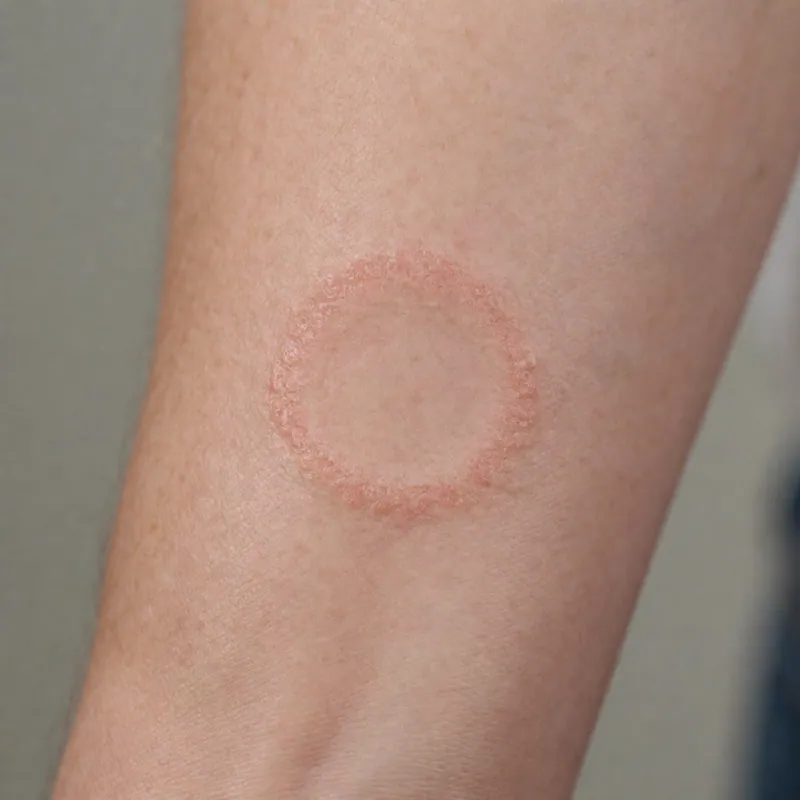
Superficial fungal infections affect the skin, the hair and the nails, and go by names that describe the site rather than the organism: ringworm on the body, athlete's foot between the toes, jock itch in the groin. Ringworm is a poor name that has misled generations of patients — there is no worm, and the ring is simply how a fungal patch grows, spreading outward with an active scaly edge while the centre clears.
The characteristic feature that distinguishes fungal infection from eczema is exactly that edge: a patch that is more scaly and more raised at its border than in its middle, asymmetrical, and slowly enlarging. Yeast infections in the skin folds look different again — uniformly red, moist, sore rather than scaly, with small satellite spots beyond the main area, under the breasts, in the groin or in the abdominal folds.
The single most common thing that goes wrong is a steroid cream. Applied to a fungal patch it reduces the redness and itch, so it appears to help; meanwhile it suppresses the local immune response and the fungus spreads further and deeper. The result is a large, atypical, poorly defined patch that no longer looks like anything recognisable — a well-known presentation with a name of its own, and one of the commonest reasons a straightforward infection ends up in a specialist's room.
Confirming and treating
Scrape first where there is doubt, then treat for long enough.
Skin scrapings, where the diagnosis is not obvious
Scales scraped from the active edge, examined and cultured. Quick, painless, and worth doing before committing anybody to oral treatment or where a steroid has already confused the picture.
Topical antifungal cream, for most body and foot infections
Applied to the patch and a margin of two centimetres beyond its visible edge — the fungus extends further than the redness does, and treating only what you can see is why it recurs. Continue for at least two weeks after it looks better, again for the same reason.
Oral antifungal treatment where topical will not reach
Necessary for scalp infection always, for nail infection usually, and for extensive or resistant skin disease. It involves several weeks or months of tablets and, for the longer courses, blood tests.
Scalp infection in children needs tablets, not cream
Fungal scalp infection produces scaly patches with broken hairs and sometimes a boggy tender swelling. Topical treatment cannot reach the fungus within the hair shaft, so oral treatment is required. Untreated, it can scar and cause permanent hair loss, which makes prompt diagnosis worthwhile. Household members and shared hairbrushes, combs and pillows matter.
Yeast in the folds
Treated with an antifungal, and — more importantly — by addressing the moisture. Keeping the area dry, using a barrier preparation, and treating any underlying factor. Recurrent or extensive yeast infection in an adult is a recognised reason to check for undiagnosed diabetes.
Treating the source and the reinfection route
Feet are the reservoir for groin and body infections in the same person — treat the feet at the same time. Pets are a common source of ringworm, particularly kittens, and an infected animal needs treating too. Wash towels and bedding hot and do not share them during treatment.
Prevention, which is mostly about moisture
Fungi need warmth and damp. Removing those does most of the work.
Dry properly between the toes
The single most effective habit for athlete's foot, and the one everybody skips. A separate small towel, or a hairdryer on cool.
Rotate footwear and let shoes dry out
Shoes worn two days running never dry. Alternate pairs, and consider replacing shoes worn throughout a persistent infection.
Sandals in communal showers and changing rooms
Gyms, pools and shared bathrooms are where most of this is acquired.
Change out of damp clothing
Sports kit and swimwear left on after exercise is the commonest cause of groin infection, particularly in warm weather.
Do not use somebody else's antifungal cream on an undiagnosed rash
Nor, more importantly, somebody else's steroid cream. That is the specific action that converts a small treatable patch into a large confusing one.
Fungal Skin Infections in western Queens
Ringworm, athlete's foot, jock itch and yeast infections in the folds. Straightforward to treat once correctly identified — and routinely made much worse by a steroid cream applied in good faith.
Every appointment here starts the same way: a proper history, an examination in good light, and a named diagnosis said out loud and written down for you to take home. If there is genuine doubt you will be told that, and told what would settle it — usually a biopsy. You leave with a plan that has a strength, a site, a frequency and a date to stop or come back on it, and, where the condition is one that relapses, what to do on the first day of the next flare. If the honest answer is that this is better left alone, or that it belongs somewhere other than here, that is what you get instead, and it costs exactly the same.

This page is not medical advice, and it is not a diagnosis. Nothing on this website is medical advice for you in particular, and it is not a diagnosis. These pages describe conditions in general terms so that you arrive knowing what the questions are — they cannot tell you which condition you have, because that requires somebody to look at your skin, feel it, ask you a hundred questions and frequently take a sample of it. Two conditions on this website can look identical in a photograph and need opposite treatments. If something on your skin is new, changing, painful or not healing, the useful next step is an appointment rather than more reading.
No before-and-after photographs, and no promised outcome. There are no before-and-after photographs on this website and there never will be. Every set you have seen somewhere else was chosen from a much larger pile, and the second picture is usually taken in different light, at a different angle, at a different point in a flare cycle. In dermatology the dishonesty is sharper than in most fields, because nearly every condition here fluctuates on its own — photograph any relapsing skin disease at its worst and again at its best and you have a persuasive pair of images that demonstrates nothing about the treatment in between. What we publish instead is what a treatment typically achieves, in how long, in what proportion of people, and how often it does not work.
The risks, plainly. Every treatment described here has side effects, and some carry real risks. Topical steroids thin skin if they are used at the wrong strength on the wrong site for too long, which is why they are prescribed with a site, a strength and a stopping point rather than handed over indefinitely. Light-based and laser treatment can burn, blister and cause pigment change that lasts months, and that risk is higher on deeper skin tones and on recently tanned skin. Any procedure that breaks the skin can bleed, become infected and leave a scar; on the chest, the shoulders and the jawline, scars are more likely to thicken. Several of the medicines used in this speciality require blood tests, and some cannot be taken during pregnancy. We tell you your own risk rather than the average one, and where the honest answer is that a condition is better left alone, that is the advice you will get.
Nothing is diagnosed from a photograph. We do not diagnose skin from photographs, and we do not answer "what is this?" by email, by message or through a form. This is not caution for its own sake. A photograph has no history attached to it, cannot be felt, cannot be stretched or pressed to see whether the colour blanches, cannot be examined under a dermatoscope, and misreports colour badly — which matters enormously on skin that is not pale. The examination that actually distinguishes a harmless growth from an early cancer involves magnification, cross-polarised light and, when there is any doubt at all, a biopsy. An application that offers to tell you whether a mole is dangerous from a picture taken on a telephone is selling reassurance, and reassurance is the one product in this field that is dangerous when it is wrong. Bring the mark to a room where somebody can look at it.
Questions
Fungal Skin Infections — the questions we are asked most
Is ringworm actually a worm?
No. It is a fungal infection of the skin, and the name comes from the ring-shaped patch it forms as it spreads outward with an active edge while the centre clears. There is no worm involved at any stage, and the name has frightened a great many people unnecessarily.
I used a steroid cream and it got worse. Why?
Because a steroid suppresses the local immune response, which reduces the redness and itch while allowing the fungus to spread further and deeper. The patch becomes larger, less well defined and harder to recognise. It is one of the commonest reasons a simple infection ends up needing a specialist, and it is why an itchy spreading rash should be identified before it is treated.
How long do I treat it for?
For skin infections, at least two weeks beyond the point at which it looks better, and applied about two centimetres past the visible edge. The fungus extends further than the redness, so stopping when it looks clear is the standard route to recurrence.
Can I catch it from my pet?
Yes — cats and kittens especially, and it is a common source in children. If a household pet has bald scaly patches, it needs treating by a vet at the same time, or the infection simply passes back and forth.
My child has a scaly patch on their scalp with broken hairs.
That needs an appointment rather than a cream. Fungal scalp infection requires oral treatment because creams cannot reach fungus inside the hair shaft, and if it is left it can scar and cause permanent hair loss. Combs, brushes, pillows and hats should not be shared while it is being treated.
I keep getting yeast infections in the skin folds. Should I be worried?
Recurrent or extensive yeast infection in the folds is a recognised reason to check for undiagnosed diabetes, and it is worth a blood test rather than another cream. Beyond that, the main measures are keeping the area dry and using a barrier preparation, because moisture is what allows it to return.
Related
Often seen alongside this
Hair, Nails & Sweat
Hair Loss
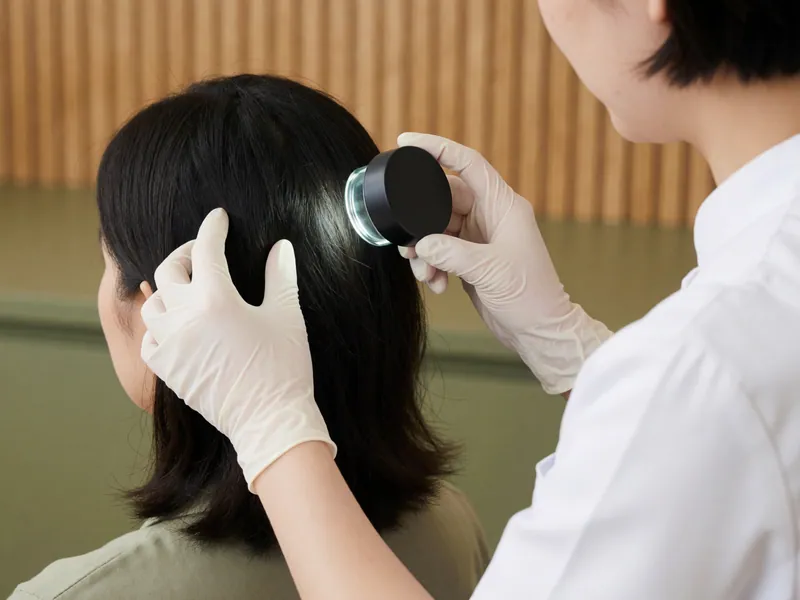
Around twenty different causes that look similar to a patient and quite different under magnification. The question that governs everything is whether the scalp is scarred, because scarring is permanent and the window to prevent it is while the condition is still active.
Read more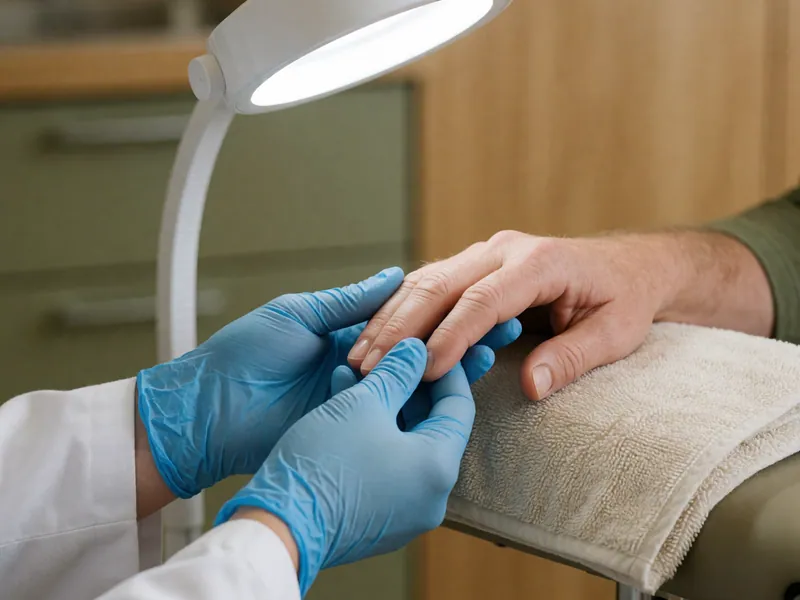
Hair, Nails & Sweat
Nail Disorders
Thickened, discoloured, crumbling or lifting nails. About half of what is assumed to be fungus is not, which is why nails are sampled here before treatment rather than after months of it.
Read more
Hair, Nails & Sweat
Excessive Sweating
Sweating far beyond what temperature requires, enough to change what you wear and what you avoid. It is a recognised medical condition with a ladder of treatments, and it is not a sign of poor hygiene or nervousness.
Read moreA named diagnosis and a written plan you leave holding
Book an appointment
Pick a physician and a time from the calendar — it shows only the hours each of them genuinely has free. A new patient appointment is thirty minutes, a full skin examination forty-five, and you leave with a named diagnosis written down. If something on your skin has changed, telephone instead and say that word: it is triaged differently.