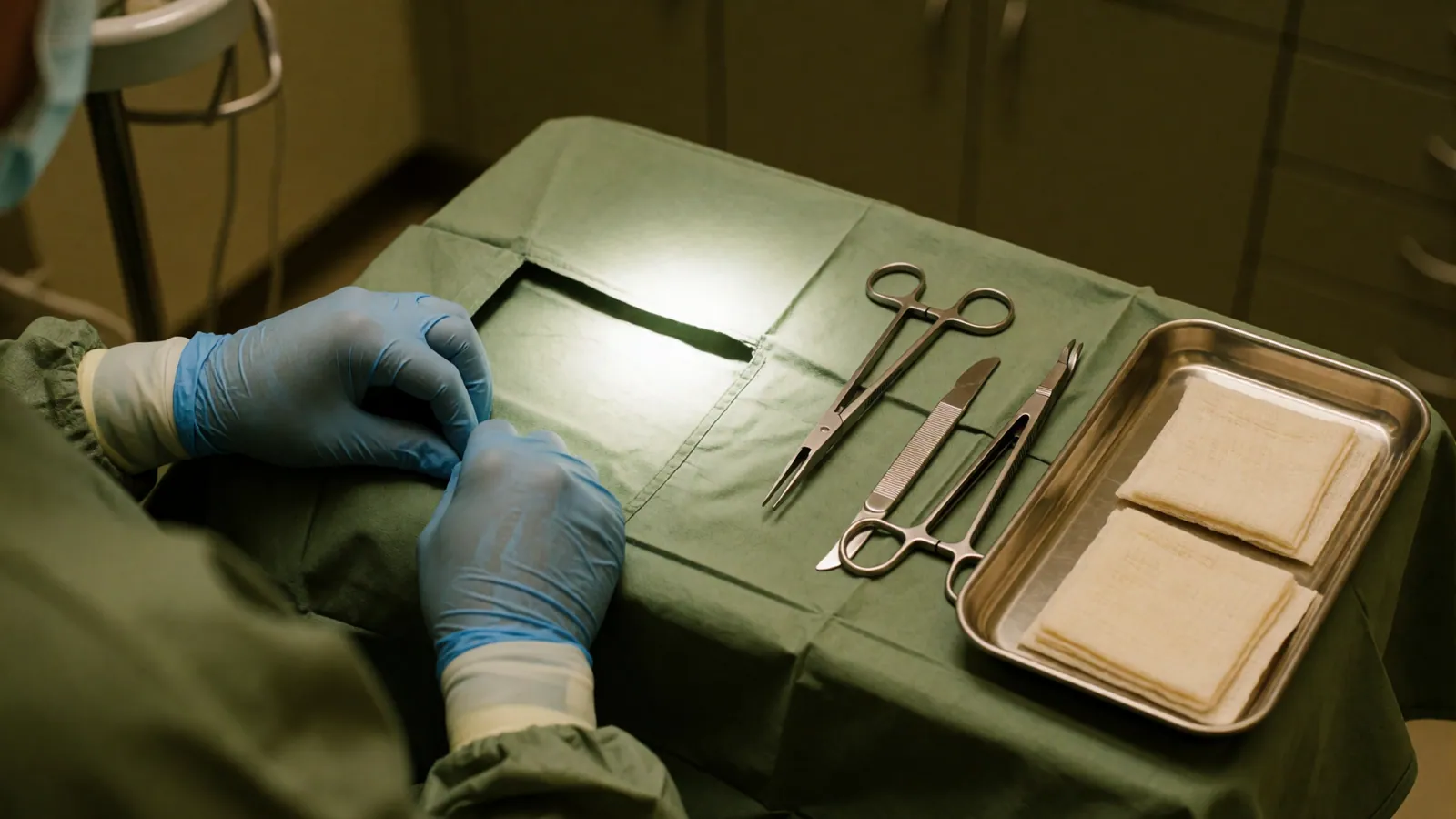
Some things should not wait for the next free routine appointment. Some things should not wait for the next free routine appointment. Telephone the practice and say what is happening, or go to an emergency room, if you have a mole or a mark that has changed shape, colour or size, that has become raised or uneven, or that bleeds, itches or will not heal; a sore anywhere that has not healed in three weeks; a rash that is spreading quickly, especially with fever, blistering, or peeling skin; a painful rash in a band on one side of the body, particularly near an eye; redness that is hot, swollen, tender and spreading, which can be a deep skin infection; a new rash after starting a medicine, especially with mouth or eye involvement; or a child under three months with any widespread rash. If you have been treated here and something is worse rather than better after a procedure, telephone us rather than waiting for the review appointment. We would far rather field a call that turns out to be nothing.
An excision removes the cancer along with a margin of normal-looking skin around and beneath it, because these tumours extend further than they appear to. The margin is decided by which cancer it is, how big, where on the body, and whether the pathology showed an aggressive growth pattern. The specimen goes to the laboratory, which confirms both the diagnosis and whether the margins are clear.
The whole thing happens under local anaesthetic. You are awake, you can talk, and the only part that hurts is the anaesthetic going in — a sting for perhaps ten seconds. After that you feel pressure and movement and nothing sharp. If you feel anything sharp we stop and put more in, and that instruction is given to every patient at the start, because people endure things unnecessarily rather than interrupt.
It is worth being plain about the two things people find harder than the operation. The first is that wounds on the face bruise dramatically and can spread down into the eyelids over a couple of days, which looks alarming and is not. The second is that the scar takes six to twelve months to settle, and it is at its reddest and firmest around week six — which is exactly when people conclude it has gone wrong.
What happens on the day
The sequence, so that none of it is a surprise.
Before you come in
Eat normally and take your usual medicines, including blood thinners unless you are specifically told otherwise — stopping them without instruction carries more risk than the bleeding does. Tell us about them beforehand. No alcohol the night before. Bring somebody with you if the news is recent and you would rather not be alone, though you do not need a driver.
Consent, marking and photography
The site is confirmed with you, marked while you are sitting up, and the plan is described again including the expected scar direction. A clinical photograph is taken for the medical record — for identifying the correct site, not for publication, and nothing from this practice appears on this website.
The anaesthetic
A fine needle, a sting for about ten seconds, and then the area goes numb within a few minutes. The numbness lasts one to three hours. Adrenaline in the anaesthetic reduces bleeding and can make your heart feel like it is racing for a minute, which is expected.
The excision and the closure
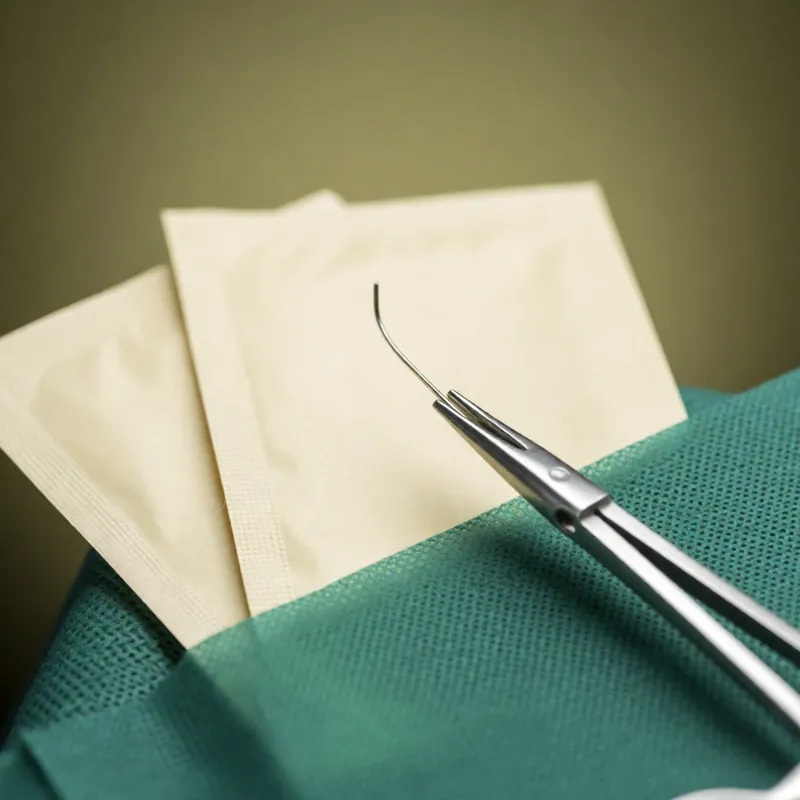
The lesion and its margin are removed as an ellipse, which is why the scar is a line considerably longer than the lesion was wide — that geometry is what allows the skin to close flat rather than with a pucker. Deep stitches take the tension, surface stitches align the edges.
Afterwards, within the hour
A dressing, written wound-care instructions, a date for suture removal and a plan for how you get the pathology result. You walk out and drive yourself home.
Wound care and what is normal
The first fortnight, including the things that look wrong and are not.
Keep it dry for forty-eight hours
Then clean gently and re-dress as instructed. Showering is usually fine after that; soaking, swimming and hot tubs are not until the sutures are out.
Bruising, sometimes spectacular
Facial wounds bruise, and gravity moves the bruise downwards over two or three days, so a forehead excision can produce a black eye. It is unpleasant to look at and it resolves in a week to ten days.
Some ooze and a little bleeding
Normal in the first day. Firm continuous pressure for twenty minutes without peeking stops nearly all bleeding; if it soaks through repeatedly, telephone.
Avoid stretching the wound
No lifting, no gym and no vigorous exertion for two weeks, particularly on the trunk and shoulders where the skin is under tension. This is the commonest reason a scar ends up wider than it needed to be.
What is not normal
Increasing pain from day three onwards, spreading redness, heat, swelling, pus or a fever. That is how an infection presents and it wants a telephone call rather than a wait-and-see.
Sutures out
Five to seven days on the face, ten to fourteen on the trunk and limbs. Removing face sutures late is what leaves the little cross-hatch marks people associate with stitches, so the timing matters.
The scar, honestly
There will be one. What varies is how it settles and how long that takes.
It gets worse before it gets better
A scar is at its reddest, firmest and most raised at around six weeks, and then remodels for six to twelve months. Judging it at two months is judging it at its worst. Nobody should be offered scar revision before a year has passed.
Sun protection on a new scar matters
New scar tissue pigments readily, and a scar exposed to sun in its first year can darken permanently. Cover it or use sunscreen on it daily for twelve months — this is one of the few pieces of scar advice with a real effect.
Massage once it is healed
Firm massage for a few minutes a day, from about three weeks, helps a scar soften. Silicone gel or sheeting is the other measure with reasonable evidence behind it, and we will tell you when to start.
Some sites thicken, and you will be told beforehand
The chest, the shoulders, the upper back and the jawline are the sites where scars are most likely to become raised or keloid, and that risk is higher on darker skin. Where it applies to you, it is part of the conversation before the operation, and there are things we can do early — see /scar-and-keloid-treatment.html.
Numbness around the scar
Small sensory nerves are cut. A patch of numbness or odd sensation around the scar is expected and usually recovers over months, though occasionally a small area stays numb permanently.
What we refer out, and why
Sending something elsewhere is a judgement about the right setting, not about the seriousness.
The eyelid, the lip margin, the nose tip and the ear cartilage
Sites where a few millimetres of margin changes the function and the appearance permanently, and where the reconstruction is a speciality of its own. These go for staged microscopic surgery with margin control during the procedure.
Anything recurrent
A cancer that has come back after previous treatment has an unpredictable footprint under scarred skin, and it needs margins checked as the surgery proceeds rather than a week later.
Aggressive growth patterns on the pathology
Certain patterns reported by the pathologist extend much further than they look, and are referred for the same reason.
Melanoma, after the biopsy
Diagnosed here, then managed at a cancer centre for staging, wider excision and any lymph node assessment. We make the referral rather than hand over a number, and we continue your skin surveillance afterwards.
Large defects needing a flap or a graft
Where closing the wound needs tissue moved from elsewhere or a graft, that is planned surgery in a setting built for it.
Skin Cancer Surgery in western Queens
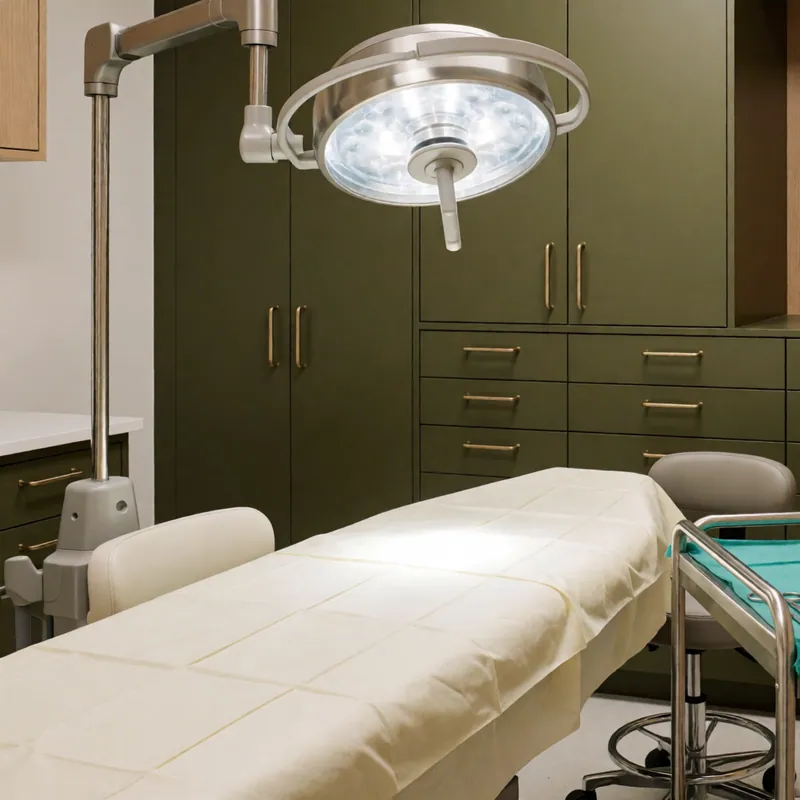
Removing a skin cancer with a margin, under local anaesthetic, in the procedure room downstairs from where you were diagnosed. Most take under an hour. What we do not do here is the eyelid, the lip margin, the nose tip and the ear cartilage.
Every appointment here starts the same way: a proper history, an examination in good light, and a named diagnosis said out loud and written down for you to take home. If there is genuine doubt you will be told that, and told what would settle it — usually a biopsy. You leave with a plan that has a strength, a site, a frequency and a date to stop or come back on it, and, where the condition is one that relapses, what to do on the first day of the next flare. If the honest answer is that this is better left alone, or that it belongs somewhere other than here, that is what you get instead, and it costs exactly the same.
This page is not medical advice, and it is not a diagnosis. Nothing on this website is medical advice for you in particular, and it is not a diagnosis. These pages describe conditions in general terms so that you arrive knowing what the questions are — they cannot tell you which condition you have, because that requires somebody to look at your skin, feel it, ask you a hundred questions and frequently take a sample of it. Two conditions on this website can look identical in a photograph and need opposite treatments. If something on your skin is new, changing, painful or not healing, the useful next step is an appointment rather than more reading.
No before-and-after photographs, and no promised outcome. There are no before-and-after photographs on this website and there never will be. Every set you have seen somewhere else was chosen from a much larger pile, and the second picture is usually taken in different light, at a different angle, at a different point in a flare cycle. In dermatology the dishonesty is sharper than in most fields, because nearly every condition here fluctuates on its own — photograph any relapsing skin disease at its worst and again at its best and you have a persuasive pair of images that demonstrates nothing about the treatment in between. What we publish instead is what a treatment typically achieves, in how long, in what proportion of people, and how often it does not work.
The risks, plainly. Every treatment described here has side effects, and some carry real risks. Topical steroids thin skin if they are used at the wrong strength on the wrong site for too long, which is why they are prescribed with a site, a strength and a stopping point rather than handed over indefinitely. Light-based and laser treatment can burn, blister and cause pigment change that lasts months, and that risk is higher on deeper skin tones and on recently tanned skin. Any procedure that breaks the skin can bleed, become infected and leave a scar; on the chest, the shoulders and the jawline, scars are more likely to thicken. Several of the medicines used in this speciality require blood tests, and some cannot be taken during pregnancy. We tell you your own risk rather than the average one, and where the honest answer is that a condition is better left alone, that is the advice you will get.
Nothing is diagnosed from a photograph. We do not diagnose skin from photographs, and we do not answer "what is this?" by email, by message or through a form. This is not caution for its own sake. A photograph has no history attached to it, cannot be felt, cannot be stretched or pressed to see whether the colour blanches, cannot be examined under a dermatoscope, and misreports colour badly — which matters enormously on skin that is not pale. The examination that actually distinguishes a harmless growth from an early cancer involves magnification, cross-polarised light and, when there is any doubt at all, a biopsy. An application that offers to tell you whether a mole is dangerous from a picture taken on a telephone is selling reassurance, and reassurance is the one product in this field that is dangerous when it is wrong. Bring the mark to a room where somebody can look at it.
Questions
Skin Cancer Surgery — the questions we are asked most
Will I be asleep?
No. It is done under local anaesthetic with you awake, which is safer, quicker and means you go home immediately afterwards. You will feel the anaesthetic go in for about ten seconds and then pressure and movement but nothing sharp. Tell us at once if you feel anything sharp and we put more in — do not endure it.
Should I stop my blood thinner beforehand?
Not unless the doctor who prescribed it has told you to. The bleeding risk during a small skin operation is manageable and the risk of stopping an anticoagulant without instruction is not. Tell us what you take, including aspirin and supplements such as fish oil, and we plan around it.
Why is the scar so much longer than the lesion was?
Because a circle cannot be closed flat. Removing an ellipse three times as long as it is wide is what allows the edges to come together without a pucker at each end, so the line is longer than the thing removed. It is deliberate and it produces a better final result than a shorter, bunched closure.
When will I know the result?
About a week, occasionally longer if extra staining is needed. We telephone every result, including the good ones. If the margins were not clear, a further procedure is arranged — that happens sometimes, it is not a failure, and it is why the specimen is examined at all.
Can I go to work the next day?
For most people with a wound on the trunk or a limb, yes, provided the job does not involve lifting or stretching the area for two weeks. For a facial wound the limiting factor is usually the bruising rather than the wound, and people vary in how much they mind that.
What if the cancer is on my nose or eyelid?
Then it is referred for staged surgery with margin control during the procedure, done somewhere set up for the reconstruction. That is not a downgrade in your care — it is the correct operation for those sites, and doing it here would be doing it worse.
Related
Often seen alongside this
Skin Cancer & Lesions
Skin Cancer Screening
A full-body skin examination in good light with a dermatoscope, taking about forty-five minutes. It finds most of what is present on the day it is done — not all of it — and the part that matters as much as the appointment is what you do between appointments.
Read more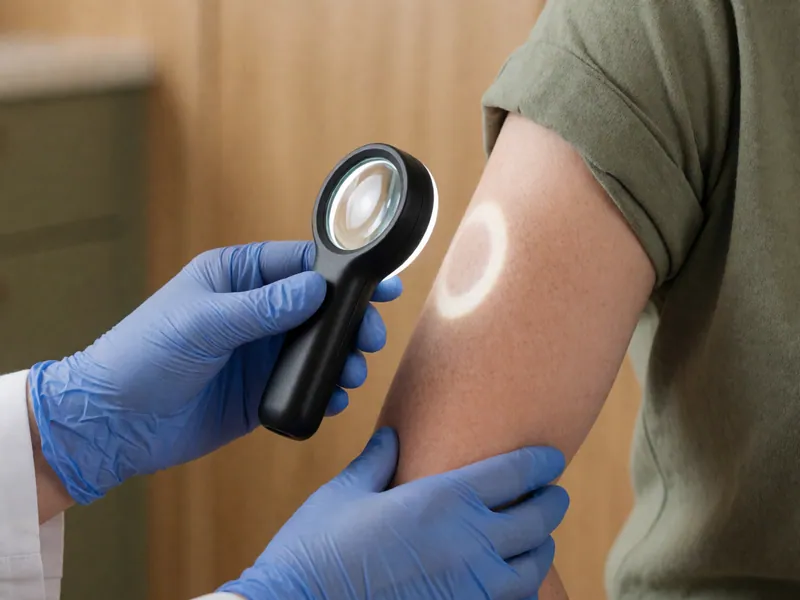
Skin Cancer & Lesions
Mole & Lesion Evaluation
One mark, examined properly: history, naked eye, then dermoscopy. Most moles are entirely ordinary and are left alone with reasons given. Anything genuinely uncertain is sampled rather than watched for a year.
Read more
Skin Cancer & Lesions
Melanoma
The least common of the major skin cancers and the one that matters most, because it can spread. Found early it is usually dealt with by removing it. This page is about recognising change and getting seen — not about self-diagnosis.
Read moreA named diagnosis and a written plan you leave holding
Book an appointment
Pick a physician and a time from the calendar — it shows only the hours each of them genuinely has free. A new patient appointment is thirty minutes, a full skin examination forty-five, and you leave with a named diagnosis written down. If something on your skin has changed, telephone instead and say that word: it is triaged differently.